Two film projects featuring stories unique to San Francisco top the slate. Also today: Jodie Foster’s new French movie.
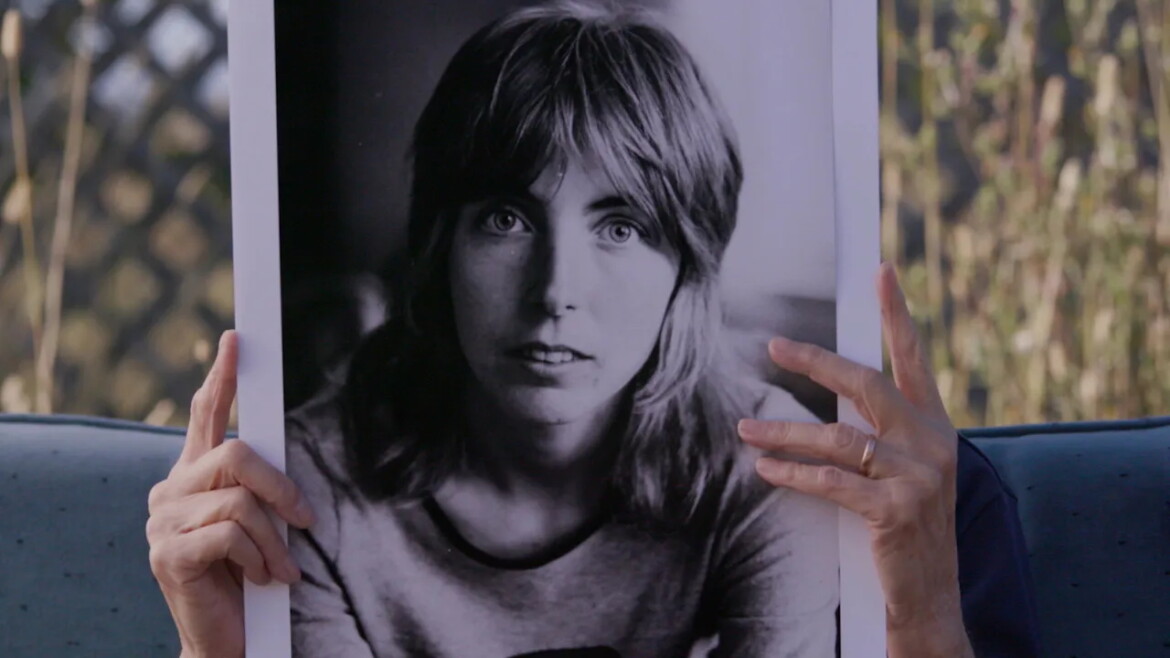
Longtime film editor Vivien Hillgrove reflects on her remarkable career and its roots in the Bay Area’s 1970s and 1980s film scene in her engaging directorial debut, “Vivien’s Wild Ride.” The documentary, which premieres at 10 p.m. today on “Independent Lens” on KQED, can be streamed on the PBS app.
Via interviews, photos, archival footage and other elements (the reenactments excluded) that document a life and time authentically, Hillgrove, 78, deftly guides viewers through her journey. Citing an interest in machines and how they work — which she traces back to childhood visits to San Francisco’s now-gone Playland at the Beach — Hillgrove recalls feeling drawn to film editing, a field she entered more than 50 years ago, when it was opening up to women. Her time spent at Francis Ford Coppola’s American Zoetrope resulted in collaborations, as a picture and dialogue editor, with giants such as Philip Kaufman and Walter Murch (“The Unbearable Lightness of Being”), Milos Forman (“Amadeus”), and Lourdes Portillo (“The Devil Never Sleeps”).
“Everywhere I looked, artists and activists were breaking the rules,” Hillgrove says of the local scene back then. “Coppola, Philip Kaufman — these guys were experimenting with everything.”
Interwoven with her filmmaking journey are two life-shaping experiences. One is vision loss, due to dry macular degeneration. Hillgrove describes how it led her to develop a new way of seeing and a sense of herself as an artist with a disability. The other is about how, as a pregnant teen, she gave up her baby. In the film’s most affecting scenes, Hillgrove and her grown daughter (they reunited in the 1980s) discuss their complicated feelings for each other and reveal dark truths about the social system. Viewers also meet Hillgrove’s longtime partner, Karen Brocco, with whom Hillgrove shares two lives: one in the fast lane, the other on a humble farm.
“Vivien’s Wild Ride” is an informative and uplifting cinematic memoir and appreciation of filmmaking and the local landscape’s creative vibe. Visit pbs.org/independentlens.
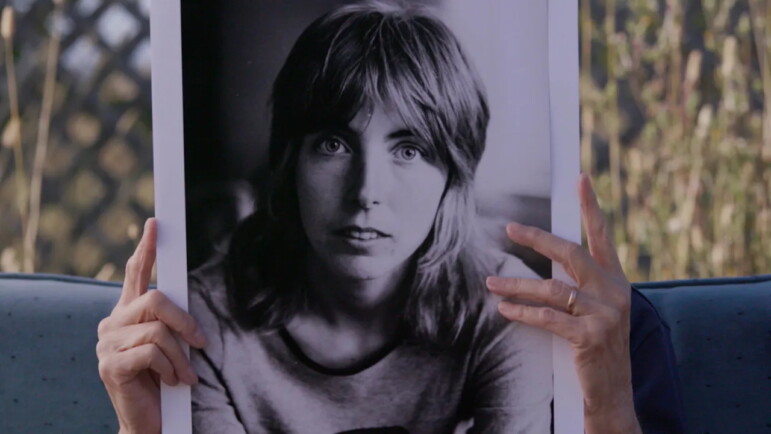
The Tenderloin Museum will present San Francisco filmmaker Rob Nilsson’s entire “9 @ Night” film cycle on nine evenings beginning Jan. 29. It’s a showcase of nine interconnected feature films developed in Nilsson’s Tenderloin yGroup (1997-2007), an acting workshop devoted to truthful depictions of lives in San Francisco’s Tenderloin.
Nilsson, known for his workshop-based improvisational work, has made 45 feature films and received numerous awards, including the Camera d’Or at the Cannes Film Festival. “Noise” (2002), a film about a man who arrives in San Francisco by ferryboat after spending 20 years in prison, opens the series. The cycle continues with “Used” (2007) screening on Feb. 3; “Attitude” (2007) on Feb. 5; “Singing” (2000) on Feb. 10; “Stroke” (2000) on Feb. 12; “Scheme C6” (2001) on Feb. 17; “Need” (2005) on Feb. 19; “Pan” (2006) on Feb. 24; and “Go Together” (2007) on Feb. 26.
All programs begin at 6:30 p.m. Q&A sessions with Nilsson and guests follow all screenings. For more information, visit tenderloinmuseum.org.
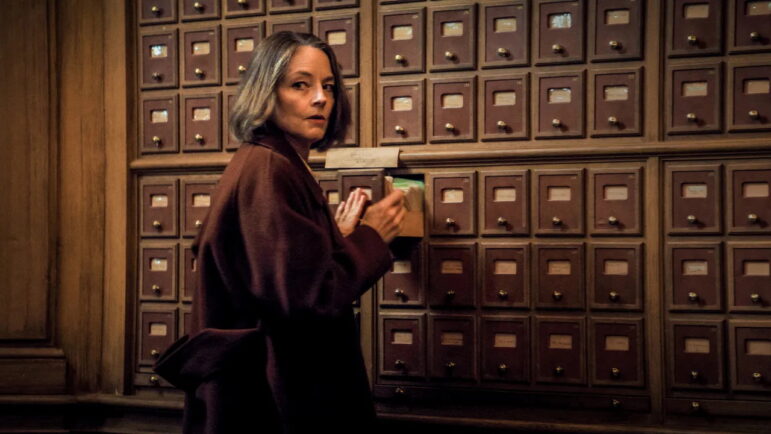
A self-possessed psychotherapist unravels in “A Private Life,” an enjoyable French genre hybrid directed by Rebecca Zlotowski (“Dear Prudence”) and starring a terrific Jodie Foster. Foster, in her third French-speaking role, plays Lilian Steiner, a Paris-based renowned American psychiatrist who is so confident in her analytical skills that we know she’ll be thrown off balance.
It happens when Lillian is informed that her patient Paula (Virginie Efira) died by suicide. Following encounters with Paula’s angry husband (Mathieu Amalric) and daughter (Luana Bajrami), Lillian, who never viewed Paula as suicidal, begins to believe that Paula was murdered. Shaken, Lillian teams up with her ex-husband, Gabriel (Daniel Auteuil), an ophthalmologist, to investigate. (She visits his office to have her eyes examined, unable to fathom why she can’t stop crying.) Spying on suspects, the two reconnect romantically. Along the way, Lillian becomes increasingly paranoid and loopy. At the same time, strange things, including an office break-in, truly happen.
Zlotowski, cowriting with Anne Berest, fares so-so with the movie’s crime element. Suspense doesn’t seem to be her priority and the story is short on surprise. The climactic confrontation is underwhelming. Also, it’s hard to know what to make of a bizarre, perhaps Hitchcock-inspired, Nazi-themed dream sequence during Lillian’s hypnotherapy. But, with a playful tone set by Zlotowski, who wisely doesn’t take the dippy story too seriously, and the in-sync actors, the movie hits more than misses. Foster, whose Lillian exudes intellect at one moment and goes off the deep end at the next, delights as a woman who is a mystery to herself. Her chemistry with Auteuil allows the movie, which initially seems to be a whodunit, to shine as a remarriage comedy.
“A Private Life” opens Friday in select theaters around the Bay Area.
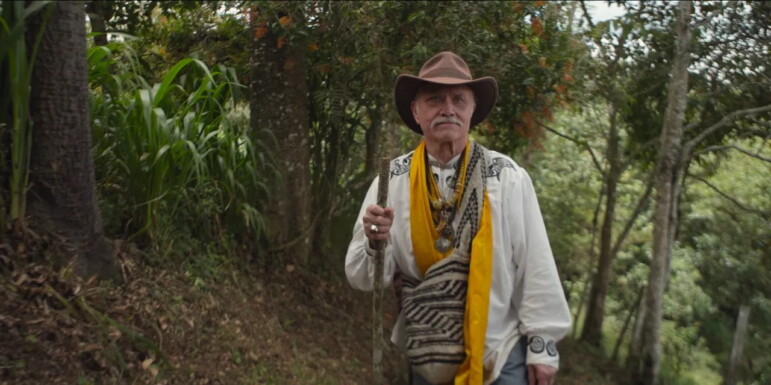
“The Man Who Saves the World?,” filmmaker Gabe Polsky’s entertaining documentary about Patrick McCollum — a peace activist, spiritual leader and colorful personality who finds himself at the center of an indigenous prophecy involving the fate of the Amazon — screens at 7 p.m. at Oakland’s Grand Lake Theatre on Wednesday as part of a national tour. A conversation with Polsky and McCollum will follow the screenings. Visit themanwhosavestheworld.com.
This post appeared first on Local News Matters.