This story was originally published by EdSource. Sign up for their daily newsletter.
A subtle, but significant, vibe shift has taken hold across California’s classrooms this semester.
Students are making fewer screen swipes. Dings and buzzes aren’t disrupting class discussions as often. Teachers say classrooms feel more alive with face-to-face interactions.
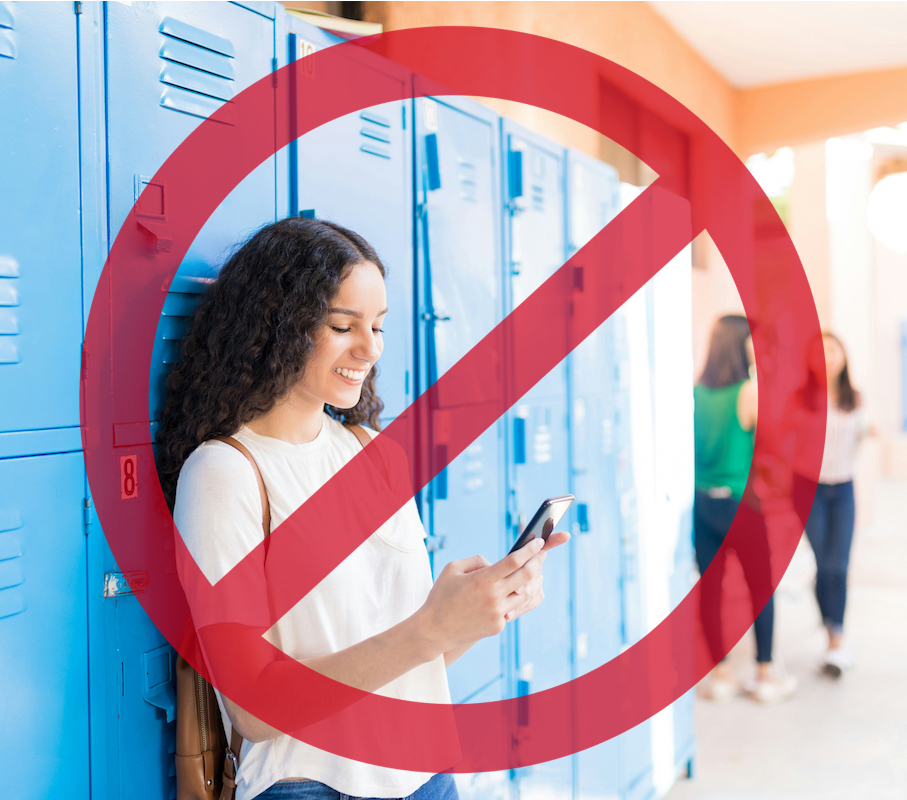
A 2024 law required all school districts, county offices of education and charter schools to approve policies limiting or prohibiting student smartphone use by July 1. The state law, known as the Phone-Free Schools Act, gave local control in deciding those restrictions. As a result, policies vary widely from district to district and, in some cases, from school to school.
Some schools require students to lock their phones away the entire day; others allow them during lunch between classes, while some leave much of the enforcement to teachers.
The overall effects, so far, have been profound and far-reaching, educators say.
EdSource reporters interviewed more than 40 people in seven school districts across the state about their schools’ cellphone policies, and analyzed the written policies of the largest 15 districts. School leaders and teachers said they are seeing higher student engagement inside classrooms. Educators at some schools are reporting fewer fights and bullying since their policies went into effect.
Some also said they have seen improvements in academic performance and overall well-being, though researchers caution it is too early to know whether those changes can be directly attributed to cellphone crackdowns.
“My favorite thing is that they’re actually communicating, which I think is a skill that kids, because of cellphones, have lost,” said Amy Alexander-Carter, principal of John Barrett Middle School in Carmichael, near Sacramento.
A patchwork of approaches
Some districts, like Oakland Unified, say they require all students to put their phones in a locked box or a magnetic pouch for the entire school day, while others allow students to keep their phones with them as long as they are turned off and out of sight.
Many districts allow high schoolers to use their phones during breaks and passing periods. Some, like Clovis Unified, leave the specifics to teachers, saying middle and high school students cannot use their phones in an “unauthorized way” and must have their phones off and stored away during class “according to the teachers’ directions.”
At least one district, West Sonoma County Union High School District, allows students to have their phones, but blocks their devices from accessing social media, games and most other apps.
A patchwork of approaches is to be expected, given the diversity of California’s school districts, said Troy Flint, chief of communications for the California School Boards Association.
Flint said some parents have pushed for students to have more access because they want to be able to contact their children during emergencies.
“That’s really been the rub,” Flint said. “How (do) we restrict access to cellphones in a way that complies with the law and supports a more productive learning atmosphere, but still allows students to have access in emergency situations or situations where the student is more reliant on parental connection to help them navigate the day.”
Under the law, schools must allow students to use their phones during emergencies; if a doctor says they need the phone for their health or well-being; if a teacher or administrator grants them permission; or if an individualized education program, or IEP, requires a student with disabilities to be able to use their phone.
Students getting along better
At John Barrett Middle School in Carmichael, school administrators said fights dropped by more than half after cellphones were banned. In Modesto City Schools, a senior director of child welfare reported a nearly 40% reduction in fights since the district implemented its cellphone policy.
It’s too early to know whether cellphone restrictions are responsible for those changes, and the research is mixed on whether they improve students’ mental health or academic outcomes, said UCSF pediatrician and researcher Jason Nagata. But he said the reports from administrators and teachers are consistent with what researchers might expect when students spend less time on their phones during the school day.
Phones can distract students not only during class, Nagata said, but also at recess and breaks, when students might otherwise be playing or talking with one another.
“The type of interactions that you’re having on social media is limited to a few words on your phone or keyboard, and that doesn’t capture tone or facial expressions or body language, which are all really important skills for kids to develop,” Nagata said.
Reducing phone use may also reduce students’ exposure to cyberbullying, Nagata said. In one study, 10% of 11-year-olds reported experiencing cyberbullying, which has been associated with depression, suicidal behavior and experimentation with tobacco and marijuana.
Enforcement matters
How cellphone policies are enforced may be one of the most important factors in determining outcomes, Nagata said.
“Just because we say there’s a phone ban can mean lots of things in practice,” he said. “In lots of places that say they have phone bans, kids are still using their phones.”
Some school districts, such as Modesto City Schools, have a no-warning policy under which teachers or administrators confiscate phones the first time they see them out, and require parents to pick them up. For a second offense, the district requires a parent-teacher conference.
Many districts give one or more warnings to students before confiscating phones.
“I tell them, ‘You see me, put it away,’ ” said Crisan Baker-Casilla, campus monitor at Rosemont High School in Sacramento. “’The last thing I want to do is get into an argument with you about your phone. And I don’t want to deal with your parents.’ You’re not trying to sneak up on them. No. You want them to put it away.”
In a national study released this year, Nagata and other researchers found that teenagers used their phones for an average of 70 minutes a day during school hours, mostly on social media, followed by videos and video games. Many districts already had restrictions in place, but those policies didn’t necessarily prevent teens from using their phones, Nagata said.
Students told EdSource reporters they have found ways around some of the bans. Some said students put dummy phones or sticks of deodorant in school pouches while keeping their actual phones with them.
“Some people still use their phones regardless of the policies,” said Rosemont High senior Julianna Rodriquez. “I see people in class sneak their phones while the teacher is talking.”
Some students want rules
Some students interviewed by EdSource reporters said they didn’t like their schools’ cellphone restrictions at their school. They wanted to use social media at lunch, call their parents during the school day or record TikTok videos with their friends.
But several also said the policies had improved how they interact with other students or, in some cases, helped their grades.
“I actually started doing my classwork,” said 17-year-old Daniela Gamez, a senior at Bullard High School in Fresno.
“We get more social with each other and start talking to other people,” said Valeria Mora, an eighth grader at Mark Twain Junior High School in Modesto. “We start getting involved in clubs. We start getting communication skills.”
San Juan Unified school counselor Debi Trotti said even students who complain about the cellphone policies in public often admit they like them in private.
“When I would bring in kids and we would talk, they would have so many good things to say about not having cellphones,” she said. “They liked it. They felt safer on campus not having it (phones). And they would talk about how more kids are talking to each other.”
When interviewing students across the country about school phone policies, Nagata said some adolescents told researchers they appreciated rules to help them resist the urge to check their phones during school.
“Even if teens don’t want to be checking their phone during the school day, if you hear a notification or someone’s messaging you, it’s really hard to resist that urge,” he said. “So I do think implementing those policies can be helpful.”
EdSource reporters Diana Lambert, Mallika Seshadri and Lasherica Thornton contributed to this article.

This story was originally published by EdSource.