This story was originally published by EdSource. Sign up for their daily newsletter.
If you’ve waited until the last moment to look at your ballot and need help sorting through who you will vote to be California’s next State Superintendent of Public Instruction, you’ve come to the right place. EdSource is an independent, nonpartisan news organization that has provided comprehensive coverage of the race.
Here’s what you need to know.
Who is running?
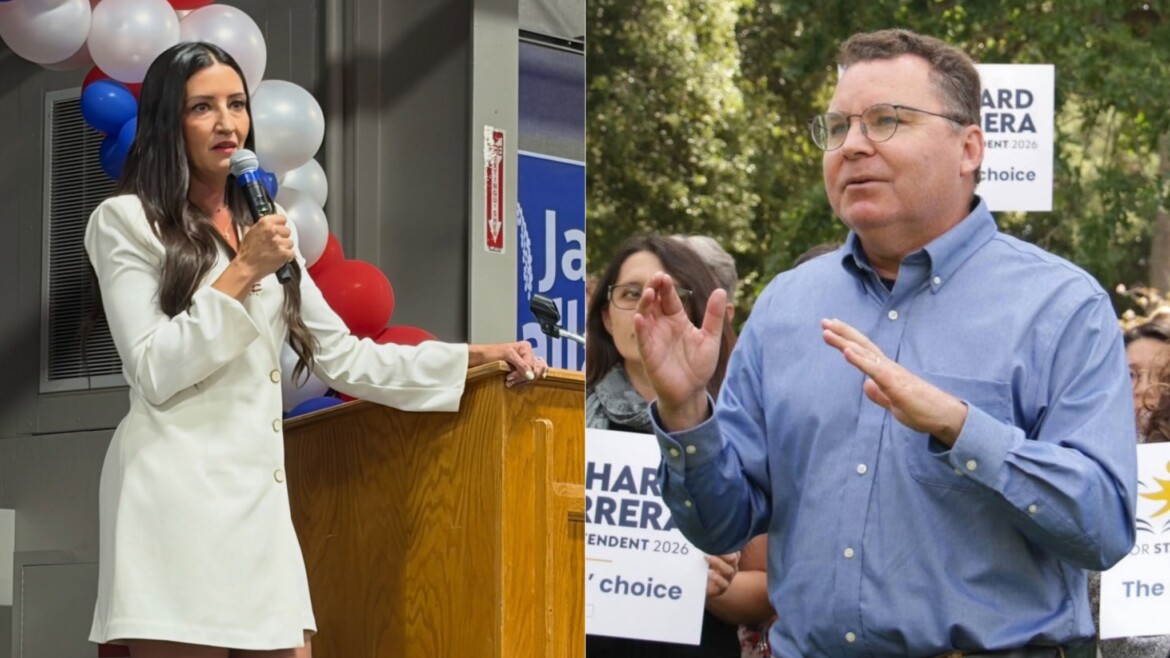
This year’s contest features two local school board presidents: Richard Barrera and Sonja Shaw, the latter of whom was the top vote-getter in the June primary election.
Richard Barrera is a longtime union organizer and labor leader in San Diego. He has been on the board of San Diego Unified for 18 years. He also serves as a senior adviser for special projects at the California Department of Education.
Read more about Barrera’s background, as well as his tenure as a school board member.
Sonja Shaw has been the board president of Chino Valley Unified since her election in 2022. Before the pandemic, she was a stay-at-home mom who led early-morning fitness training sessions.
Read more about Shaw’s background, as well as her tenure as a school board member.
What is the State Superintendent of Public Instruction’s role?
The position has historically been associated as the state’s top education administrator who leads the California Department of Education. That will no longer be the case after Gov. Gavin Newsom signed a law this summer that completely overhauled the state superintendent role. The next superintendent will hold a position that looks very different from the one current Superintendent Tony Thurmond holds.
The incoming governor will appoint an education commissioner who will run the department that oversees TK-12 education.
The state superintendent overhaul added new responsibilities to the role, as well. The next superintendent will become a voting member of the State Board of Education, which sets policy for TK-12 schools, and will also become a member of the Community College System Board of Governors.
Some duties will remain the same. The next state superintendent will continue to serve as a California State University trustee and University of California regent. And, the state superintendent will remain an independently elected voice in the state on education issues.
But the position will evolve. The next state superintendent and new education commissioner will spend the first six months of 2027 negotiating a job description for the superintendent to bring back to the Legislature for any further funding and statutory changes, according to an outline by state legislators.
Read more about how the state superintendent role will change under the next California governor.
How have the candidates responded to the elected seat’s changes?
The dramatic change to the role happened mid-campaign. Neither candidate supported the changes that wrested control of the California Department of Education from the state superintendent, but it hasn’t dramatically changed the course of the campaign.
Shaw has been more vocal in her criticism, calling changes to the position an unconstitutional “sweeping power grab.” Shaw said she plans to sue to prevent future governors from hiring a new education commissioner, though legal experts say that suit isn’t likely to be successful. In the meantime, Shaw said she intends to reshape the job around “the bully pulpit, systemic accountability and a voice on boards that actually set policy.”
Barrera has been ambivalent but ultimately accepting of the new change. He has ambitious plans to flesh out the independence of the role. One is that he plans to meet in the fall with local superintendents, educators and parents to create a first draft of a state education budget before the governor lays out the full state budget in early January.
How do Sonja Shaw and Richard Barrera’s positions differ?
Barrera wants more funding for schools, and supports Prop. 3, which renews taxes on high incomes. He said California needs more counselors and nurses and smaller classroom sizes. Shaw said she wants to slash state bureaucracy and ensure that money makes it to classrooms.
Shaw is a vocal opponent of California policies that allow transgender students to participate in girls’ sports and prohibit school districts from requiring teachers to tell parents if they believe a child identifies as transgender. Barrera, the president of the San Diego Unified board, supports the state policies aimed at making schools more inclusive for LGBTQ+ students.
Some University of California professors have complained that their students cannot do middle school-level math. The UC Board of Regents is expected to decide next year whether the public university system will reinstate a standardized testing requirement in admissions. Shaw supports bringing the SAT exam requirement back, as a way to ensure students are prepared for admission. Barrera said that the answer isn’t bringing back the SAT but bringing high school and college faculty together to ensure students are prepared for college.
You can watch the two candidates face off in a debate hosted by EdSource or compare the candidates’ answers on key topics in a September questionnaire.
Who is supporting the candidates?
The position is a nonpartisan one. In years past, the difference between the final two candidates of a run-off wasn’t strictly partisan. This year is different.
Shaw is emblematic of a wave of mostly conservative mothers who became active in school board politics during the pandemic. She’s won endorsements from the California GOP and many more Republican elected officials in California, as well as Moms for Liberty California.
Barrera has won the endorsements of the California Teachers Association and the California Charter Schools Association — groups that have been at odds in past races — as well as the Association of California School Administrators, which represents school administrators. He also earned the endorsement of the California Democrat party and many officials, several major labor unions and advocacy groups for LGBTQ rights, including Equality California.
The California Teachers Association has been a major source of support for Barrera, having spent $8.4 million in support of his campaign and in opposition to Shaw’s campaign, according to campaign finance records.

This story was originally published by EdSource.