It’s the question of the hour, alright: Will AI Save or End the World?
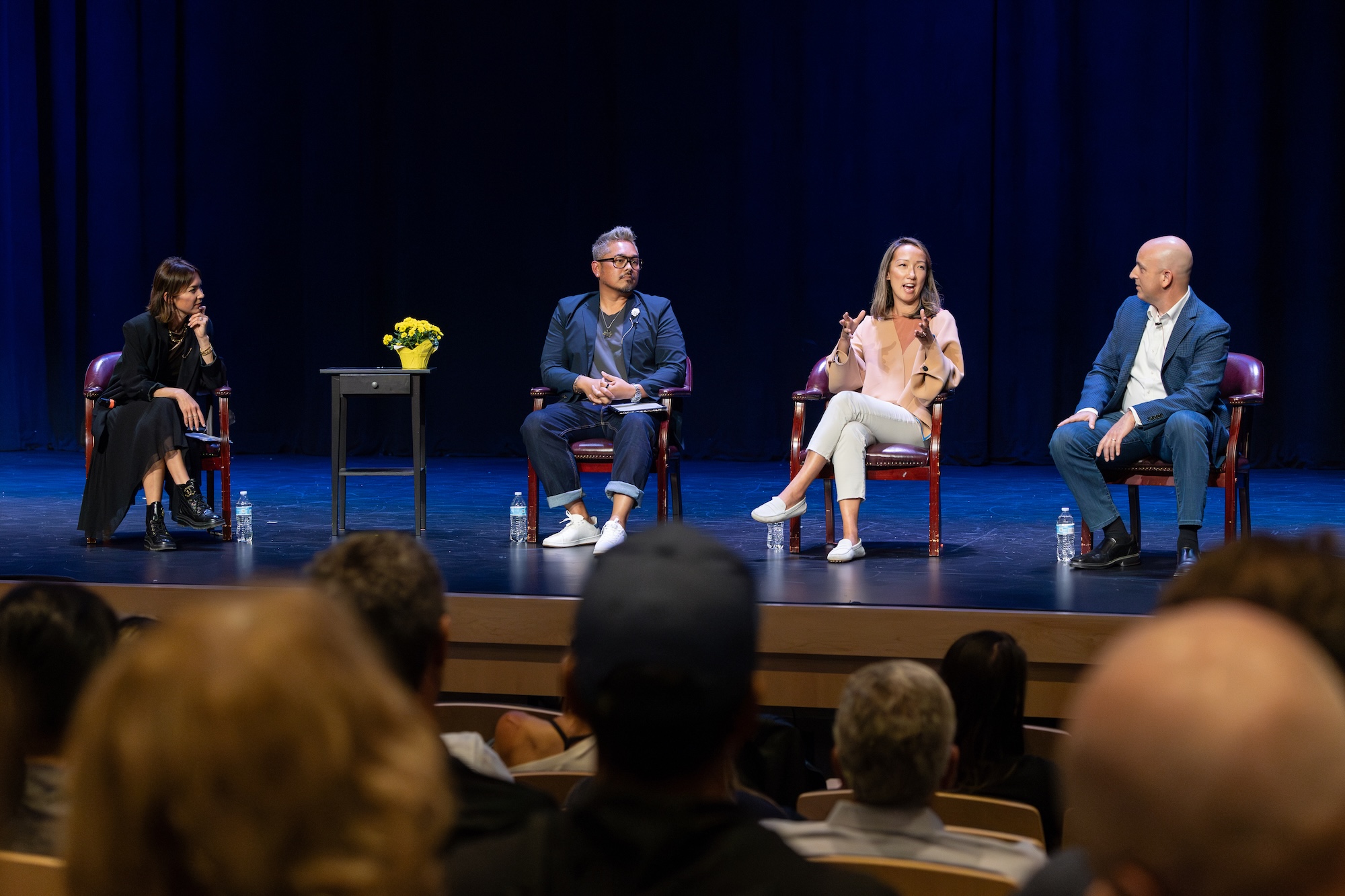
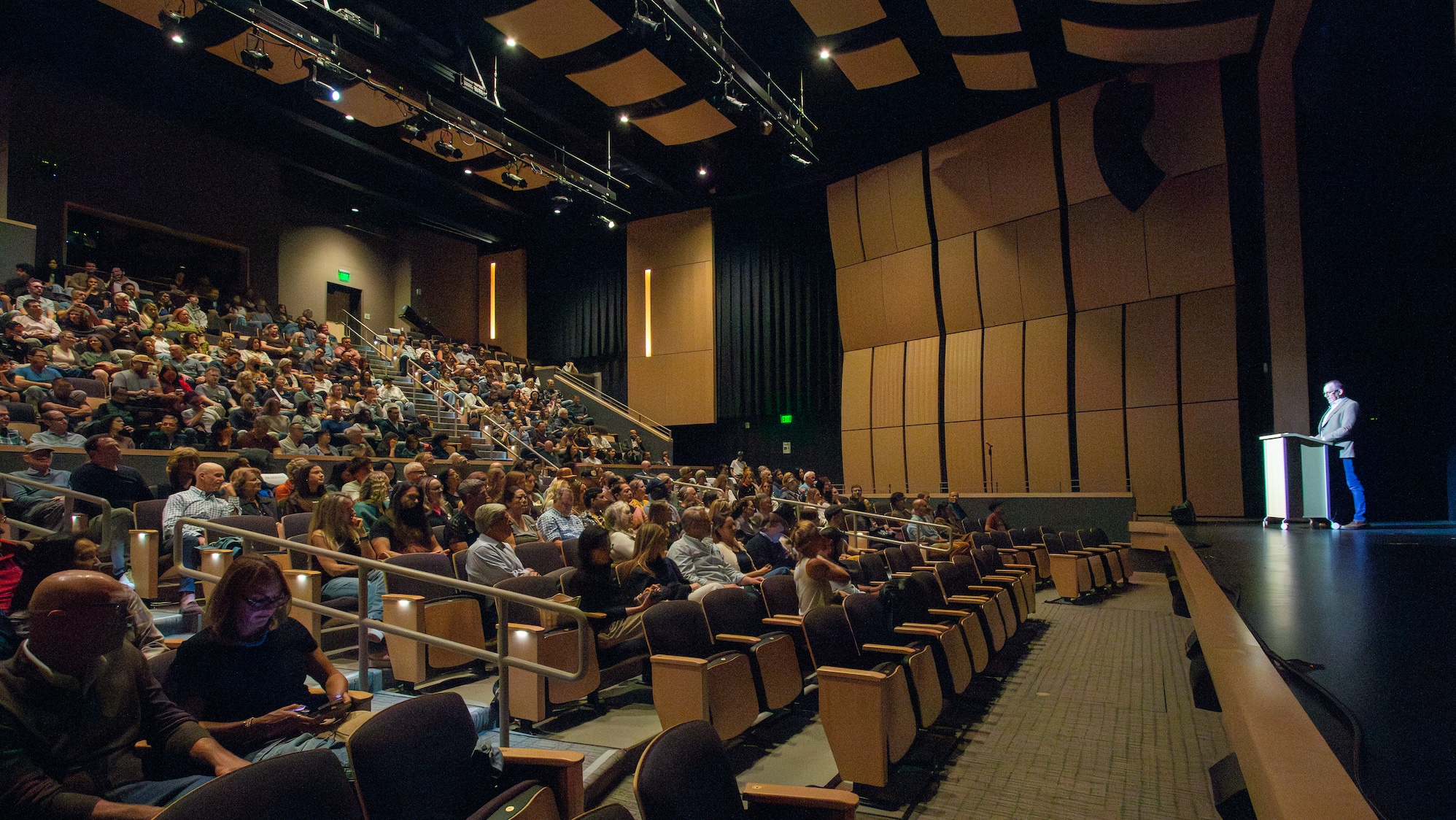
On Saturday evening a large crowd pressed into the Alan Harvey Theater for a panel discussion featuring AI experts from Microsoft, Meta, and Google, and for a screening of a controversial new film that shines a harsh light on the AI industry — “The AI Doc: or how I became an Apocoloptimist”.
The event was organized by Piedmont Boosters and supported by PEF, Piedmont Makers, Piedmont Parents Network, and PUSD. The screening and discussion came just in time to make a splash in the roiling national debate over artificial intelligence, its explosive growth, the trillion-dollar global investment frenzy behind it, and the opportunities and threats it will bring into our homes, our work life, and our relationships.
Just in the last few weeks alone the public has been left to make sense of a stream of alternately promising and terrifying developments of AI – including the solving of a long-standing mathematical puzzle, followed by reports of AI programs escaping their laboratory confinement and wreaking mischief on the internet.
And who can forget the sudden resignation of a high-level AI scientist whose parting words warned the world that the technology being developed in all those scores of digital boiler rooms between San Francisco and Beijing might just kill us all. And this week, after a meeting with top executives of Google, Anthropic, Open AI and other corporate leaders, the White House announced that it will not impose any federal regulations on the industry. The reason? Because doing so would harm economic growth, even though many of the executives doing the work have said they favor some kind of regulatory oversight.
Into these turbulent waters the event at Alan Harvey jumped in with a showing of “The AI Doc: How I became an Apocaloptomist”, by Canadian filmmakers Daniel Rohrer and Charlie Tyrell. Built largely on interviews conducted by the filmmakers with AI execs such as Sam Altman of Open AI, Dario Amodei of Anthropic, Demis Hassabis of Google Deepmind and others, the film presents two scenarios: first, a scathing vision of greedy, duplicitous, apathetic humanity squashed by superintelligent AI, not unlike envisioned in the Terminator Hollywood sci-fi films. Many of the interviews were shot as long as three years ago. Watching these AI execs on screen speak so directly, it’s difficult to imagine them mustering this same level of candor today as their companies grow closer to the gargantuan initial public offerings that will make them multi-billionaires.
The second half of the film explores an opposite scenario where human nurturing saves the day, we learn to cooperate, mitigate greed and the thirst for power, and build a new world our children can thrive in, one where digital machines serve us, not the other way around. Although this scenario may seem idealistic, the filmmakers hit the bullseye when they assert that the outcome of the AI race – apocalypse or apotheosis – is in our hands and will be what we make it.
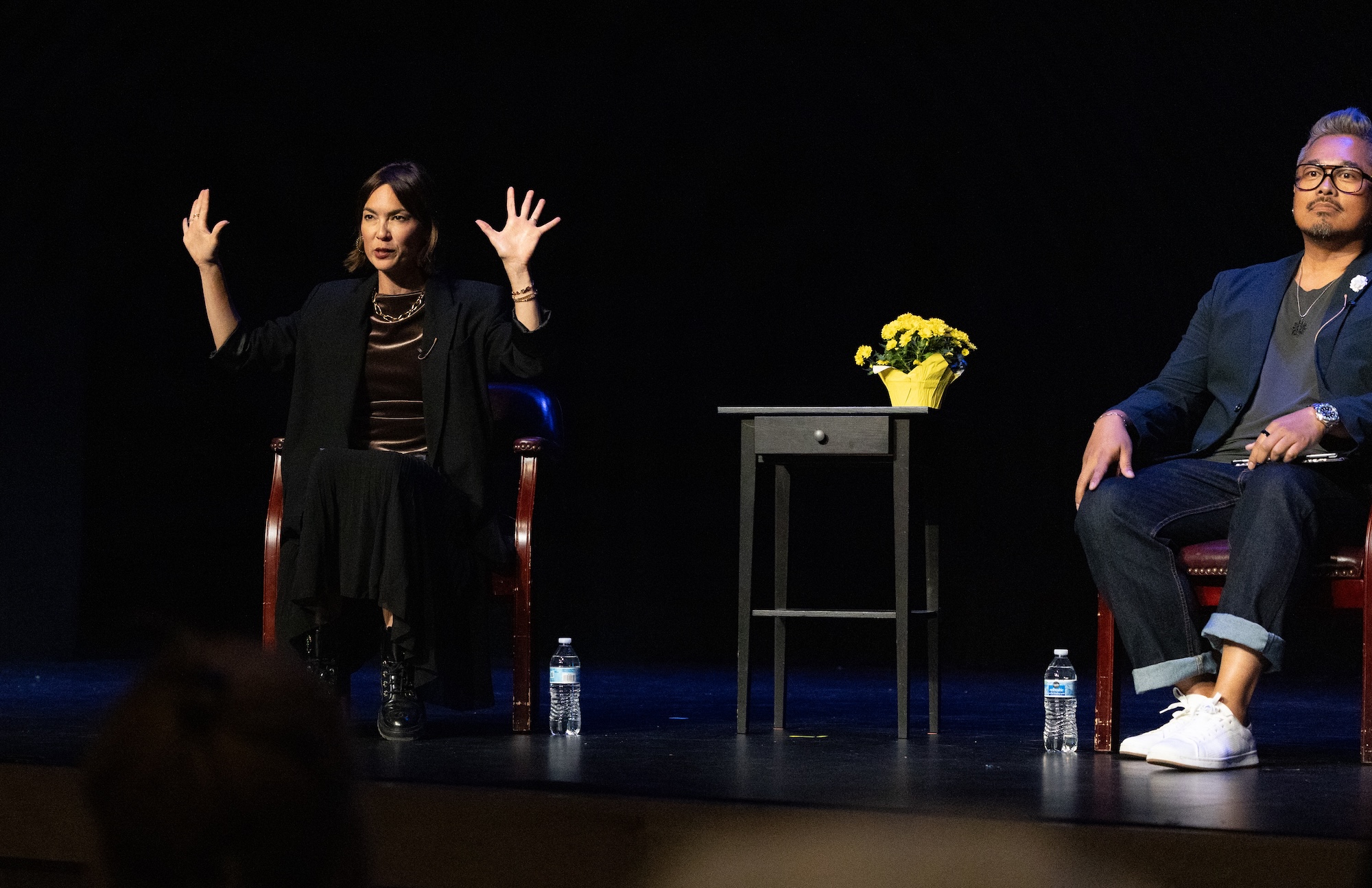
The panel discussion, with Microsoft’s Marco Casalaina, Meta and Salesforce veteran Clara Shih (now of the New Work Foundation), and Merve Lapus, VP of Common Sense Media, did their best to inject nuance into the discussion, but one of the most revealing moments of the evening came when moderator Emily Chang of Bloomberg News asked the audience to show their hands if the film left them “more worried or less worried.”
Scanning the house, the ‘more worrieds’ won the day.
Photos by Julie Reichle
This article was updated on October 4 to more accurately reflect the event sponsors and to correct a photo caption that misidentified Dave McMurtry at the podium.