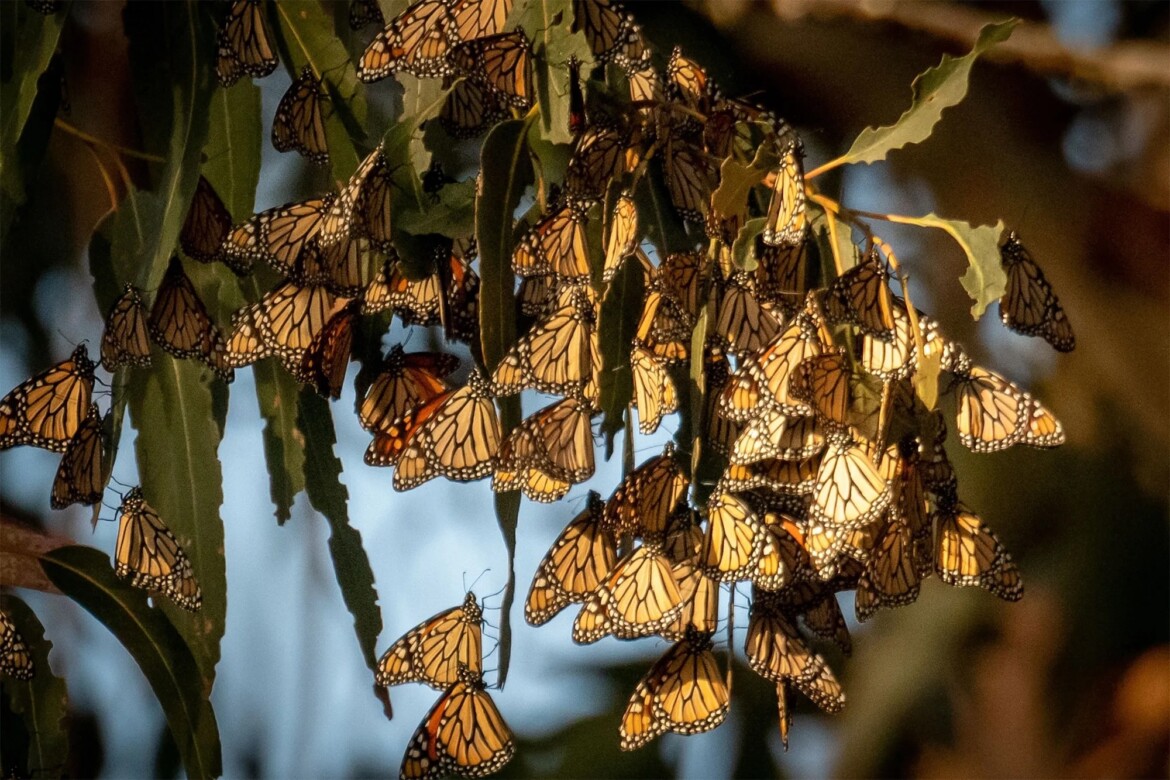
As western monarch butterflies prepare to retreat to groves along the California coast for the winter, conservationists are asking the public to report sightings ahead of the annual count.
The California State Parks Foundation, a nonprofit that advocates for preserving the state’s biodiversity, said that the data from these observations will help scientists understand where these butterflies are at different times of the year. The effort is part of California Biodiversity Day, which is celebrated across nine days from Sept. 5-13 and aims to promote activities that protect the state’s natural ecosystems.
“We invite Californians to help support monarch butterfly conservation by taking a few easy steps to report sightings,” said the foundation’s director of programs, Randy Widera, in a statement.
Sightings can be submitted through the free iNaturalist mobile app. Members of the public can take a photo of a western monarch butterfly or caterpillar and upload it to the app.
On California’s Central Coast, western monarch hotspots are found in many state parks, including Natural Bridges State Beach, Lighthouse Field State Beach, New Brighton State Beach, Point Lobos State Natural Reserve and Andrew Molera State Park.
Many western monarchs flock to groves in these parks as part of overwintering, the phase where these butterflies get rest and conserve energy ahead of the mating season and northward migration in the spring. These groves provide specific microclimates needed for western monarchs to survive, such as sunlight that is filtered through tree foliage, protection from wind and cold, and ample nectar sources, according to the foundation.
Data submitted from the public through iNaturalist will help inform scientists before the upcoming 30th annual Western Monarch Count, which involves surveys at overwintering sites throughout the fall and winter seasons.

These counts have tracked a trend of western monarch populations that have “plummeted” in recent decades due to factors like habitat loss, climate change, pesticides and disease, the foundation said. Millions of western monarchs used to come to the California coast for winter, but last year’s Western Monarch Count tracked just 12,260 butterflies across hundreds of sites.
“The western monarch butterfly is among the most beloved species in our state,” Widera said. “Californians can play a critical role in preserving our western monarch butterfly population by advocating for the protection of butterfly habitats and helping scientists track butterfly locations.”
A list of state parks where western monarchs fly for winter can be found on the California State Parks Foundation’s website.
The post Spotted a western monarch? Conservationists are asking public to report sightings appeared first on Local News Matters.