This story was originally published by EdSource. Sign up for their daily newsletter.
Top Takeaways
- Transitional kindergarten, also known as TK, was fully expanded statewide last school year.
- Families’ TK experiences still vary depending on their school.
- Challenges, from restroom access to child development training, continue in some classrooms.
One year after California made transitional kindergarten available to every 4-year-old, educators and early childhood experts say the new grade still looks different from one school to another.
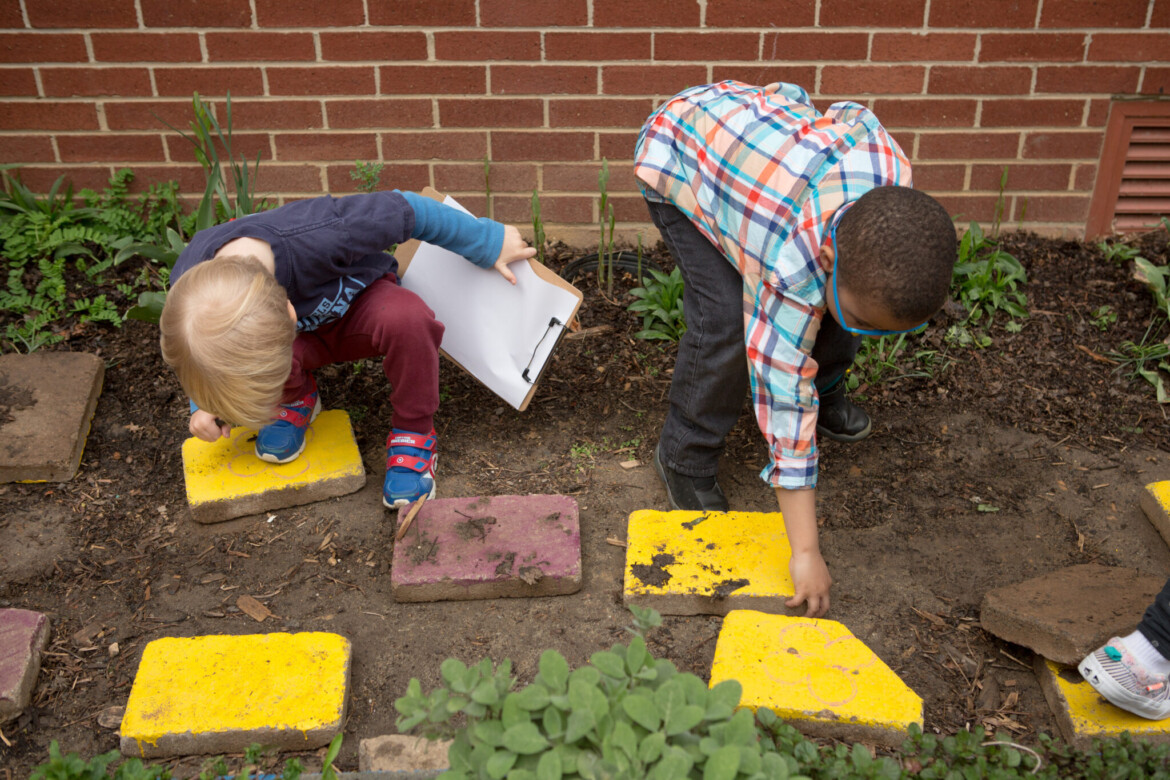
In some classrooms, children are learning through play with blocks, sand and other sensory items — the type of learning both experts and state regulations recommend for 4-year-olds. In others, it looks more like traditional kindergarten or first grade, with assigned seating and worksheets.
“Last year was a bit rough,” said Elyse Doerflinger, a Woodlake Unified teacher in the Central Valley who has taught TK since 2019. “Some districts seem to be more prepared for the rollout than others, and I think a big indicator of that is whether schools and districts planned for this expansion by understanding that TK, although often on an elementary campus, is a very different ballgame.”
California officials have celebrated providing TK to all. But access is only the first step. Educators and early childhood experts say the quality of the experience depends on a few key factors, such as teachers having specialized knowledge of early childhood development, schools building a bridge between preschool and elementary school, and educators understanding that play, exploration and creativity are central to how 4-year-olds learn.
The rollout continues in some districts
Planning for transitional kindergarten has been in the works since 2021 when the state Legislature dramatically expanded the program. The 2025-26 school year was the first in which the grade was expected to be available to every 4-year-old in the state. It was the same year the state’s TK spending reached about $3 billion in ongoing funds. The first significant investment was in 2021, with $1.2 billion to plan for the expansion, train staff and update facilities.
In some places, the rollout has been bumpy, and early childhood experts say it is not yet consistent from district to district.
Some teachers have shifted to teaching TK after years with older elementary students. “That’s where you see that discrepancy — they’re not fully understanding the developmentally appropriate practices within TK,” said Bernadette Zermeño, early learning curriculum designer with Great First Eight, a curriculum company.
Doerflinger herself moved into TK after five years of teaching first grade. She said one difference between districts is whether they have invested in early childhood expertise — either by hiring an early childhood director or providing early childhood development training to existing administrators.
Educators and early childhood experts are hopeful that California’s preschool-through-third-grade credential, approved in 2024, will address the shortage of teachers with specialized early childhood training. More than 500 of these credentials were issued last year, according to the state’s Commission on Teacher Credentialing.
There is a strong need for more qualified teachers, experts say. TK has driven enrollment of 4-year-olds in California’s publicly funded early childhood education in recent years. Over 208,000 children were enrolled in 2019–20, and more than 264,000 in 2024-25 — a 27% increase.
“More kids are benefiting,” said Patricia Lozano, executive director of the early education advocacy organization Early Edge. “There’s a huge effort to make this work, and there’s work to do, but it is a good start for our children.”
Two families’ experiences
For some families, TK has delivered the kind of developmentally appropriate transition to elementary school that California envisioned.
Dillon Vallenas’ youngest child, Noah, attended TK last year at Los Angeles Unified’s Germain Academy for Academic Achievement. Now in kindergarten, Noah is thriving, his father said.
“In this classroom, at that school, they were able to find a great balance between the play and the structure,” said Vallenas. His son’s classroom had desks but no assigned seating, and they had homework, but it was project based.
One project asked students to build something from recycled materials — Noah chose to make a windmill, and then presented it to the class.
“Showcasing it and having all the kids talk about it in class really helps them develop those communication skills but also instills confidence in the kids,” said Vallenas.
Carla Hinojosa’s child was also in TK last year and, while she noted he had wonderful teachers who emphasized play-based learning, it was a tough year.
“It was a very, very hard year for him,” said Hinojosa, who declined to share her child’s name because she works at the school he attends. “I wish we had just kept him in preschool for one more year.”
The challenge for a lot of districts in rolling out TK often comes down to operational issues. For example, there were sufficient adults in the Oakland Unified classroom where Hinojosa’s child attended TK. With 24 students, “it was just too many little bodies in one room,” Hinojosa said.
Families deserve to have access to TK, she said. “But I think the execution and the rollout could have been done a lot more thoughtfully and a lot slower.”
Inconsistency in approaches
Early childhood experts say the kind of positive TK experience Noah had is not yet consistent across California.
A free, regulated early childhood program looks “great on paper,” said Jorge Ramirez, a Pacific Oaks College early childhood professor. But the variation in how districts implement TK — which Ramirez hears about from his student teachers — concerns him. And, while the state has clearly outlined requirements to ensure consistency, there is currently no plan to evaluate TK implementation.
When administrators, teachers, or other staff do not understand where 4-year-olds are developmentally, Ramirez said, the consequences could extend beyond academic learning.
“I can also see the long-term effects of the lack of emotional awareness that contributes to your interpersonal relationships, to your social interactions, your pro-social behaviors,” said Ramirez, who has also been a preschool teacher and mentors student teachers.
There isn’t always a smooth transition or ability to collaborate between preschool — typically for 2- and 3-year-olds — and TK, he said. “All of us that want to see that change, want to work in collaboration with TK and kindergarten teachers,” he added.
What teachers need
Doerflinger, the Central Valley TK teacher, said she looks forward to seeing districts develop a shared understanding of what 4-year-olds need to learn and how they learn best.
That means more than providing age-appropriate facilities, such as restroom facilities that a small child can use — with appropriately sized stalls, door handles and sinks.
It also includes rethinking the importance of play and giving teachers the resources they need, including Play-Doh, kinetic sand and jumbo crayons “because that’s what’s more appropriate for smaller hands,” she said.
Play, exploration and creativity are “the foundation for this age group,” said Doerflinger. “You’re not going to get them to sit on a carpet and talk at them. They need to talk to you and get excited and explore things. That’s, I think, my favorite part about this age in this grade level.”

This story was originally published by EdSource.