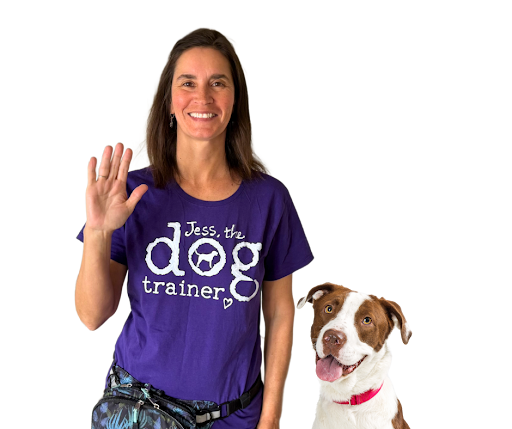
Piedmont is a city that loves its dogs. This is one in an occasional series of Q&As about dog training and behavior featuring local trainer Jess Rollins.
Q: I just got a new dog. What should I teach first? Sit? Shake? Stay? I want to get off to a good start, but I’m not sure where to begin.
When we think about teaching dogs tricks, we tend to think of the fun stuff: shake, roll over, speak. But the first things you teach your dog can have a much bigger impact on everyday life.
That’s because your dog is learning more than individual commands. They’re learning how to learn from you — what you like, what you don’t like, and what works to get your attention.
And those first lessons tend to become the strongest. They can also become the behaviors your dog uses to “beg” for what they want (shake paw can turn into scratching your leg for attention). So choose carefully!
Teach your dog what “yes” means
I use the word “treat” as a reward marker. When my dog does something I like, I say “treat!” right away and then give them a food treat.
With repetition, your dog starts to understand: That was right!
I also use “Eh-eh” when my dog does something I don’t want. It doesn’t mean “bad dog.” It simply means, “Not that. Try something else.”
The key is consistency. If jumping gets attention sometimes, but sitting gets attention at other times, your dog has a much harder time figuring out what you want.
Choose your first lessons carefully
Sit is one of my favorites because it can become your dog’s way of asking for things. Want dinner? Sit. Want the door opened? Sit. Want attention? Sit. Want to say hello? Sit.
Eventually, your dog may start walking over and sitting when they want something instead of jumping, pawing, or barking. That’s a pretty nice way to beg!
Place teaches your dog where to go when you need them to settle. It can be incredibly useful when you’re cooking, eating, working, or answering the door.
And come is one of the most important things you can teach. A dog who happily comes when called can have more freedom while also being safer.

Your dog is always learning
Your dog isn’t only learning during training sessions. They’re learning from you all day long.
If barking makes the door open, barking works. If jumping gets attention, jumping works. If sitting consistently gets your dog what they want, sitting becomes their go-to request.
That’s why those first lessons matter so much. You’re teaching your dog a way to communicate with you that will carry over into everything else you do together.
When to call in backup
Teaching these first behaviors can sound simple, but getting them reliable around distractions and excitement is another story. And if your dog has already developed habits you’d rather not encourage, it can be difficult to know what to reward and what to do differently.
Whether you’re starting with a new puppy or an older dog who needs a fresh start, getting some guidance early can save a lot of frustration later.
Jess Rollins offers private, in-home dog training in the local area. To schedule a free discovery call, visit GuidanceDogTraining.com/Discovery or text 510-545-3889.