A queer indie festival, a teenage Anthony Bourdain and Jane Schoenbrun’s new horror movie are on today’s slate.
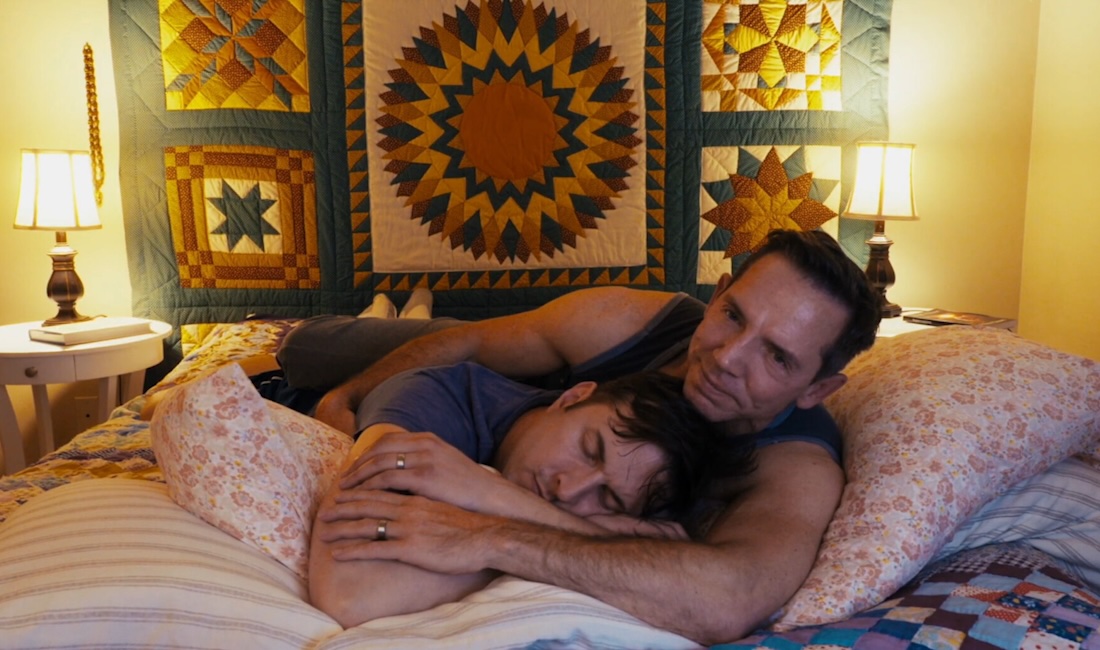
The sixth annual San Francisco Queer Film Festival, presenting bold, unconventional and under-the-radar cinema, takes place Friday through Sunday at the Roxie Theater. More than 50 films made by LGBTQ+ artists screen. Opening night begins with “Mean Goals,” a short film about a gay Latino who joins a queer soccer team to bond with his ailing sports-loving father. Friday’s feature attraction is “Sweet Nothing,” Bay Area filmmaker-performer Robby Kendall’s comedy about finding his drag persona. Saturday’s features are “Velvet Vision,” Bart Everly’s documentary about photographer-director James Bidgood; and “Snow Falling on Pumpkins,” Jeff London’s drama about a 43-year-old gay man with early-onset Alzheimer’s.
A special Saturday offering is “Surviving Voices,” Jorg Fockele’s 35-minute documentary about the compassionate people who, during the early days of the AIDS crisis, cared for dying loved ones who were shunned by society. A panel discussion moderated by Sister Roma follows the screening. Sunday’s features are “In This Moment,” Mike Talplacido’s drama about a gay marriage broken by a betrayal; and “Sunshine Girls,” Madeleine Hicks’ sci-fi comedy about a woman who must choose between motherhood and medically induced photosynthesis. Also look for short-film programs on Saturday and Sunday.
Visit sfqueerfilmfest.com for more information.

“Tony,” directed and cowritten by Matt Johnson (“Blackberry”), is a lightweight but engaging origin story presenting a formative summer in the life of Anthony Bourdain, the celebrity chef, author, and TV host who died in 2018. The 1975-set dramedy is currently showing in Bay Area theaters.
Johnson’s fictionalized adaptation of Boudain’s memoir “Kitchen Confidential” depicts Bourdain (played by Dominic Sessa), aka Tony, as a brash, directionless 19-year-old who uses hifalutin language to impress people and lies his way into one opportunity after another. When his application for a writing fellowship is rejected, Tony impulsively heads from New Jersey to Provincetown on Cape Cod to pursue his high-school crush, Nancy (Emilia Jones). An awakening begins when he gets a job in a seafood restaurant’s rowdy kitchen, hired by the eatery’s tough-loving owner, who’s called Chef (Antonio Banderas). Under Chef’s wing, Tony becomes Anthony and learns to cook and appreciate food. Another notable character is Sal (Leo Woodall), a hotheaded oyster shucker and druggie who becomes Tony’s sort-of pal.
“Tony” isn’t particularly penetrating or insightful; Johnson and cowriters gloss over the protagonist’s darker aspects, the romance unfolds blandly and predictably, and the redemption-filled ending is too happy for credibility. Still, the movie is an enjoyable coming-of-age tale, with wonderful performances. Sporting lots of curly 1970s hair, Sessa conveys in Tony both teenage restlessness and hints of Tony’s future self. Banderas’ Chef, a fabricated character who becomes Tony’s mentor, is resonantly warm and soulful; the pair’s mentoring scenes are the highlight of the movie.

One of the most exciting filmmakers working in horror cinema, Jane Schoenbrun (“I Saw the TV Glow”) makes movies that operate with a logic all their own. The results can be hazy or puzzling but also fascinating. That’s again the case with Schoenbrun’s excitingly original “Teenage Sex and Death at Camp Miasma,” currently in Bay Area theaters.
Kris (Hannah Einbinder), a 29-year-old Sundance darling, has been tapped to direct an “elevated, aka woke” reboot of the “Camp Miasma” franchise, a 1980s slasher series featuring a transphobically depicted gender-fluid spear-wielding monster called Little Death (Jack Haven). That moniker, non-coincidentally, is a French term for orgasm. Since childhood, Kris has been obsessed with the franchise — and with Billy, the actress who at age 24 (played by Amanda Fix) starred in the first picture. Aching to cast Billy, now a 60ish recluse (played by Gillian Anderson), in her movie, Kris visits Billy, who lives at the very site where “Miasma” was filmed. An erotic charge occurs between the academic-minded Kris and the sex-positive Billy. Both note how the “Miasma” films deeply affected them — Kris as a child watching the movies; and Billy as a young actress traumatized when filming them.
As in Schoenbrun’s previous films, fiction becomes reality. Ambiguity is an ingredient in the work of Schoenbrun, who isn’t the most accessible filmmaker, and the results will frustrate some. Yet the movie impresses as a grade-A psychological-horror picture and a blood-soaked lesbian love story. It also is a consideration of the slasher genre by Schoenbrun, who identifies as trans and nonbinary and, throughout the film, addresses the genre’s hateful stereotypes and their emotional impact. Einbinder, funny as the inhibited, awkward Kris, and Anderson, whose Billy works magic with lines like “Do you like dipping sauce?” supply entertaining chemistry.
The Noe Valley Girls Film Festival’s 11th edition is at 4 p.m. Saturday at the Noe Valley Ministry in San Francisco. Designed to inspire girls to make movies and to celebrate the Noe Valley neighborhood, the event includes screenings of short works made by young female filmmakers, plus a guest speaker. Visit nvgff.com for more information.
In celebration of the publication of the English-language edition of “Elisabeth,” a novel written by Eric Rohmer under a pseudonym in his pre-filmmaking period, the Roxie Theater will screen “My Night at Maud’s” (1969), the third film in Rohmer’s “Six Moral Tales” series, at 6 p.m. Tuesday. Visit roxie.com for more information.
The post Movies: SF Queer film fest, ‘Tony,’ ‘Teenage Sex and Death at Camp Miasma,’ Noe Valley Girls festival appeared first on Local News Matters.