A film about modern education, a samurai whodunit, a Mexican American coming-of-age tale, and a Jewish summer-camp comedy are opening in the Bay Area this week.
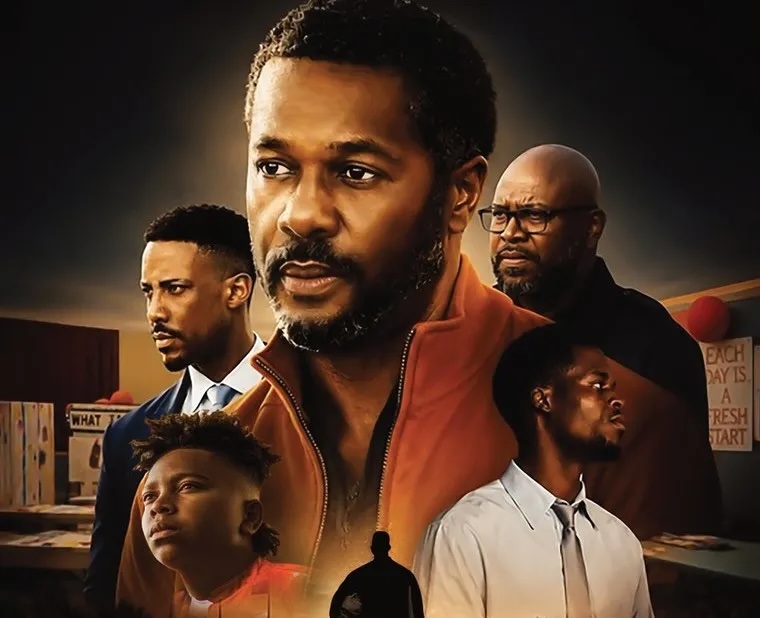
Writer-director Stacie McClam, a Bay Area educator-turned-filmmaker, premieres her film “Mr. Advocate” at a red-carpet screening at 2:30 p.m. Saturday at Cinemark Century Hilltop in Richmond. The movie is about a teacher (played by Rodney Damon Collins) new to an urban elementary school that’s focused on test preparation. When the teacher bends the rules by creating an Artificial Intelligence Show for students, the principal tries to shut it down, creating conflict between students, parents and the school administration. Following the 50-ish minute feature, which has the tag line “I didn’t come here to survive. I came to teach,” the cast and crew will be on hand for a question-and-answer session. Tickets to the black-tie optional event are $25 at mradvocatefilm.com.

Japanese genre chameleon Kiyoshi Kurosawa (“Cure,” “Cloud,” “Tokyo Sonata”) combines a jidaigeki drama with a whodunit in “The Samurai and the Prisoner,” a classically styled period piece adapted from the novel by Honobu Yonezawa and distinguished by its unconventional protagonist and philosophical quality. It opens at the Roxie Theater on Friday. Murashige Araki (Masahiro Motoki), is a fact-based ahead-of-his-time pacifistic samurai warlord and a former retainer of the ruthless warlord Nobunaga Oda (Bando Shingo). It is 1578, and Murashige, who has turned against Oda, has barricaded himself in his own castle, surrounded by Oda’s forces and supported by his devout wife (Yuriko Yoshitaka) and loyal generals. Enter Kanbei Kuroda (Masaki Suda), an envoy sent by Oda to pressure Murashige to surrender. Rather than take the standard samurai course of action — and decapitate Kanbei — Murashige, for varied reasons that include a distaste for killing, imprisons him in the dungeon. When four baffling crimes — involving, among other weirdness, a disfigured decapitated head — occur, Murashige, rejecting the argument that “divine judgment” has been at play, turns to the untrustworthy but brilliant Kanbei for detective work. The plot also includes rival clans, lots of scheming, a Buddhist battle cry and a treasured tea urn. Kurosawa’s unhurried storytelling and restrained tone don’t produce an overtly compelling movie. Action-wise, political and ideological conflicts outweigh the battlefield. But with its deftly crafted narrative, intelligently talky screenplay and complex character dynamics, the film emerges as an absorbing and multifaceted consideration of war, violence and decency. Imposing and nuanced in the role of the dread-plagued, complicated Murashige, who would rather be making tea than devising war strategies, Motoki gives the film a fascinating hero. Suda, star of Kurosawa’s “Cloud,” makes the mystery-solving Kanbei himself an intriguing mystery.

“Olmo,” written and directed by Fernando Eimbcke (“Duck Season”) and opening at the Roxie Theater Friday, is a coming-of-age dramedy noteworthy for its realistic, thoughtful portrayal of a family dealing with illness. Mischievous 14-year-old Olmo (Aivan Uttapa) lives with his working-class Mexican American family in 1970s New Mexico. Olmo’s father, Nestor (Gustavo Sanchez Parra) has multiple sclerosis and receives full-time care from Olmo’s mother, Cecilia (Andrea Suarez Paz); Olmo’s slightly older sister, Ana (Rosa Armendariz); and Olmo himself. When Cecilia leaves to work a double waitressing shift — to help pay the family’s overdue rent — Ana, having already made roller-rink plans, refuses to stay home and take care of her dad. The responsibility falls to Olmo, who, too, balks: He has been invited to a party by Nina (Melanie Frometa), his neighbor and crush. Olmo makes quick arrangements for Nestor’s care, purloins his mother’s car, and with his friend Miguel (Diego Olmedo), drives off. Snafus occur, of course, causing Olmo to realize the importance of family. While the storyline is predictable, there is much to experience between the plot points, from family members dragging Nestor’s urine-soaked mattress outside to Olmo and Miguel trying to look cool and performing “Saturday Night Fever” dance moves. In a sadder scene, Nestor, repairing a plot-pivotal stereo, tries to share his electronics knowledge with Olmo, who is too selfish to listen. “Olmo” is a warm, compassionate, funny, serious, and appealingly acted movie. Parra, giving Nestor humanity and dignity, is the standout among the solid cast. Olmedo, as supportive Miguel, almost steals the show.

“The Floaters,” filmmaker Rachel Israel’s Jewish summer-camp comedy, screens at Rialto Cinemas Sebastopol Tuesday and opens at the Opera Plaza Cinema on Friday (visit landmarktheatres.com to verify). Jackie Tohn stars as Nomi, an out-of-work rock singer who accepts a job offer from her friend Mara (Sarah Podemski) at Camp Daveed. Nomi is instructed to oversee the “floaters” — misfit teens who didn’t sign up for any activities — and stage the camp’s umpteenth production of “Fiddler on the Roof.” Instead, Nomi inspires the kids to create something reflective of their own spirit. Expect audaciously unorthodox results.
Yerba Buena Center for the Arts is hosting a 12-week film series titled “Through an Open Window,” inspired by the center’s exhibition “GaHee Park: Behind the Curtain,” featuring work by the Montreal-based Korean painter who explores sexuality, mortality, fantasy, identity and alienation through a surrealist lens. Screenings are at 2 p.m. on Saturdays. Movies by renowned directors screen, beginning with a Hitchcock classic and ending with a Powell and Pressburger masterwork. Here’s the schedule:
• Aug. 15: “Rear Window” (1954), Alfred Hitchcock
• Aug. 22: “And Life Goes On” (1992), Abbas Kiarostami
• Aug. 29: “Goodbye, Dragon Inn” (2003), Tsai Ming-liang
• Sept. 5: “Querelle” (1982), Rainer Werner Fassbinder
• Sept. 12: “Pandora and the Flying Dutchman” (1951), Albert Lewin
• Sept. 19: “Trouble in Paradise” (1932), Ernst Lubitsch
• Sept. 26: “Yourself and Yours” (2016), Hong Sang-soo
• Oct. 3: “A New Leaf” (1971), Elaine May
• Oct. 10: “The Music Room” (1958), Satyajit Ray
• Oct. 17: “The Ceremony” (1971), Nagisa Oshima
• Oct. 24: “Silent Shorts Program,” multiple directors • Oct. 31: “The Red Shoes” (1948), Michael Powell and Emeric Pressburger
Visit YBCA.org for more information.
Bay Area filmmakers and life partners Nathaniel Dorsky and Jerome Hiler, known for their poetic and experimental cinema, present four programs of their films — including Dorsky’s “Hours for Jerome, Parts 1 & 2,” “Alaya,” and “Arboretum Cycle” and Hiler’s “Words of Mercury” and “Careless Passage” — during a 16-day series at Berkeley Art Museum and Pacific Film Archive beginning Friday. Visit bampfa.org.
The post Movies: ‘Mr. Advocate,’ ‘Samurai and the Prisoner,’ ‘Olmo,’ ‘Floaters,’ GaHee Park-inspired films at YBCA, Dorksky/Hiler selections appeared first on Local News Matters.