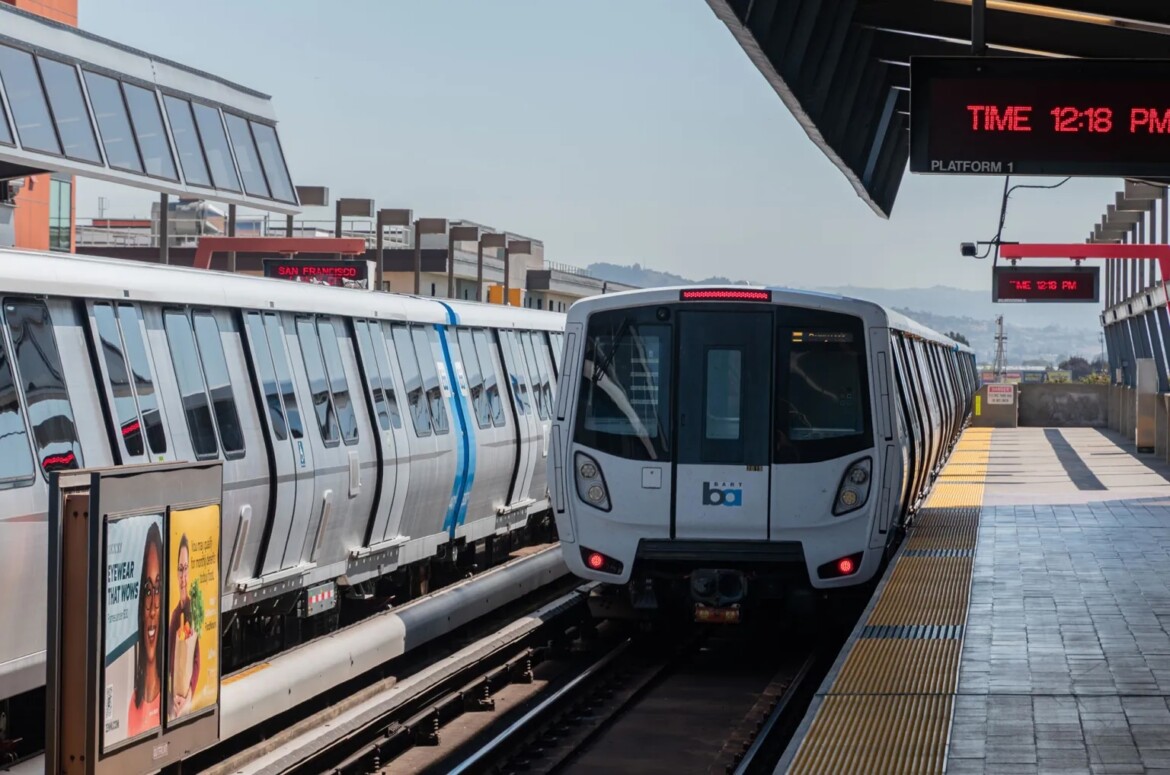
BART trains are filling up again, and people are excited about it.
Officials at BART announced Thursday that June was the transit agency’s best month for ridership since the COVID-19 pandemic-induced slowdown cratered passenger numbers, and BART credited major sporting and community events with the dramatic rise.
Ridership rose by 18.6% in June as compared to the same period last year. The month marked the end of the agency’s 2025-2026 fiscal year, which outperformed the previous year by 13%.
BART credits the steady rise in ridership recovery, now at about 56% of 2019 levels, to the agency’s “growing role beyond the traditional commute.”

People have been regularly using trains to travel to major sporting events, such as the 2026 FIFA World Cup, and large cultural celebrations like San Francisco Pride.
Several post-pandemic records were also broken. June saw the highest single ridership day, the highest average weekday and weekend ridership, and all-time highs for certain stations.
Chris Filippi, a spokesperson with BART, said the positive trend is why the agency has decided to add capacity during peak commute hours by bringing back 10-car trains — which had not been regularly used since the start of the pandemic.
“It’s very exciting to see not just the increase in June but what is now two consecutive years of double-digit ridership growth,” said Filippi.
While ridership is showing positive signs of recovery, the transit agency warned fare revenue remains insufficient to sustain regular BART operations. Since the depletion of pandemic-related emergency federal funds, the agency and others continue to face a budget deficit unless new sources of revenue are found.
The Connect Bay Area Act, a regional measure proposing a sales tax in five Bay Area counties, received enough signatures to appear on the ballot in this year’s November election. The measure will introduce a sales tax if approved by voters in Alameda, Contra Costa, San Francisco, San Mateo and Santa Clara counties.
Proponents have said it will help create a robust new source of revenue that will help reduce the likelihood of drastic cuts to service and operations.
The post BART records highest ridership month since pandemic-induced low appeared first on Local News Matters.