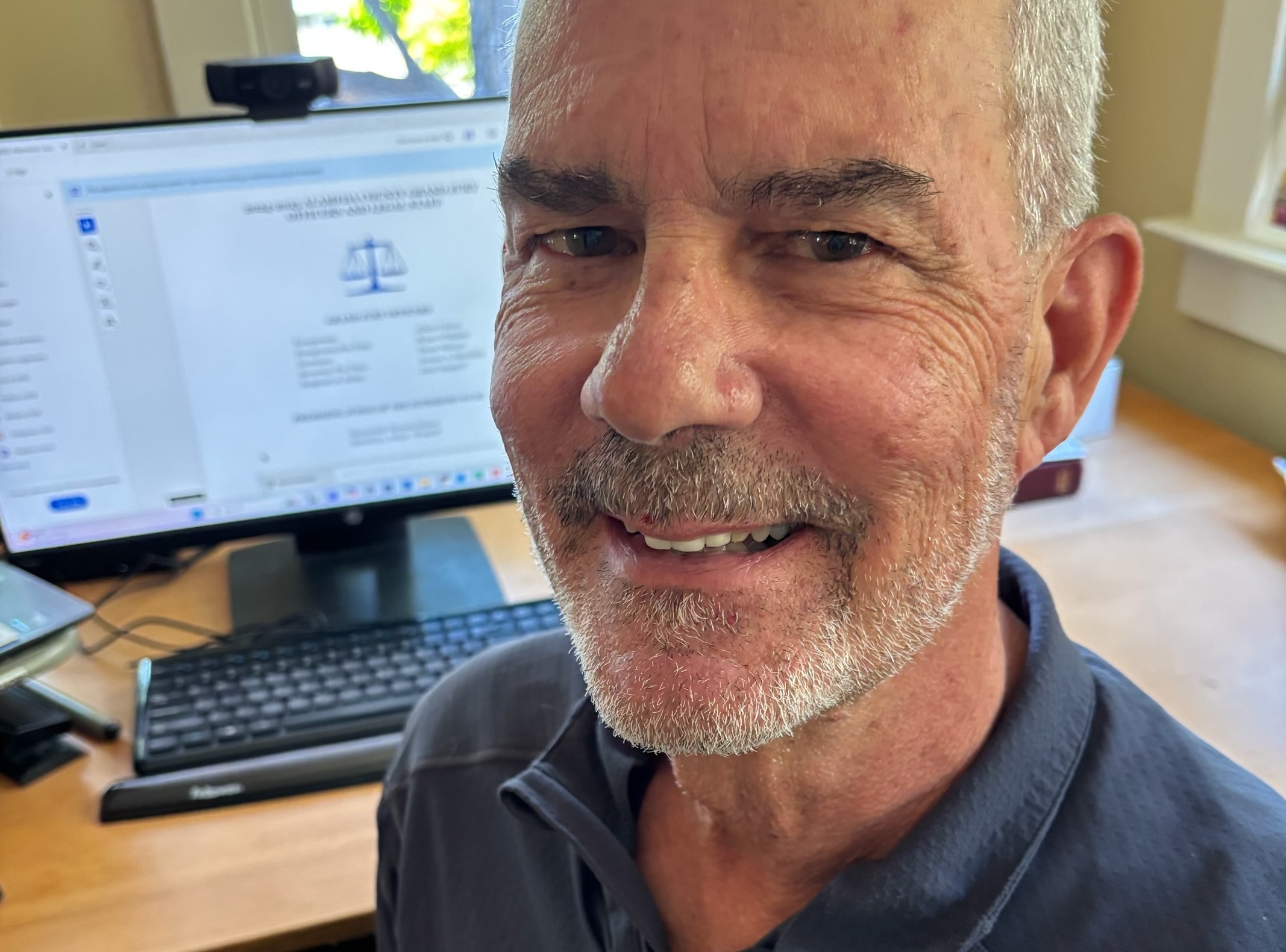
As a senior nonprofit executive with broad experience in civic causes, Rick Smith has long enjoyed a close-up view of new and old “civic technologies” — a phrase used to describe effective innovations in communications and other methods used by citizens and governments to solve problems together.
So it caught our attention when Smith, currently foreperson of Alameda County’s Civil Grand Jury, talked about the value of civil grand juries, a decidedly old civic technology, and why they can be uniquely effective in helping citizens and local government tackle thorny policy problems. Says Smith, “I’ve spent my whole career working on public policy issues. This work on the civil grand jury has been one of the most interesting and fulfilling.”
What is a civil grand jury and who gets to sit on it? Civil grand juries are made up of ordinary citizens and are empowered through the California state Constitution to assemble and conduct investigations in a watchdog capacity over local and county governments. Anyone can apply to join a civil grand jury. The main requirements are to be a citizen of that county, and to be over the age of 18. Potential jurors are vetted by the Superior Court and 19 are selected to serve.
Like criminal grand juries, the workings of a civil grand jury are secret. This is needed to help ensure the independence of the jury in its investigations of local government accountability. Some of the issues a jury may investigate include whether public funds are properly spent, that government agencies operate transparently, and if government is working efficiently. To achieve these goals, civil grand juries are given the extraordinary power of subpoena — allowing them to compel testimony from anyone or any source vital to the jury’s inquiries. A jury can only investigate a matter suggested by a citizen of the county.
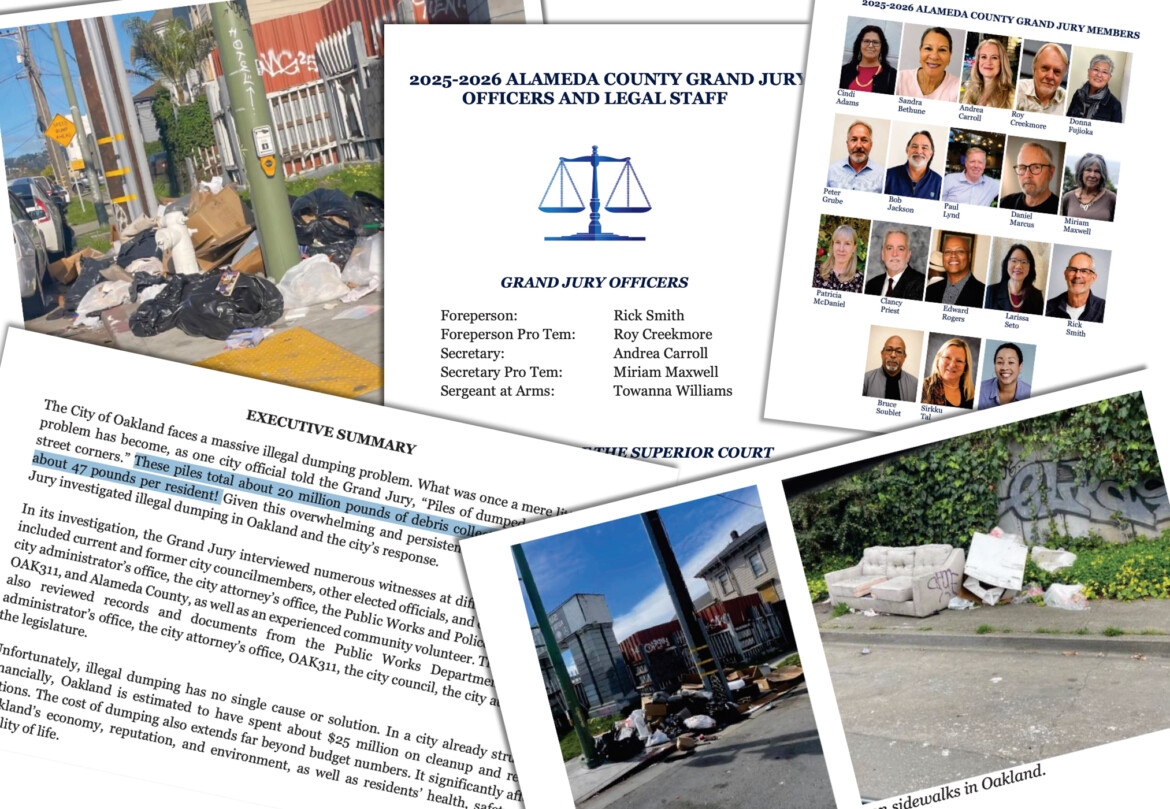
Annually, each jury selects the subjects it wishes to investigate, compiles its information, and then publishes its report on the civil grand jury website. The purpose of the report is to present evidence to the public that will ideally move the issue under investigation higher up on the public agenda, and to reveal pertinent failures or misdirection on the part of the public agencies responsible. Highest up on the 2025-2026 report is an examination of a problem that has bedeviled Oakland for years — illegal dumping of trash and waste in public places. As the report advises: “These piles total about 20 million pounds of debris collected by the city, or about 47 pounds per resident!” The report goes on to say: “Illegal dumping also has significant economic, reputational, environmental, health, and safety impacts on Oakland. It is a quality-of-life issue, with piles of waste indicating decay, blight, and community decline. It is also a public safety issue, as other illegal activity often follows when an area appears to be in decline and unlawful conduct is tolerated.”
Say Rick Smith; “I really encourage everyone to read the full report. And I especially encourage people interested to apply for a civil grand jury spot if you are civic-minded. This work raises the visibility of issues that are important to us all, and it that can make a difference.”
Editor’s Note: Smith serves on The Piedmont Exedra’s board of directors.