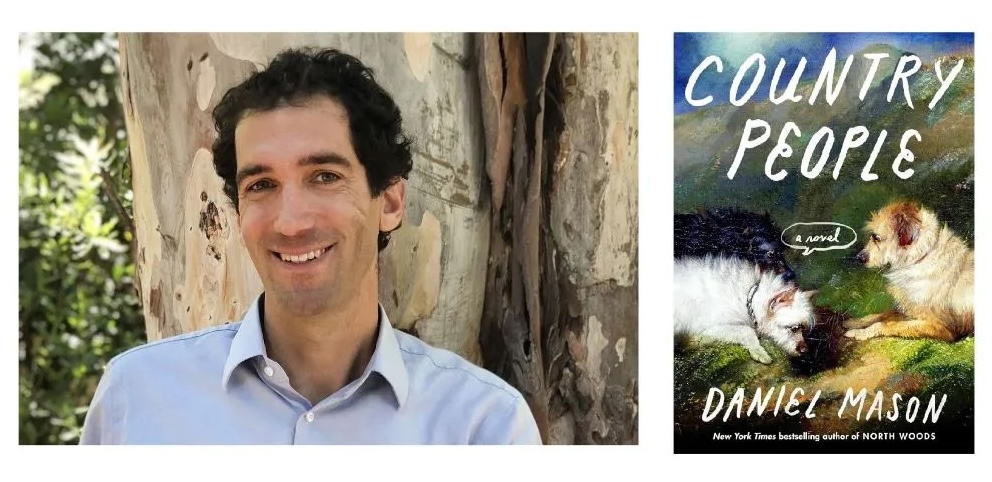
Bay Area writer Daniel Mason, the Pulitzer-Prize nominated author of “North Woods” and “The Registry of My Passage Upon the Earth,” has a sixth book coming out on July 7, and though the previous five were distinct in their breadth and focus, “Country People” (Random House, $26, 320 pages) is a true departure into another realm. As his publisher Andy Ward notes in a foreword, the new novel is the first with a contemporary setting, although it dives deep into folkloric fantasy, following the adventures of an accomplished storyteller and procrastinating Ph.D. candidate as he moves with his wife, two kids and Giuseppe the dog from California to rural Vermont for her prestigious university appointment. Apart from the setting, the novel is uproaringly, if gently, humorous and suffused with such accurately perceived observations of human (and canine!) behavior that the author’s other calling in life is immediately summoned to mind.
Mason, who published his first novel, 1972’s “The Piano Tuner,” while he was in medical school, is a board-certified psychiatrist with a degree from University of California, San Francisco followed by a residency at Stanford University, where he is now an associate professor with a clinical practice who developed and teaches a class on “The Literature of Psychosis.” So perhaps it should come as no surprise that the characters in his new novel– affable, distractible Miles Krzelewski; his brilliant and supportive wife Kate and their preteen children Olive and Wesley – are so tenderly rendered that their unique characteristics are instantly recognizable. Even Giuseppe the truffle-snuffing dog has a strong personality.
After winning the California Book Award for fiction for “A Registry of My Passage Upon the Earth” in 2021, Mason gave an interview to the Stanford Medicine News Center in which he acknowledged that the disciplines of psychiatry and writing have cross-resonated with him.” I often find that fiction informs my medicine as much as the other way around,” he told reporter Tracie White. “Whether thinking about patients’ stories in terms of narrative structures, or trying to pay closer attention to a person’s material world or enter a character’s inner world, these are all essential elements of fiction that also make up so much of a clinical encounter.”
If you’d like to ask him more about the interplay of his two careers, attend an upcoming book signing for “Country People” at 7 p.m. July 22 at Kepler’s Books in Menlo Park and/or 7 p.m. July 23 at Bookshop Santa Cruz.
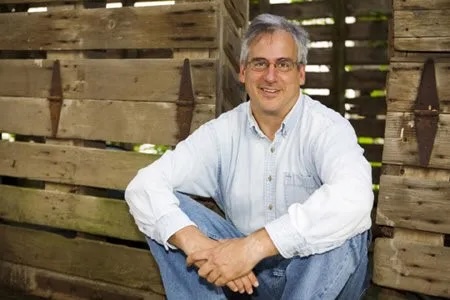
Another physician author with Bay Area connections, Ethan Canin, a San Francisco University High School graduate who earned his M.D. at Harvard and served his residency at UCSF, co-founded the San Francisco Writers Grotto and pursued both writing and medicine for several years before joining the faculty at the Iowa Writers Workshop in 1995. In an interview with the California Commonwealth Club’s Barbara Lane when his 2001 novel “Carry Me Across the Water” came out, Canin emphasized the unique access to a wide range of humanity as key to the interplay between medicine and literature.
“In medicine, you have the privilege of being exposed to the way most of the world lives; at least I did during my residency at a big city hospital like San Francisco General,” he said. “You see what prostitutes’ lives are like, the homeless guys and all kinds of other people who tell you their secrets. They tell you things they don’t tell anybody else and allow you to touch them on the first meeting. I can see why there have been a number of doctors who have also been interested in writing. It’s the same interest in people and hearing the people’s stories.”
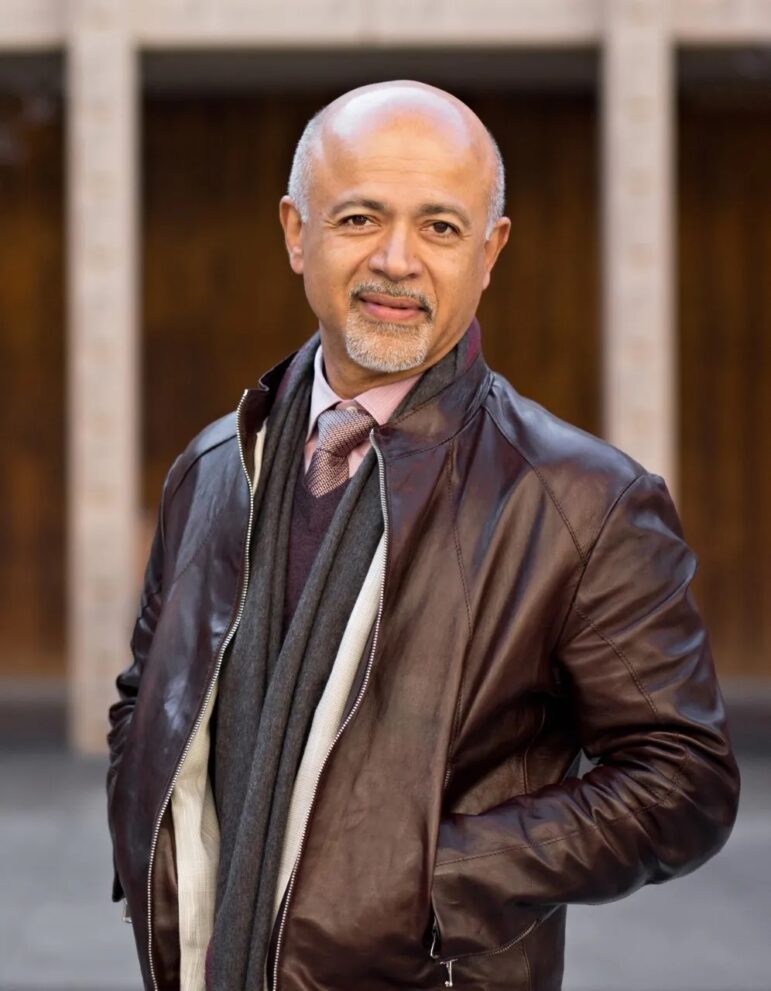
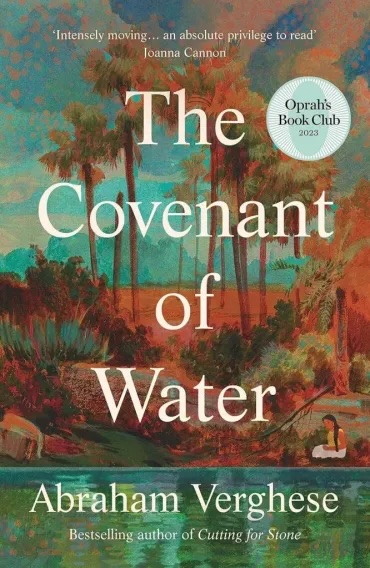
The Bay Area has been blessed with at least two other very talented authors, high-profile novelists who either are or have been practicing physicians. Fremont’s Khaled Hosseini was an internist at Kaiser Permanente when he began writing his breakout novel, “The Kite Runner.” Its runaway success in 2003 — 100 weeks on the New York Times best-seller list and more than 30 million copies sold worldwide — encouraged him to pursue the literary path exclusively, confessing that he considered his decade in medicine “an arranged marriage” and writing his true passion. And Stanford University professor Abraham Verghese is an infectious disease specialist also board-certified in internal and pulmonary medicine who has incorporated eye-popping amounts of medical detail (some of it gruesome!) in his best-selling novels “Cutting for Stone” and “The Covenant of Water.”
Contrast Hosseini’s comments about his “arranged marriage” to what famed playwright and short-story writer Anton Chekhov had to say about the active practice of medicine that got him through school in Moscow and supporting various members of his family until his literary efforts started bringing in fame and money. “Medicine is my lawful wife,” he said, “and literature is my mistress.” Chekhov credited his medical background for honing his powers of observation as a writer. Never a specialist, he treated many of his patients for free, and his own battle with tuberculosis, which killed him at age 44 in 1904, deepened his empathy for his characters.
The phenomenon of the physician as author has a long history, stretching at least as far back as mid-16th-century France, when Francois Rabelais, writing the comic masterpieces the five “Gargantua and Pantagruel” novels, was more known in his own time for being an eminent doctor, humanist and Catholic priest. The gifted poet John Keats of England was licensed to practice both as an apothecary and a surgeon before he died, also of tuberculosis, at age 25 in 1821.
Other well-known writers who have also hung out their shingles as doctors include Arthur Conan Doyle, who served as both a ship’s surgeon and a general practitioner before specializing in ophthalmology; and the renowned poet William Carlos Williams, who valued his career as a general practitioner and a pediatrician and followed it for four decades. “Of Human Bondage” novelist Somerset Maugham was delivering babies as a medical student while he was writing his first book, “Liza of Lambeth”; its success and that of subsequent plays, novels and short stories propelled him into the life of a full-time writer. American novelist Walker Percy was a trained pathologist and psychiatrist whose medical background heavily influenced his writing; he won the National Book Award in 1962 for his existentialist novel “The Moviegoer.” The late Michael Crichton earned his M.D. at Harvard after getting an undergraduate degree there in biological anthropology; both of those influences infused novels such as “The Andromeda Strain” and “Jurassic Park” and, of course, the incredibly successful TV series he created, “ER.”

Among the anointed: Joining a prestigious list of authors that includes Toni Morrison, E.L. Doctorow, E. Annie Proulx, George Saunders and Colson Whitehead, novelist Ann Patchett will be honored with the 2026 Library of Congress Prize for American Fiction, to be bestowed on Aug. 22 during the National Book Festival in Washington, D.C. Awarded annually since 2008, the prize goes to a writer “whose body of work is distinguished by its mastery of the art as well as its originality of thought and imagination.” First gaining widespread fame as the author of “Bel Canto” in 2001, Patchett has written 10 novels, including “State of Wonder,” “Tom Lake,” the Pulitzer-nominated “The Dutch House” and this year’s “Whistler,” which she will talk about at the festival in August. Robert R. Newlen, the acting Librarian of Congress, made the announcement, commenting: “Ann Patchett crafts moving, probing, tender novels. She has a talent for creating fiction that readers continually devour because she thinks deeply and writes evocatively about human connection.”
Hooked on Books is a monthly column by Sue Gilmore on literary buzz and upcoming book events. Look for it on the last Thursday of the month.
The post Hooked on Books: Is there an author in the house? Only MDs need reply! appeared first on Local News Matters.