Dear Jess: My walk feels like a sled-pulling competition. I end up dragged down the street, arm hurting, frustrated, and out of treats. I’m genuinely worried about taking a fall. What do I do?
If you’ve ever finished a walk feeling like your dog took you for a walk, you’re not alone. Most people imagine a relaxed stroll with a loose leash. Instead, they get dragged by a pup obsessed with every squirrel and fire hydrant in town.
Beyond the frustration, pulling is a safety hazard for both you and your dog; one sudden lunge can easily cause a fall. Transforming this into a pleasant time together comes down to two rules: start smaller and stop letting pulling work.
Start smaller
The biggest mistake is turning training into a full walk. By mile one, everyone is tired and your dog has practiced pulling hundreds of times. Instead, stay within a block or two of home for 15 focused minutes. Short, consistent sessions beat long walks where training falls apart halfway through.
Stop letting pulling work
Dogs repeat what gets results. If pulling successfully gets them to a bush to sniff or a neighbor to greet, they will keep doing it. The exact second you let them pull and reach their target, whatever tool or harness you use will fail.
The moment the leash gets tight, instantly change direction. It’s not a punishment; it simply shows them that only a loose leash keeps the walk moving. When they catch up and reconnect, reward them.
Reward attention
Our job is to become more interesting than the environment. Bring treats your dog loves and reward whenever they choose to look at you. Drop the treat right next to your foot so they learn the reward happens at your side. These check-ins are the true foundation of a polite walk.
Consider your equipment
For strong pullers, a front-clip harness changes the physics by redirecting their momentum back toward you. This gives you physical control without causing pain—but it only works if you consistently enforce the rule that tension stops all forward progress.
What to practice next (or when to call backup)
For most dogs, these two rules will transform the walk. Once they master this close to home, gradually challenge them: slowly extend the time between treats, add mild challenges, and venture slightly farther out.
However, if your dog is barking, lunging, panicking, or completely unable to focus outside, standard tips won’t cut it. Managing intense reactions requires advanced handling and precise timing.
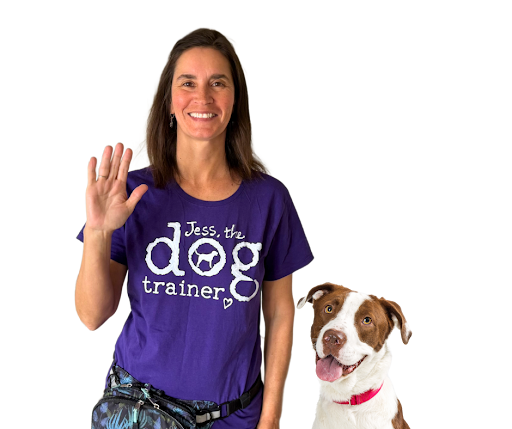
Jess Rollins offers private, in-home dog training (including leash training) in the Piedmont area. To schedule a free discovery call, visit www.guidancedogtraining.com/discovery or text 510-545-3889.