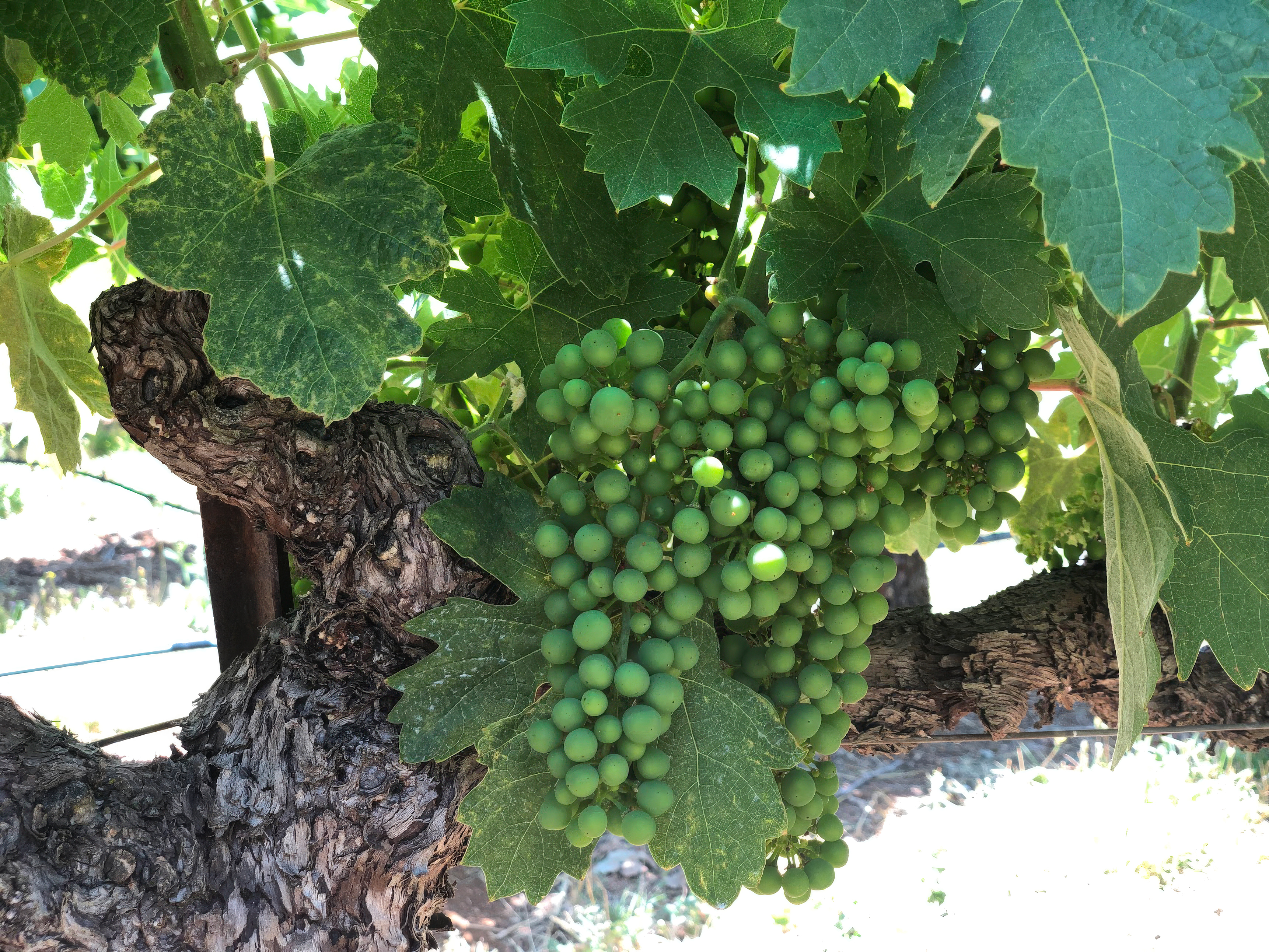
LEE MARTINELLI SR. IS 87, and he can read his family on the trunks of his vineyard the way other people read a photo album.
On the 60-degree slope of Jackass Hill in Forestville, the zinfandel his grandfather Giuseppe planted in the late 1880s is still in the ground. Lee Sr. can walk among those vines and identify, by the pruning cuts on the trunks, which were made by his father, Leno, who farmed the hill from age 12 until he was 89; which were made by Giuseppe; which were made by him. Their hands and their fathers’ hands and their grandfather’s hands are all over the trunks.
“They become part of the family,” Courtney Wagoner, Martinelli’s winemaker, told me one afternoon in Forestville. “It’s really hard to tear them out, because they are literally family members.”
In the last year, 38,000 acres of California vineyard came out of the ground — 2,700 of them in Sonoma County, with more coming. The vines on Jackass Hill are not among them. Neither are the vines at Seghesio’s Home Ranch in Asti, or at Montafi on Pine Road, or at the half-dozen other century-plus sites scattered across this county. All of which raises a question: which vines are being pulled out, which ones aren’t, and why?
The short answer involves four families, 140 years of decisions, a wine establishment that still hasn’t figured out how to take zinfandel seriously, and a kind of farming that doesn’t pay.
It is also a portrait of the only living things in California agriculture old enough to remember the 19th century.

What counts as old
There is no legal definition of old vine. “That term is not regulated legally,” said Andy Robinson, Seghesio Family Winery’s winemaker, sitting with vineyard manager Ned Neumiller in Healdsburg. “At some point you have to have an internal rule.” Seghesio draws the line at 50 years — the same threshold the Historic Vineyard Society uses.
By that yardstick, four Seghesio sites qualify. The oldest is Home Ranch, just south of Asti, between Geyserville and Cloverdale, where founder Edoardo Seghesio planted blocks behind the one-room Victorian in the 1800s. About 40% of Seghesio’s old-vine bottling comes from there. The rest is a patchwork: San Lorenzo in Alexander Valley; Saini Farms in Dry Creek, where the Saini family has farmed since 1917 and the fifth generation is now learning the work; and Montafi Ranch on Pine Road in the Russian River Valley, planted in 1926.
Down in Forestville, the dates get harder to pin down. Jackass Hill was planted by Giuseppe in the late 1880s, on a 65-degree slope Leno named because only a jackass would farm a hill that steep. “Jackass Vineyard is the oldest one,” Wagoner said. “When Giuseppe and Luisa came, it was already a mature vineyard, so we don’t know how old that is.” Both are on the Historic Vineyard Society register. Both are farmed by hand.
What’s actually being ripped out
What may be surprising is that the vineyards coming out are almost never the old ones.
“What we’re seeing pulled is the boom from the late 1990s and early 2000s,” Neumiller said.
That boom-era planting was dominated by vertical shoot positioning trellis on steel highway stakes — tidy, mechanized canopies that were supposed to last 20 years. They’re failing at 15 or 16. Red blotch virus is part of it. Infrastructure rot is the rest. Neglect a head-trained century-old vine, worst case, and you have a self-supporting plant that still produces fruit. When a VSP vineyard falls apart, you’re looking at collapsed trellis, virused material and a redevelopment bill of $50,000 to $200,000 an acre.
Revenue per acre has barely moved while development costs climbed. Turnkey vineyards are now liabilities — the vines have to come out before the land will move. Neumiller’s bet is that more vineyards will come out of Sonoma County over the next year than most people expect.
What survives and why
Ask Robinson why century-old vines survive and he doesn’t start with soil or rootstock. He starts with wine quality. “If it wasn’t a good vine when it was young — if it didn’t produce good wine when the wines were young — it’s not suddenly going to come around at 50.”
Surviving to old age isn’t neutral. It means the vine was worth keeping through Prohibition, through the white zinfandel wave, through the chardonnay rise, through the cabernet and merlot booms.
“You’re literally tasting a piece of history,” Robinson said. “You can’t buy that anywhere off the shelf unless it was grown from that vine.”
It’s really hard to tear them out, because they are literally family members.
Courtney Wagoner, Martinelli’s winemaker
Wagoner’s answer doesn’t contradict it. The vines survived because the people who farmed them refused to let them go. “Lots of times the younger generation will see the money grab,” she said. “It’s a lot of hard work. The grapes will grow every single day that ends in a Y. They don’t care.”
“I’m very thankful for white zin (which uses the same grapes as red),” Wagoner said. “It actually saved a lot of these old vines from being pulled out. Probably somebody’s brilliant, bad idea. But it did save a lot of these old guys, because the fruit was going somewhere.”
The vines themselves keep proving it. In 2020, when wildfires ruined entire vintages of cabernet and pinot noir up and down the coast, the old zinfandel held up. “We still made 2020 zinfandel. No smoke damage. They were able to tolerate it. The zinfandel — harder skins, tougher, more resilient. Probably because they’re not French. Not fussy French.”
Chimneys and roof
Head-trained, three-dimensional vines on St. George rootstock — standard before 1950 in Sonoma County — produce a canopy that hangs in the air like an umbrella with vents. Air moves through it. Fruit hangs loosely. A head-pruned vineyard “has its chimneys, it has its roof,” Robinson said — much better flow than a combed-up VSP canopy that traps moisture right where the fruit hangs.
Wagoner has a different name for the same thing: “California sprawl, head-trained. The airflow, for sure, that’s a big one. They can actually breathe. They’re not crammed against each other. And they’re dry-farmed, so they’re going to absorb as much moisture from the air as possible.”
Modern high-density planting puts about 1,000 vines on an acre. Old head-trained blocks have around 430, and they produce fewer shoots as they age.
“It really is for a love, a passion,” Wagoner said. About Jackass Hill: “It’s still farmed by Lee Senior. He just turned 87.” By hand? “It’s by hand, but he does take the crawler up to disc it twice a year.” The slope is 60 degrees. “It’s pretty scary.”

Asked why nobody plants head-trained anymore, Neumiller said: “Zero mechanical advantage. Whatsoever.”
Mystery vines and a cooler corner
Field blends from this era weren’t planted to a recipe. “We’ve got a 1910 block of sangiovese in Alexander Valley where there are a couple of vines that have no DNA reference,” Neumiller said. “Looks like a red wine grape varietal, and nobody knows what it is.”
Each mystery vine is a genetic artifact that exists in no nursery catalog. When a vineyard goes, it’s not just acreage that disappears.
The Martinelli model is the opposite. “Ours are all 100% zinfandel, which is very unusual,” Wagoner said. “They are not field-blended. All the other vineyards are either Jackass Hill or Jackass Vineyard clone.” Two Italian families, two valleys, two different planting philosophies — and the same outcome 130 years later.
Martinelli’s Forestville plantings sit farther west and cooler than most famous old-vine ground — Ridge, Carlisle, Bedrock, Turley, Seghesio all work warmer hills. “It may be one of the most western older vines out there,” Wagoner said. “There’s an elegance, especially the Hill. We get this stone-fruit quality that’s amazing.”
Why it’s always zinfandel
To be 50 years old today, a vineyard had to be planted before 1976, when varietal options were thin. Zinfandel — alongside petite sirah, alicante bouschet, carignan, grand noir — is what survived. Almost all on St. George rootstock.
The DNA work ties zinfandel to the Croatian tribidrag and to primitivo in southern Italy. What’s less understood, Robinson said, is that California zinfandel didn’t arrive via Italian immigration — it came west by wagon train from a Boston nursery, through an Austrian line.
In Forestville the lineage is local. Whatever Giuseppe Martinelli put in the ground at Jackass Hill in the late 1880s — and whatever was already at Jackass Vineyard before the family arrived — has propagated outward to every other zinfandel block they farm. There is nowhere else in the world to drink it.
Zinfandel, Wagoner said, is the most underrated grape California has. “It’s our state grape. Zin is actually harder to make. I make both pinot and zin. Don’t try to do it like a cab. They beat it to death.” She kept coming back to one word: underdog.
The prohibition reflex
Robinson worries about what’s next. Younger drinkers want lower alcohol. Ready-to-drink cocktails — “excess grain, fermented, distilled down, put into a flavored can” — are eating into entry-level wine territory. Robinson said a winemaker friend in Italy estimates 30% of the world’s vineyard acreage is likely to come out.
Wagoner is calmer. “It’s all about balance,” she said. “You can have a low-alcohol wine that burns. It doesn’t matter what the alcohol is. I love to pour some of my zins and have people guess what it is, and they always guess lower — because it’s balanced.”
And she suggests a longer view: “There’s always been a little bit of a prohibition movement throughout history after a plague. After the Spanish flu is actually when Prohibition happened. We’re kind of seeing that — a backlash after COVID-19.”
Three or four years ago, the Martinellis opened a 1939 zinfandel from the cellar, bottled in an old 1.5-liter sake bottle, made by Lee Senior’s father. It was, Wagoner said, amazing. “You don’t think zinfandel is a wine you’re going to cellar.”
‘Yeah, but …’
Last fall the Old Vine Conference, founded by London Master of Wine Sarah Abbott, held its first U.S. gathering, partnering with the Zinfandel Advocates and Producers (ZAP) organization. Producers came from Spain, Italy, South Africa and Australia. One stop was Jackass Vineyard.
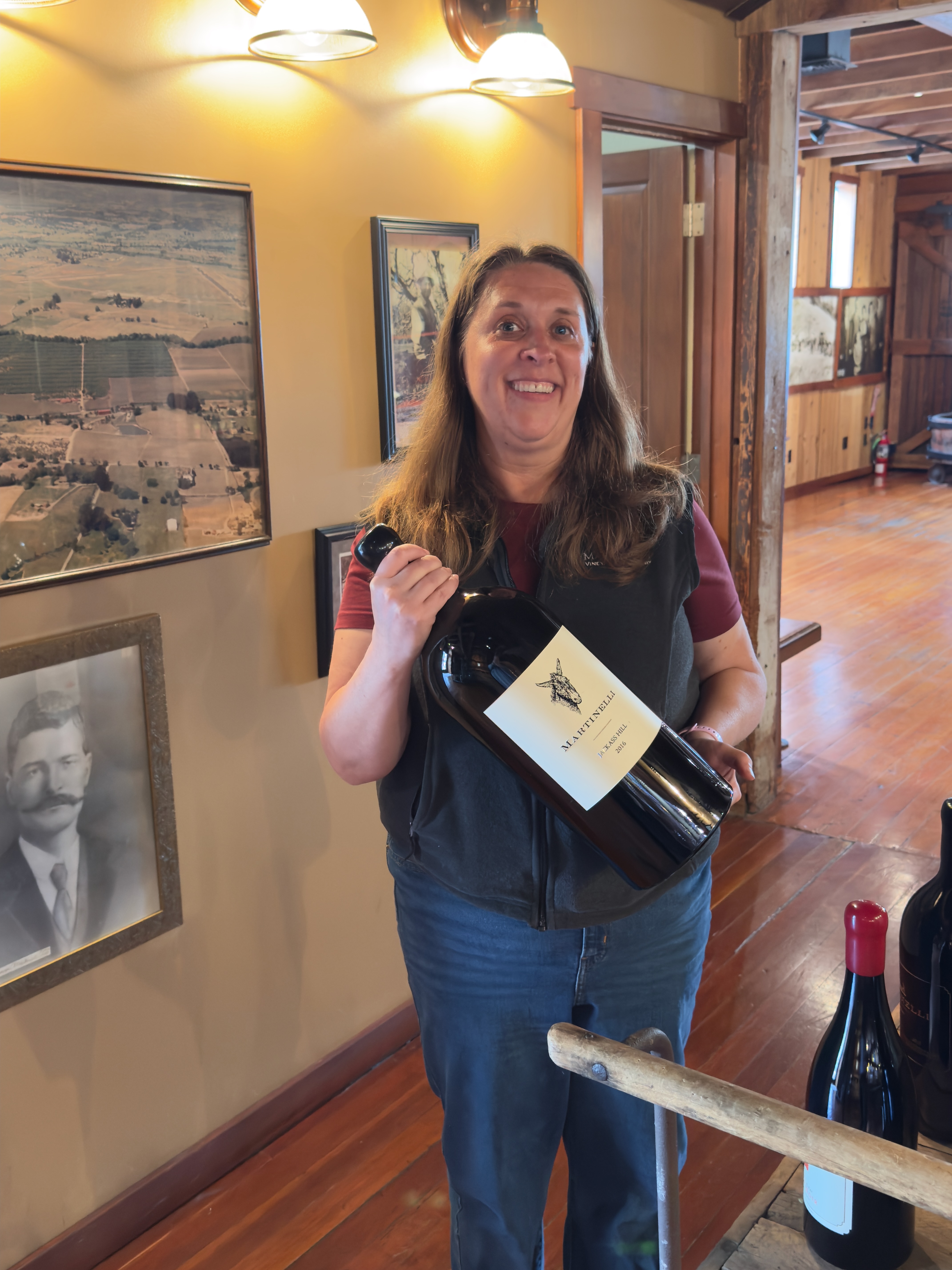
When asked whether the industry could educate the country about old-vine zinfandel, Wagoner didn’t soften the answer. “ZAP has tried, but ZAP is stale. They don’t really go on the road.” The Russian River Valley Winegrowers, by contrast, got a $250,000 USDA grant and took pinot noir to Dallas, Washington and Atlanta. “There’s not enough zin guys out there. It really doesn’t have the following — until somebody makes a movie.
“I’ve sat on panels,” she said, “and they’ll say, ‘Hey, are there any grand cru sites in Sonoma County?’ And I’ll say, Jackass Hill. They’re like, ‘Yeah, but …’”
She trailed off and shrugged.
“It doesn’t matter. It’s wine. It’s really good wine.”
The vines are still there. Lee Sr. is still walking the 60-degree slope at 87, looking at the cuts his father and grandfather left behind. Tessa Martinelli just sent her cousins a picture of six-month-old Harlan — the fifth generation.
The vines are older than the rules used to measure them — older than the appellation system, older than the Historic Vineyard Society, older than the families that farm them now. They were here before grand cru meant anything in California, and they will, with luck, be here after.
Somebody just has to keep walking the rows.
The post The cuts his father made: Two valleys, 4 families and California’s oldest living vines appeared first on Local News Matters.