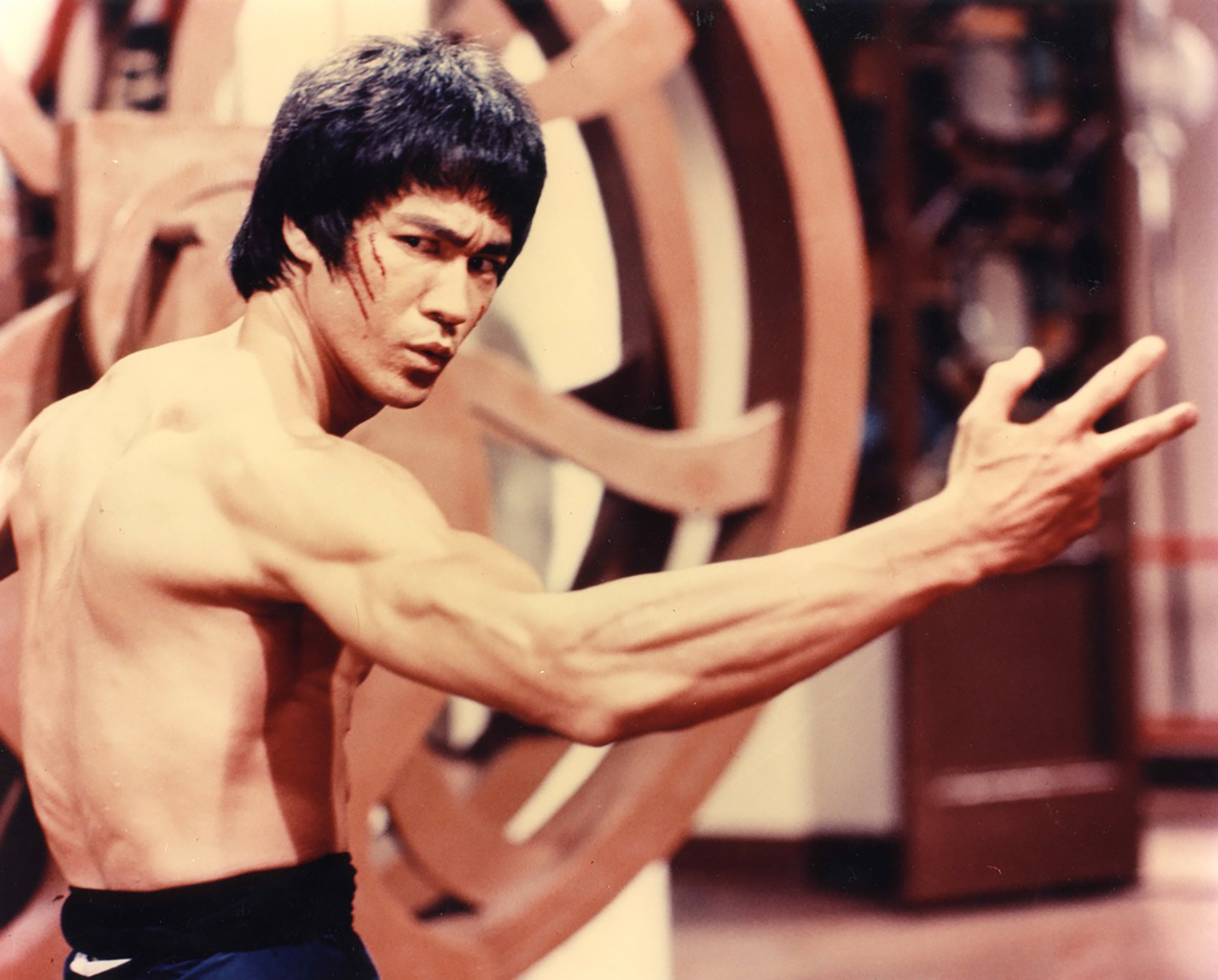
This coming Sunday is Bruce Lee Day, and the San Francisco Public Library will celebrate the actor and martial arts icon and his significance in cinema and the Asian American community with two days of special events at the Main Library.
On Wednesday, Assemblymember Matt Haney will speak at 2 p.m., and “Breath of the Dragon” author Shannon Lee will host a teen Q&A session at 3 p.m. — both addressing the work and legacy of the San Francisco–born and Hong Kong–raised star.
On Sunday, an afternoon-long celebration will include a martial-arts demonstration at noon, crafts programs from 1 to 3 p.m., “Mahjong Afternoon” from 1 to 3:30 p.m., and screenings of two fight-packed Bruce Lee hits — “The Big Boss” (1971) and “Enter the Dragon” (1973) — from 1 to 4:45 p.m.
Visit sfpl.org for more information.

This week’s new releases include “Omaha,” now screening at Landmark’s Opera Plaza Cinema. It’s first-time feature director Cole Webley’s drama about an overwhelmed father, two children and a seemingly carefree road trip with a true purpose that is heartbreaking.
John Magaro stars in the 2008-set drama, playing a financially struggling, grieving widower named Martin. When introduced, Martin is rushing his 9-year-old daughter, Ella (Molly Belle Wright) and younger son, Charlie (Wyatt Solis) and a golden retriever, into his ailing car while the sheriff’s office is posts a foreclosure notice on their house. The eastward drive — to Nebraska, Robert Machoian’s withholding screenplay eventually informs us — begins joyfully. The three cheerfully sing “Mony Mony,” a song liked by the kids’ mother, who has died from an illness. They fly kites and play silly games before the mood darkens. Martin’s EBT card runs out of money and Ella detects her dad’s mounting stress. She knows he’s concealing something serious.
The kids aren’t prepared for what their father is planning, nor will most viewers be. By hurrying through the final act, Webley undermines the audience’s ability to develop a solid sense of Martin’s desperation. The use of title cards to explain the alarming climax gives the movie an academic quality that isn’t compatible with the prevailing naturalistic tone.
But overall, “Omaha” is an emotionally truthful and deeply moving film about grief, financial hardship and family. The interactions between the quietly powerful Magaro and his young costars are engaging, convincing and sometimes delightful. By presenting the story largely from 9-year-old Ella’s perspective, Webley saddles Wright with an enormous responsibility, and she delivers. A visit to the Omaha zoo, presented through Ella’s awestruck eyes, is simply magical.

“Blue Heron,” playing in Bay Area theaters, is a stellar little film that presents a troubled family member through a child’s eyes. Filmmaker Sophy Romvari combines realistic fiction, imaginative storytelling and documentary in this debut feature centering on a girl named Sasha growing up in Canada with a disturbed older brother (Edik Beddoes) in a Hungarian immigrant family. Sasha appears both as an 8-year-old (Eylul Guven) and as an adult (Amy Zimmer) who is revisiting her past. This is a resonantly sad and beautifully crafted memory piece about mental illness and how it can affect a family.

An indigenous woman wreaks personal and cultural wrath on British colonialism in “Marama,” a gothic Victorian revenge thriller opening Friday in Bay Area theaters. Taratoa Stappard’s debut future is notable for its Maori subject and the historical and political elements that add to its genre formula.
The title character, whose Anglicized name is Mary Stevens (Ariana Osborne), is a young Maori teacher who travels from New Zealand to England in 1859 after being summoned by a man promising to reveal truths about her family’s history. Instead, Mary is taken in by British tycoon Nathaniel Cole (Toby Stephens) and becomes the governess for his young granddaughter (Evelyn Towersey). Cole has a fetishistic obsession with Maori culture and a massive collection of artifacts appropriated from Mary’s ancestors. Soon, Mary is experiences visions involving her mother, her grandmother and twin sister. She rediscovers the female seer powers rooted in her lineage. She learns horrible truths about Cole and his right-hand man (Erroll Shand).
When ignorant, arrogant British party guests insult her culture, Mary, played with scary intensity by Osborne, becomes a force of fury, her fervency enhanced by dramatic lighting and a color scheme featuring black and vivid crimson. Nothing deep or subtle exists in her revenge, or in the movie, which depicts horrible injustice and bloody retribution. But in delivering those goods, Stappard gives Maori life big-screen attention that it seldom receives and displays all-out rage with a stylish fervor.

“Two Women,” a sex soufflé from Montreal-based filmmaker Chloe Robichaud (“Boundaries”) now in Bay Area theaters, follows Violette (Laurence Leboeuf) and Florence (Karine Gonthier-Hyndman), mothers and neighbors who, bored in their conventional relationships, decide that monogamy isn’t the way to go. Their solution is to have sex with fix-it men — a cable guy, an exterminator, a plumber…. As their adventure progresses, it becomes clear that the satisfaction the women seek involves not only sex but being noticed and touched.
Written by Catherine Leger (adapting her stage play, which itself updated a 1970 Quebecoise film) and costarring Felix Moati and Mani Soleymanlou as Violette’s and Florence’s respective primary romantic partners, the movie is a feathery romp that succeeds as a 100-minute diversion. However, it isn’t sexy, witty or provocative enough to make a deeper impression.
The post Movies: Bruce Lee Day, ‘Omaha,’ ‘Blue Heron,’ ‘Marama,’ ‘Two Women’ appeared first on Local News Matters.