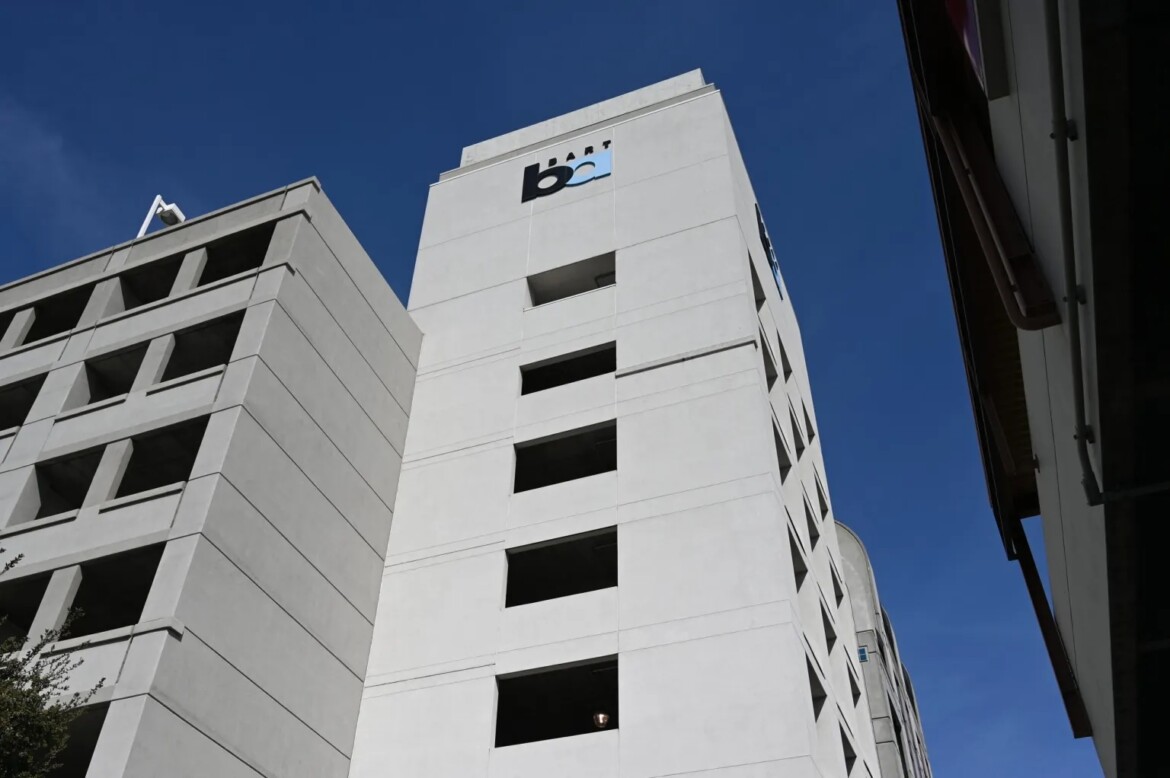
The BART Board of Directors met Thursday to consider ways to head off a looming $375 million operating deficit expected by fiscal year 2027.
BART staff presented a preliminary fiscal year 2027 budget that included spending cuts and new revenue streams — contingent on voter approval of a regional sales tax measure in November.
BART is estimating a $375.4 million operating deficit for fiscal year 2027. Despite strong year-over-year ridership recovery — up 11.3% in 2025 over the prior year — the agency continues to lag behind 2019 levels.
The proposed budget was created with the assumption that the agency would continue with current service levels, continued ridership growth, and the successful passage of Senate Bill 63 — a regional sales tax measure that would bring in additional operating revenue for Bay Area public transit agencies.
BART Budget Director Christopher Sims said the agency is working to balance the budget through $233 million in new revenues and $142 million in expense reductions. Key actions include eliminating 63 vacant positions and non-labor cuts totaling $21.6 million, deferring capital funding and Retiree Health Benefit Trust contributions without impacting individual benefits, and a one-time $97.9 million borrowing to bridge costs until new consistent revenue flows.
Sims said an estimated $74.4 million would be made available if the sales tax is passed but would not arrive until April 2027.
BART is facing a budget deficit after pandemic-era federal grants are set to expire this summer. Without new sources of operating revenue, the agency is facing a yearly $350-400 million shortfall.
If left unaddressed, the budget deficit could force BART to slash services and close stations across the Bay Area.
The post BART board considers measures to tackle $375M budget deficit by 2027 appeared first on Local News Matters.