Martha Graham Dance Company Artistic Director Janet Eilber had the opportunity to meet the troupe’s founder and towering figure of American modern dance in the late 1960s while she was attending high school in northern Michigan. She was studying at the Interlochen Arts Academy in the dance department, where Carlos Suriñach, who had written scores for Graham, was an artist in residence, and a meeting was set up.
Eilber says, “… My parents and I flew to New York, I did a solo for Martha and she talked with me for about half an hour. She suggested I should look at Juilliard. So I did and saw José Limón rehearsing ‘There is a Time’ with students, and said, well, this is where I want to go to school.”
Eilber learned the Graham dance technique — built on the principles of contraction and release, spiraling and grounded footwork — from Graham disciple Bertram Ross, who played an instrumental role when she joined the company in 1972. She danced with the troupe for nearly a decade, including when it celebrated its 50th anniversary.

Artistic director since 2005, Eilber curated “Graham 100: A Celebration of the Company’s 100th Anniversary,” a showcase with Graham’s iconic “Appalachian Spring” and “Night Journey”; a commissioned work by Hope Boykin; and recent works by Jamar Roberts and Baye & Asa. Cal Performances presents the two-program production this weekend in Zellerbach Hall at UC Berkeley, which has had a longstanding connection to Graham (1894-1991), who founded her company in 1926, led it for 66 years and created 181 works.
The Feb. 14 program opens with “Night Journey,” a 1947 piece set to music by William Schumann in which Graham reinterpreted Sophocles’ Greek tragedy “Oedipus” through the eyes of Queen Jocasta; she performed the role for the premiere.
All the pieces on both programs feature sculptor Isamu Noguchi’s striking original set designs.
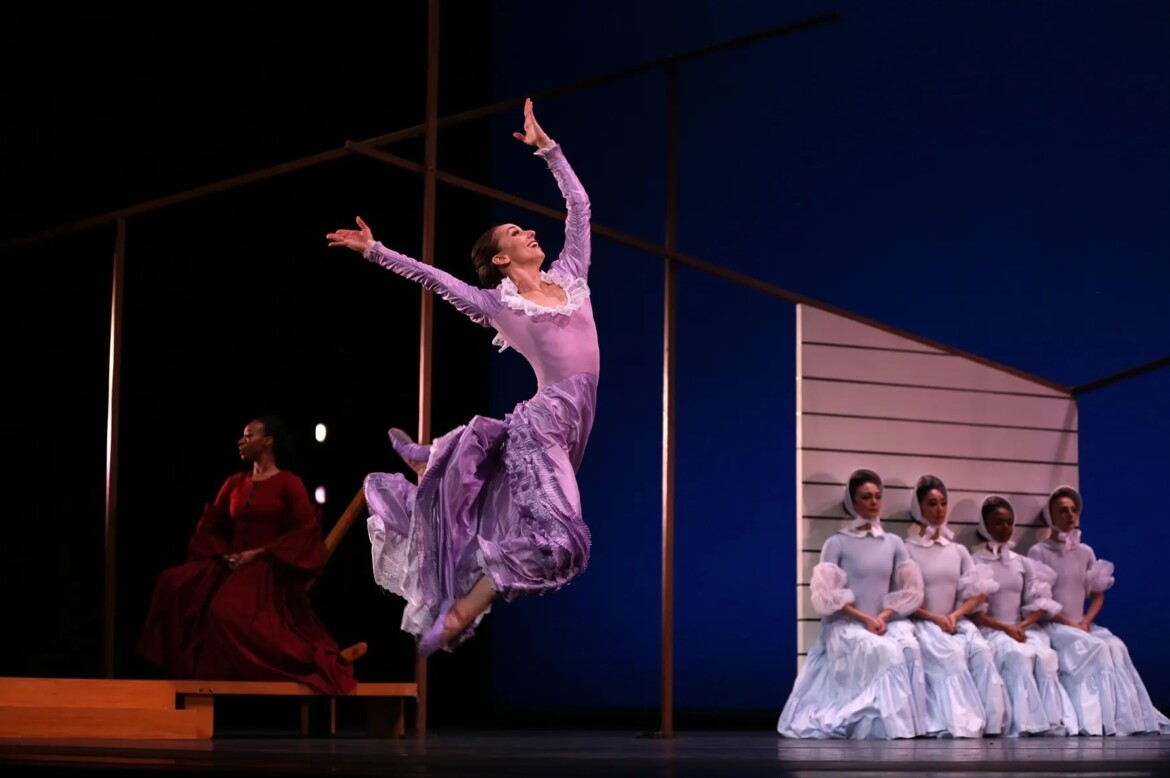
“It’s unusual for us to have the Noguchi sets on the road — each program will have a Noguchi set on it — and ‘Night Journey’ has a remarkable modernist set,” Eilber says. “And for ‘Appalachian Spring,’ Noguchi, inspired by Shaker furniture, created a set that’s much simpler, starker with an American feeling.”
Also on Feb. 14 is “Cortege,” a 2023 dance by Amadi “Baye” Washington and Sam “Asa” Pratt set to music by Jack Grabow that’s the result of extensive research in the Graham troupe archives. The choreographers were inspired by Graham’s seminal 1967 “Cortege of Eagles,” a protest of the Vietnam War; their 2024 piece is a response.
“These young choreographers do not use the Martha Graham technique, but it’s in conversation with ‘Night Journey’ because it’s also deeply thematic and coming out of Greek legend, and they both have social underpinnings,” Eilber says of “Cortege,” which has roots in African dance and hip-hop.
The sociopolitical Graham created 1936’s “Chronicle,” set to music by Wallingford Riegger, in response to the rise of fascism in Europe. On Feb. 14, the company is performing three parts of what originally was a five-movement piece.
Americana courses through the Feb.15 program, which kicks off with 1944’s “Appalachian Spring,” with its famous commissioned score by Aaron Copeland. Graham made the socially conscious piece during a period when a wartime United States was divided by isolationism, nationalism and immigration.
The piece is followed by “We the People,” Roberts’ 2024 work set to music by Rhiannon Giddens, which resonates with “Appalachian Spring,” according to Eilber.
“Martha, in ‘Appalachian Spring,’ was trying to remind Americans of our optimism, to determine our hope for the future and the American Dream; Jamar is trying to rally people around that idea and that we have to make a better future. And Rhiannon Giddens is an expert in the roots of American folk music; her score is bluegrass, feels very traditional like it was created 150 years ago, but it’s contemporary,” says Eilber.
Graham’s 1937 short solo “Immediate Tragedy,” which was thought lost but resurrected after a felicitous discovery, appears on the program in a reimagining by Eilber, who has set it to music by Christopher Rountree. Eilber was able to re-create the dance after seeing a film of it supplied by a man whose father, who apparently was dating one of Graham’s dancers, photographed Graham performing the piece from a front row seat.
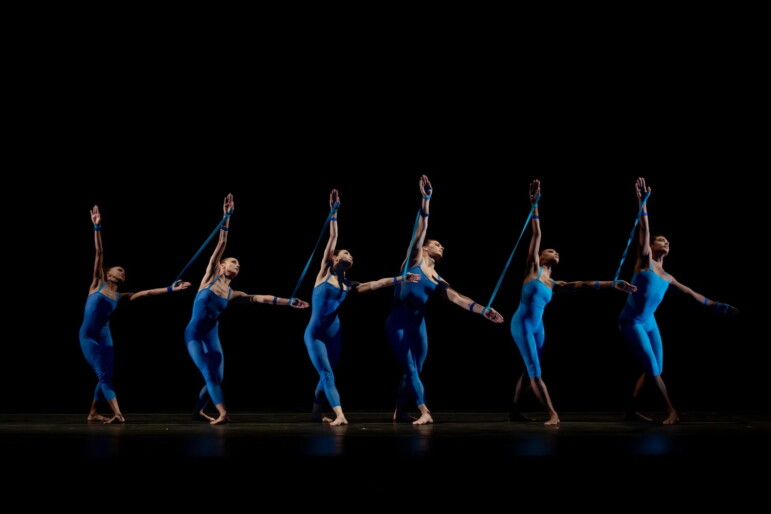
The Feb. 15 program closes with the local premiere of Boykin’s 2025 “En Masse,” set to a new score by Leonard Bernstein including excerpts from his “Mass” and recently discovered music Bernstein is believed to have composed for Graham in the 1980s.
“They had a collaboration that did not come to fruition, and the Leonard Bernstein organization found this short piece of music in the Martha-Lenny correspondence,” Eilber explains. “They allowed us to use it as a theme and then create variations on the theme.”
Graham, whose troupe was all-female until 1938, has a legacy that has intersected with UC Berkeley in profound ways, dating back to 1916 when Graham, a dancer with Ruth St. Denis and Ted Shawn’s trailblazing modern dance company Denishawn, is believed to have made her Bay Area dance debut at the Hearst Greek Theatre.
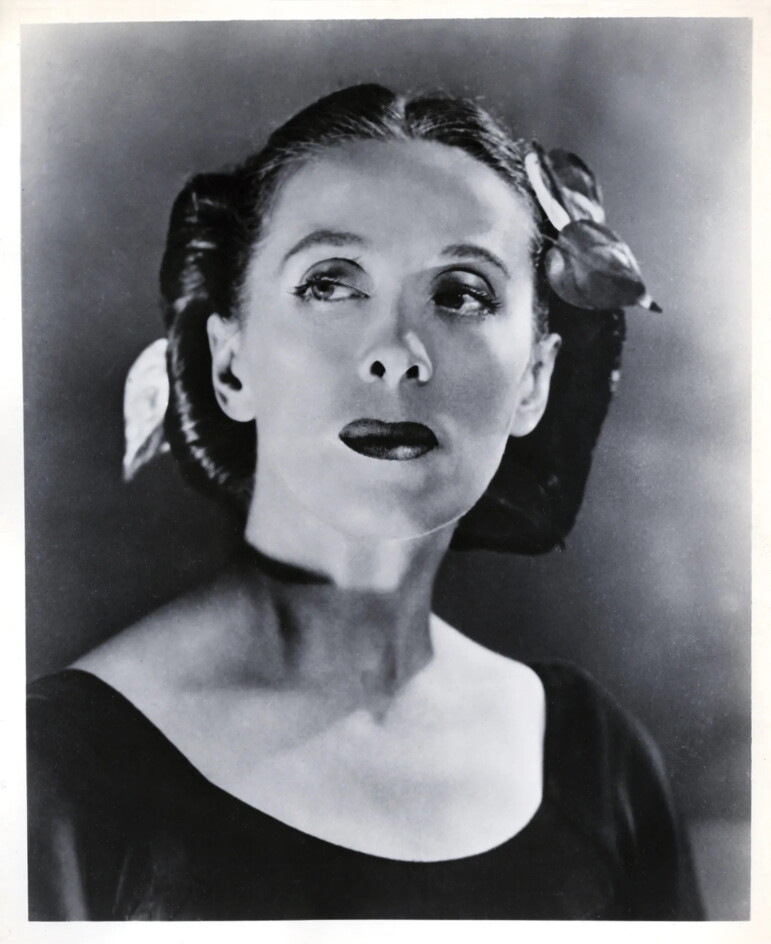
In addition, former Martha Graham principal dancers David Wood and Marni Thomas Wood founded Cal’s dance department in 1968.
“We taught the Graham technique and surprised the students by saying, ‘If you take a dance class, you have to come five days a week; you can’t just come once or twice,’” recalls Marni Thomas, who danced with Graham’s company for 10 years. “They were in shock, but they lived up to it, and we founded that kind of intensity at Berkeley.”
Marni Wood says Graham felt that a pivotal lesson for young dancers was the importance of breath: “It might be telling a story, just stretching or collapsing, but breathing has to apply to every part of achievement, especially in dance,” she says.
Describing Graham’s goal, Marni says, “She really wanted movement that meant something, and she invented shapes and dynamics that were about expressing ideas. not about showing off or being pretty,” she says. “Her aim was to reach the kind of people who would respond to the stimulus to start using their minds and bodies.”
For Eilber, Graham’s brilliance rests in her ability to read people: “She was such a genius with understanding body language; in rehearsals she knew exactly how to draw out of you what she wanted. She knew if she needed to be a mother, tyrant or flirt — she knew how to enter your psyche. She took body language and theatricalized it. That’s one of her major revolutionary discoveries that changed American dance forever.”
Cal Performances presents “Graham 100: A Celebration of the Company’s 100th Anniversary” at 8 p.m. Feb. 14 and 3 p.m. Feb. 15 in Zellerbach Hall on the University of California, Berkeley campus. Tickets are $42-$120 at calperformances.org.
The post UC Berkeley reconnects with Martha Graham legacy in centennial celebration appeared first on Local News Matters.