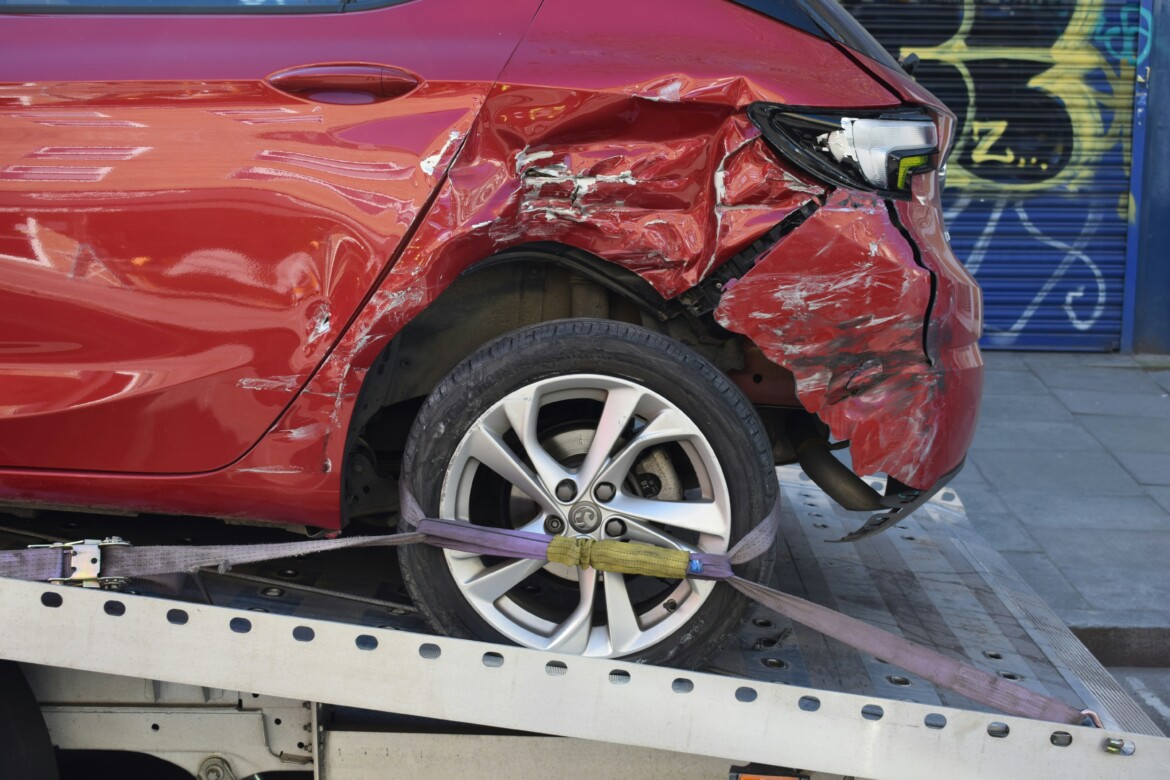
In November, California voters may have to referee a multimillion-dollar battle among Uber, attorneys and doctors. The outcome could have far-reaching implications for anybody who uses the state’s roads and highways.
Uber last fall filed a proposed ballot measure that would cap personal injury lawyers’ contingency fees and limit medical damages for all vehicle crashes in California, even those not involving an Uber. The company paints its effort as a way to rein in attorneys who take advantage of those who get hurt in a crash. Crash survivors often hire attorneys on a contingency basis, meaning the lawyers only get paid if they win the case.
That got attorney groups fired up: They responded by proposing three ballot initiatives that would expand the ride-hailing giant’s liability for passenger injuries; increase its liability for sexual misconduct against riders or drivers; and ban new state laws that interfere with people’s ability to retain lawyers.
Doctors and other medical providers also got organized and formed a political action committee, Providers for Patient Care, last October to oppose Uber’s initiative.
Despite the substantial opposition, legal experts acknowledge Uber’s proposed ballot initiative could appeal to Californians.
“This measure could backfire for Uber, but it’s certainly possible that California voters will approve (the company’s) initiative because it has a ‘bumper sticker quality’ to it,” said Stanford University law professor Nora Engstrom, a litigation expert. She said she has no formal role in the opposition to Uber’s initiative, but she has researched contingency fees’ effects on competition and has written an op-ed opposing the measure.
Engstrom told CalMatters the measure might look good because it seems “unthreatening”; who would oppose crash survivors keeping more of their settlements? But capping contingency fees is equivalent to a price control, and economists generally agree that price controls hurt consumers, she said. She and other lawyers say the initiative could discourage attorneys from taking on cases and helping crash survivors secure compensation for any losses or injuries.
A very expensive battle
Uber has put about $32.5 million into its effort since last fall, according to campaign finance records. The opposition has committed about $55 million to fight Uber as well as to promote its own competing initiatives. Consumer Attorneys of California, whose members are lawyers who represent consumers, has led the way with $30 million so far, while more than 400 other attorneys and law firms have spent a combined $20 million to fight the Uber initiative and promote their three measures. The medical providers have raised about $5 million so far and are aiming to raise a total of $10 million, said Pamela Lopez, a campaign representative.
As each side collects signatures to try to get their initiatives on the ballot, they have also spent that money on two different TV commercials that aired during the Super Bowl.
The last time Uber spent tens of millions of dollars on a California ballot measure was on Proposition 22 in 2020, when the state’s voters approved a law written by Uber and other gig companies, which allowed them to create a carveout from labor law and continue to treat their drivers and delivery workers as independent contractors instead of employees. Top spender Uber — along with its Postmates subsidiary — funded more than $70 million out of the total $205 million the winning campaign.
Veena Dubal, a law professor at UC Irvine who focuses on labor and opposed Uber’s Prop. 22 five years ago, said: “Uber is trying once again to misuse the democratic process and to disclaim legal responsibility — this time, not just towards their drivers but also towards consumers.”
The nonpartisan Legislative Analyst’s Office wrote that if Uber’s ballot measure passes, the state could be on the hook for tens of millions of dollars of increased Medi-Cal costs, such as for health care that the state wouldn’t be able to recover. On the other hand, the state could save tens of millions of dollars a year in court costs because there could be fewer auto accident cases, the LAO wrote.
Uber’s ‘expansive’ measure
Uber’s proposed initiative calls for victims of vehicle crashes to retain 75% of any settlement they receive. In addition, it limits how much can be awarded for medical expenses and raises the burden of proof for recovering them. For liens and future medical expenses, the limit would be 125% of the Medicare reimbursement rate for a service, and 170% of the Medi-Cal reimbursement rate. The measure would also ban law firms from referring clients to a health care provider in which they have a financial interest.
The company says it’s necessary to stop lawyers from inflating crash victims’ medical costs then pocketing a big chunk of a settlement. Uber has sued lawyers and medical practices in California, New York and Florida over such allegations.
“Californians deserve a system that prioritizes victims over ambulance lawyers, and that’s exactly what this measure does,” said Nathan Click, a spokesperson for Uber’s campaign, in a statement.
Opponents of the measure said that if it qualifies for the November ballot and voters approve it, accident victims may not be able to sue for the compensation they deserve because lawyers will not have enough incentive to take on their cases if they know they will get only 25% of the settlement — or less — as opposed to the average 33% or more.
“Uber wrote it to be expansive, to keep victims from finding attorneys,” said Doug Saeltzer, president of the Consumer Attorneys of California, which is spearheading the opposition to Uber’s initiative and proposed the competing ballot measures.
Lawyers and Uber are also battling over legalese about who would be responsible for paying medical bills after a crash. The lawyers say Uber’s initiative would require medical expenses to get paid from the attorney’s share of the settlement. Uber says the medical bills are likely to get paid by the client.
The way Saeltzer and other opponents of the measure read it is that medical expenses from a vehicle accident must come out of an attorney’s 25% share of a settlement. Jamie Court, president of consumer advocacy group Consumer Watchdog, said it’s because of the language that a victim must retain 75% of the total amount recovered, and this part: “Medical expenses, including liens incurred by the automobile accident victim… are not deductible disbursements or costs.”
Uber spokesperson John Finley told CalMatters in an email that the company strongly disputes the lawyers’ interpretation. He said medical bills are likely to be paid by the client, “which is why the client needs a guarantee that they’ll have enough to pay those bills instead of being left with little to no portion of their recovery.”
Engstrom, the Stanford law professor, said: “No doubt, the language is pretty convoluted… If Uber wanted to create a clear medical bill carveout, it surely could have. They have lots of smart lawyers. You have to wonder why they didn’t.”
Changing medical-cost recovery
Mary-Beth Moylan is a University of the Pacific law professor and an expert on California initiatives. When she read that Uber’s measure also proposes limits for medical costs for crash survivors, she said: “I mean, what?”
Moylan said the many details in Uber’s initiative could have unintended consequences. “This is the danger of this particularized policy-making by initiative,” she said.
Lopez, the Providers for Patient Care representative, said uninsured or underinsured survivors of vehicle crashes may not get the medical care they need because the limits mean providers may decline to treat some patients out of fear they will not be reimbursed for most of the costs.
“This is an attempt by Uber to get out of paying for patient care,” Lopez said, adding that such care could be needed long term and that limiting what a responsible party would pay would affect those without health insurance. That could help drive up medical costs for everyone else, she said.
“This will affect you, me, anyone who’s ever injured in an auto accident in California,” Lopez said.
Uber based its proposed limits on a state law that caps payments to out-of-network providers at 125% of Medicare reimbursement rates, said Uber spokesperson Zahid Arab in an email.
“The current system creates incentives to overbill and overtreat auto accident victims, which increases legal costs and raises premiums statewide,” Arab said.
Because it would be a constitutional amendment, Uber’s measure requires a higher threshold to qualify for the ballot: more than 874,000 signatures by June 8. By the first week of February, it had collected at least 25% of that number, according to the California Secretary of State.
Lawyers’ initiatives
Two of the attorney groups’ proposed measures would treat Uber and other ride-hailing providers like other common transportation carriers such as taxis, buses and trains.
One initiative would expand Uber and other ride-hailing companies’ liability for sexual misconduct against riders or drivers. It would require additional background checks for drivers; monthly reports of sexual assaults and misconduct; disclosure of a driver safety-risk assessment score based on the driver’s history of sexual misconduct to customers; and more. As an initiative statute, it needs to collect 546,651 signatures by July 1 to get on the ballot and reached the 25% threshold a couple of weeks ago.
Another measure would expand the ride-hailing giant’s liability for passenger and public injuries. It would hold the companies responsible for harm to their riders and the public, regardless of the classification of drivers as independent contractors.
The third measure would prohibit new laws that interfere with people hiring lawyers of their choice. It would be a constitutional amendment, and would void Uber’s initiative if both that one and this one are approved by voters.
Uber by the numbers
Uber’s top executives have told investors during their most recent earnings calls that they expect the company’s lower insurance costs to help drive higher revenue growth. The San Francisco-based company brought in more than $14 billion in revenue last year. The executives have mentioned “legal abuse” and their legislative efforts in different states to drive Uber’s legal and insurance costs down.
The company has tried to enact measures similar to the one it’s pushing in California elsewhere. Last year, the Nevada Supreme Court found that Uber’s description of the effects of a measure that would have capped attorneys’ contingency fees in civil cases to 20% was “misleading and confusing.” The company and lawyers in that state later reached a deal on a bill related to insurance liability.
In California, Uber recently won a bid to reduce its costs by going not to the voters but through the Legislature. Last year, Gov. Gavin Newsom signed a bill that reduced how much insurance ride-hailing companies are supposed to carry for crashes involving uninsured and underinsured motorists, from $1 million to $60,000 per person and $300,000 per incident. State Sen. Chris Cabaldon, the Napa Democrat who authored the law, said he wanted to help lower fares for rides.
Fares for Uber rides in California have generally risen in the past several years. From 2019 to 2025, the average Uber fare in the state rose from $14.11 to $27.15, according to Gridwise, which makes an app that allows gig workers to track their earnings and expenses. Gridwise says its data encompasses more than 800 million trips and more than $8.5 billion in tracked driver earnings.
That aligns with the trajectory of the data from Obi, an app maker that allows users to compare ride-hailing and taxi fares, which shows that from 2021 to 2025, the average Uber fare in California rose from $26.96 to $29.93. Obi’s data is based on information it collects from its 1 million users.