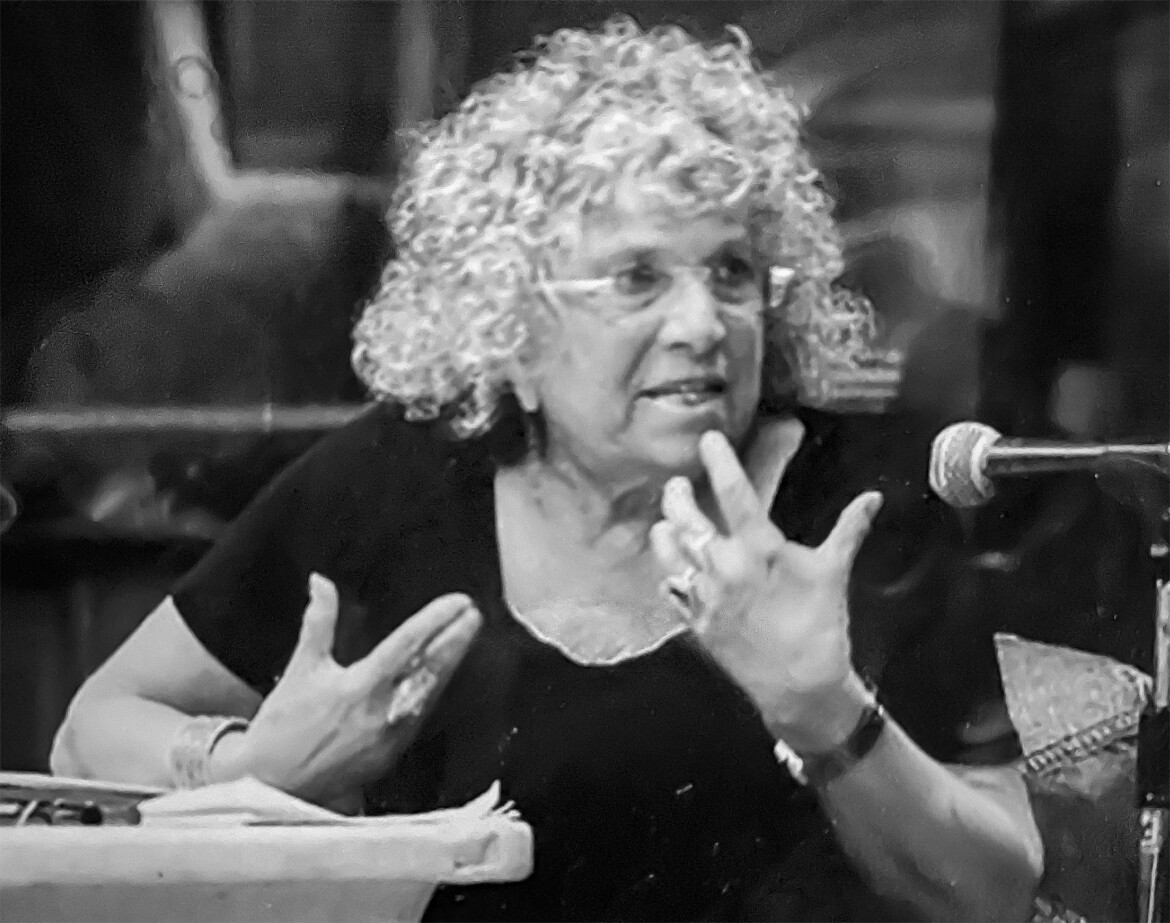
Arlene Eisen has lived in the Bay Area on and off for 60 years, though along the way, she found her home traveling among a global community of women standing up to patriarchy and white supremacy.
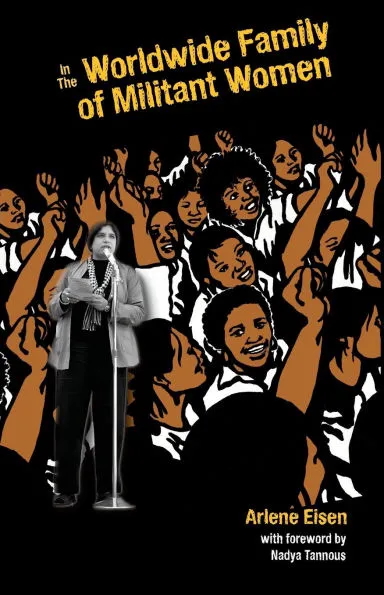
In her new book, “In The Worldwide Family of Militant Women” (Iskra Books, 470 pages, $25, Jan. 26, 2026), Eisen tracks her journey through the lens of social history and intimate personal experience. It’s a life that takes her from her native New York to Berkeley, Vietnam, Cuba, Venezuela and beyond.
On Friday, Eisen and an intergenerational, cross-cultural panel of artists and activists celebrate the publication at EastSide Cultural Center in Oakland.
“The title of the book comes from a quote by a woman who hosted me in Vietnam,” explains Eisen. “When I was leaving her area and it was evident I was very sad, she said, ‘Don’t cry, we’re part of the worldwide family of militant women. We’ll meet again either in Hanoi, Ho Chi Minh City, Paris, or even New York.’”
Though Eisen was initially reluctant to combine social history with memoir, her friends, family and fellow writers encouraged her to document the more personal encounters as a woman fully immersed engaged in the great liberation struggles of the late 20th century.
“I very much resisted that sort of individual approach to that history. I was very committed to collective activity and didn’t want to present myself as having accomplished something apart from history and apart from a collective struggle,” she says.
But the combined approach is captivating; Eisen expertly weaves intimate detail into her times and places. The book’s publication is also timely, as women are watching hard-won rights rolled back among many dangers and challenges of the chaotic here and now.
“With the murder of this woman in Minneapolis,” says Eisen, referring to Renee Good, who was fatally shot by a U.S. Immigration and Customs agent there on Jan. 7, “The connections between patriarchy and white supremacy are pretty blatant.”
The book begins in the early 1960s during Eisen’s years at Cornell University where she was a leader among the Students for a Democratic Society. She takes an eye-opening trip to Peru, encounters Malcolm X in Harlem, and meets an untoward professor at Columbia University, which results in her move to University of California, Berkeley for graduate studies and a teaching opportunity.
Eisen has a natural way with dialogue and storytelling. There’s no shortage of colorful characters, sticky situations and love affairs (spoilers are intentionally left out here!) alongside a lived history of activism, on and off American soil.
“I got to Berkeley in February of 1965, a month or so after the huge spectacle of 800 students being arrested in the Free Speech Movement,” she said, speaking from her home office in San Francisco. “In the beginning, I was just awestruck by everything that was happening because this was the center of student revolt in the United States.”
Like herself, the student activists at Berkeley were largely white, though many had been involved in the free speech and anti-war movement and were trained in direct action by the Student Nonviolent Coordinating Committee and Black leaders of the resistance to segregation and voter suppression in the Jim Crow South.
“My first encounter with cops was in a picket line around Sea Wolf, a high-end restaurant that refused to hire Black people. And so we picketed it until they did,” says Eisen. She adds, “A friend of mine who read a draft of the book said it was interesting that so many of our demonstrations in those days really disrupted things rather than simply symbolically declared our stance.
“Nowadays, when we walk out, when we march down Market Street to protest the war against Gaza or ICE or whatever it is, it’s a declaration, but it’s not really interfering with the wars,” she says.
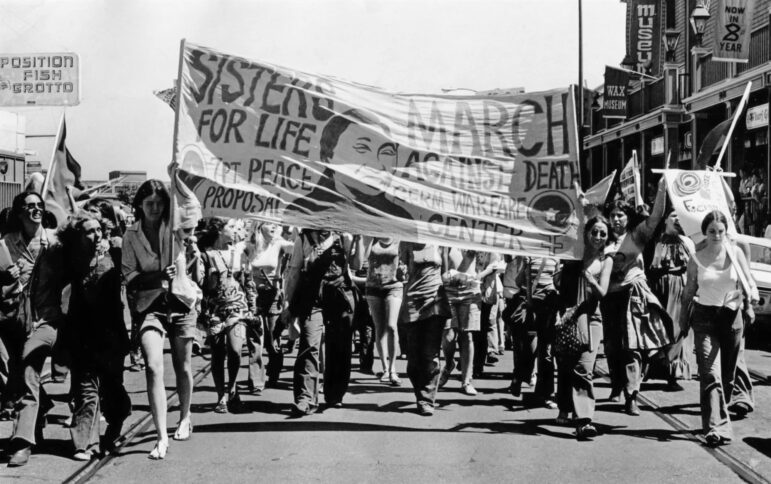
As the 1960s ended, Eisen’s patience had worn thin with constant demonstrations that had yet to end the violence against Black and poor communities in the U.S. or the war in Vietnam. As the FBI waged its well-documented siege on student organizations and the Black Panther Party, Eisen’s eyes also opened to the failing of misogyny within the far left itself. As women worldwide began to organize for their own liberation, she found purpose and a warm community among the women of Vietnam.
“The Vietnamese women were very, very sure they were going to win. And I think that’s an essential, not just belief or conviction, but the spirit that they had,” she says. “That’s part of the DNA of most people and organizations who fight for their liberation.”
Encouraged to resist imperialism through direct action, writing and teaching, Eisen postponed returning to the Bay Area and tried Chicago and New York.
“I decided San Francisco was too small, too much like Disneyland. I wanted to be in the real world,” she says. She returned when she found it to be more hospitable to cohabitating with Black friends, lovers and the father of her children.
“There were neighborhoods in San Francisco, I mean, this was 46 years ago, but there were neighborhoods in San Francisco, the Fillmore, the Mission particularly, that were integrated and where you could find an affordable apartment. So there was that,” she says. She raised her two sons, Tongo and Biko, here, among comrades and teachers of Black liberation theory and practice.
“Not only for political reasons, but for the purpose of raising my kids, I became increasingly immersed in the Black community and particularly a community of Black mothers who were very involved in the same kinds of activities I was interested in and in raising their kids to be artists.”
Her sons Tongo Eisen-Martin and Biko Eisen-Martin are both artists educators and organizers. At her book celebration, she will be joined by them, as well as writer Sarah O’Neal, actor Kara Young, podcaster Hénia Belalia and Palestinian Youth organizer Nadya Tannous, who wrote the forward to “In The Worldwide Movement of Militant Women.”
“When I thought about the forward to the book, I thought, ‘Well, I want somebody who represents today what we represented then,’” says Eisen. “History doesn’t repeat itself exactly the same. You can learn from history, but definitely the times today are quite different in many significant ways than they were then.
“You saw a certain kind of awakening with police violence and murder, you saw another kind of another layer opening up with Gaza and you have another, with this situation in Minneapolis,” she says. “I think people should read the book, just for Nadya’s forward.”
Arlene Eisen appears with Nadya Tannous, Sarah O’Neal, Kara Young, Hénia Belalia and special guests at 8 p.m. Jan. 23 at EastSide Cultural Center, 2277 International Blvd., Oakland; visit eastsideartsalliance.org.
The post SF activist Arlene Eisen celebrates women worldwide united by struggle in new memoir appeared first on Local News Matters.