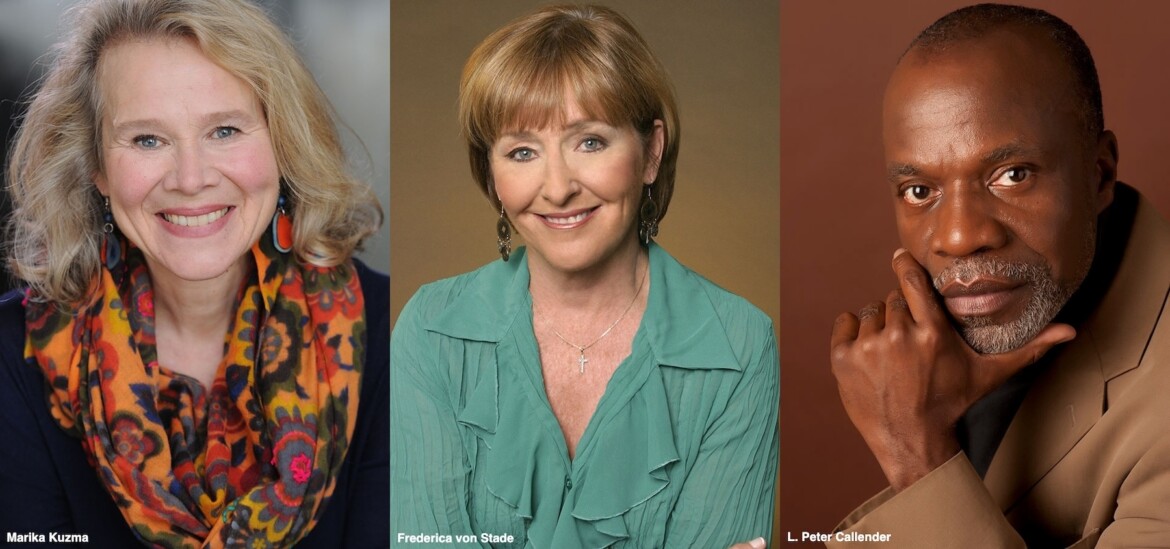
Ukrainian-American UC Berkeley professor emerita of music Marika Kuzma finds multiple points of beauty to highlight in a conversation about the upcoming concert, “Carols of Birds, Bells, and Peace from Ukraine: A Holiday Celebration.”
Presented Dec. 13 by CAL Performances at Zellerbach Hall on the UC Berkeley campus, Kuzma directs the concert’s ensembles and solo performers that include the Piedmont East Bay Children’s Choir; Ensemble Cherubim, a chamber choir composed of professional artists from across the United States; mezzo-soprano Frederica “Flicka” von Stade; violinists Karen Bentley Pollick and Cookie Segelstein; and actors L. Peter Callender and Patrick Russell.
The concert in many ways is a response to recent news and events related to the current Russian-Ukrainian war, but also seeks to celebrate the unique and precious attributes of the country—its history, culture, traditions, and gorgeous landscapes and architecture.
The holiday-themed repertoire is centered on Ukrainian choral music, offering secular and sacred carols, children’s lullabies, and spoken poems and text. Special works Kuzma mentions range from Ukraine’s famous “Carol of the Bells” to lullabies sung by von Stade, one of which has a special connection to Michael Tilson Thomas, the former music director of the San Francisco Symphony with whom von Stade often collaborated.
“I think of Flicka as compassionate and loving. Her voice is rich; her artistry is never one thing—she can be fun, forceful, many other things. But her essence is warmth,” says Kuzma. “Surprisingly, it’s her first time singing in Ukrainian. One lullaby she will perform was a piece composed in the displaced person camp where my mother was a refugee after World War II. The translated title is, “In the Shade of a Palm Tree.” My mother often used to sing it to me.”
Kuzma says children’s choirs in Ukraine are cherished and have strong traditions, making the Piedmont choirs participation a particular high point. “Also, the Piedmont Children’s Choir just eats up cultures. When I spoke with (PCC Artistic Director) Eric Tuan about the concert, they’d just been to Estonian singing in their language. In a rehearsal, he started it saying, “Ok, now, we have to shift to Ukrainian. And they jumped right in. How beautiful is that; that these children will know this and have it in their vocabulary early on and for the rest of their lives?”
The choir also formed a special, long-distance friendship with their Ukrainian counterparts. Kuzma tells the story of a video sent by a children’s choir in Ukraine that shows them rehearsing underground, singing in a subway station while the threat from Russia rages above. Tuan and the choir made a video to send in response. “It was sent so the Ukrainian children would know they are not alone or forgotten,” says Kuzma.
During the concert, projections of the Ukrainian countryside and buildings that hold historical importance will illuminate the country’s rich heritage. “One projection is of a place called “Monastery of the Kiev Caves,” she says. “It is a very old monastery, founded over a thousand years ago. It’s a gorgeous place—the golden domes!—and
central to Ukrainian culture and history. In the countryside, we show the Carpathian Mountains. Ukraine is like California; we have geography that has the sea, the mountains, and many agricultural fields.”
Turning her attention to the country’s language, Kuzma says singers delight in its open, consistent vowels that stand in contrast to Russian language. “Singers expect it to be dark and complex, but with our language, what you see is what you sing.” She cites as one example the word, “milk.” The word is spelled the same in the two languages, but is pronounced one way and holds consistent application in Ukraine. In Russian, the word for milk spreads into complex diversity depending on where the accents are placed.
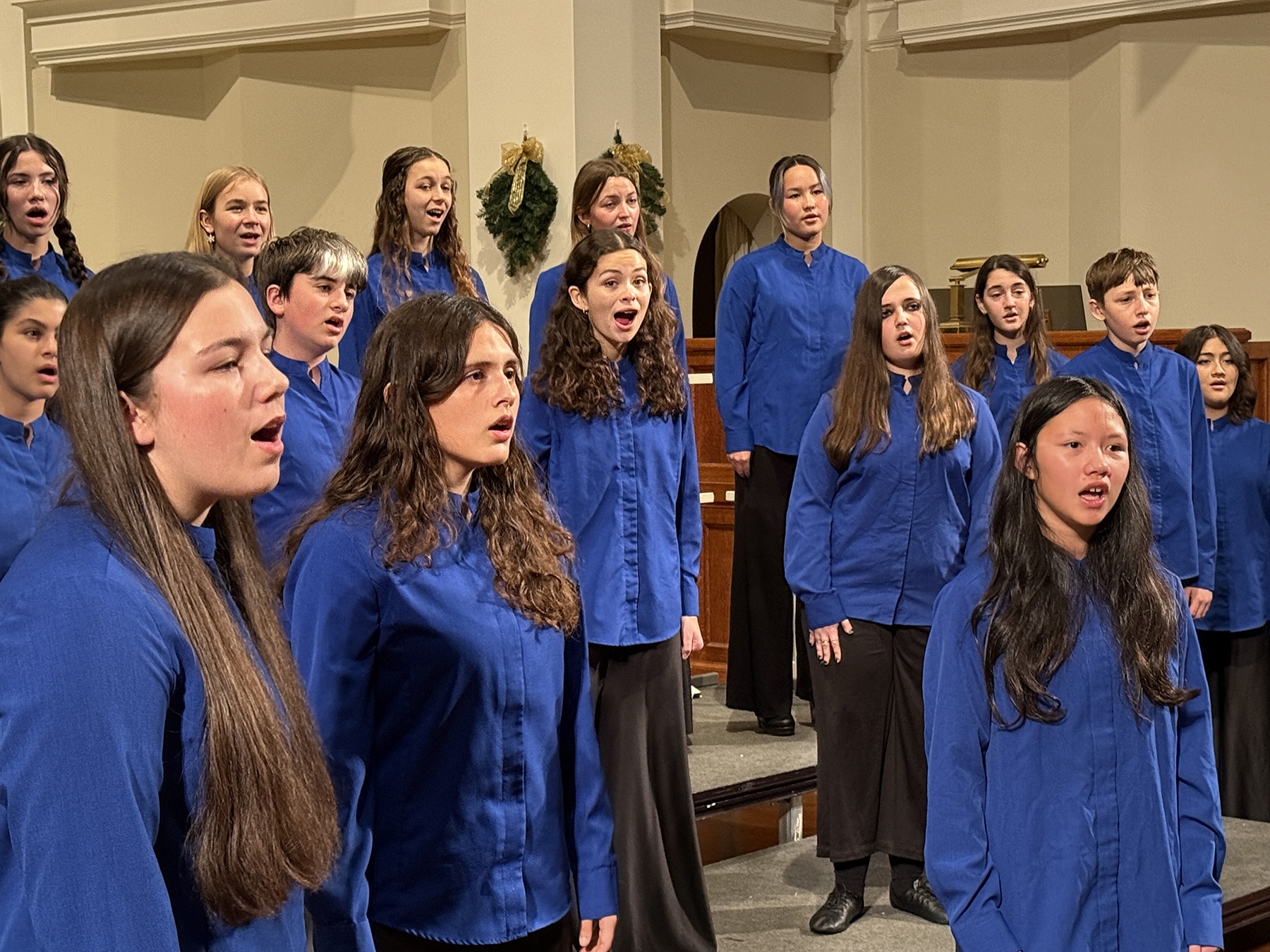
Piedmont East Bay Children’s Choir (credit: courtesy of the artists) 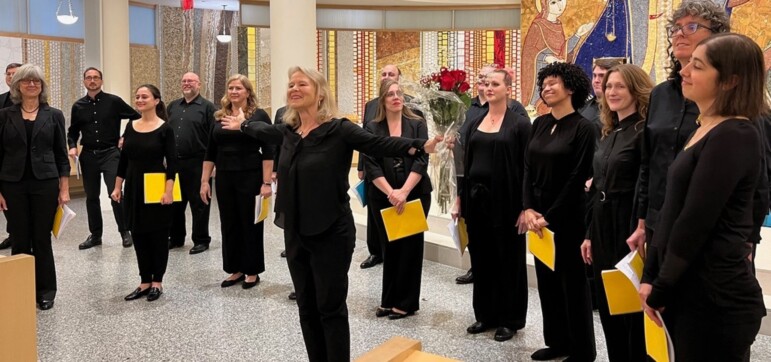
Ensemble Cherubim Chamber Chorus(credit: courtesy of the artists)
Most of the songs on the program are performed without instrumental accompaniment and were composed by musicians who were themselves choir singers. “The composers know what’s satisfying because they come from it from the inside. Because the pieces are also predominantly sung a capella, all the drama and contrast comes from just the voices, which makes it fun.”
Kuzma finds it most poignant that the Piedmont choir will be participating in singing a sacred carol that demonstrates Ukraine’s devotion to children and the feminine divine. That history can be traced back to pre-Christian times and is conveyed in a work written by a children’s book author and set to music by a contemporary composer. “It talks about Mary being the protector of children in Ukraine. One line is, “Snow melts from the warmth of your goodness.” This is so precious now, during a time of war when 20,000 children have been abducted,” she says.
Planning to show the Ukraine she knows and loves, Kuzma says the concert opens with a song nearly 2,000 years old. The country is rapidly digitizing its music, artwork, artifacts, and printed materials to preserve them. “What breaks my heart is that when people think of Ukraine, they think now only of war, missiles, military aircraft, destruction. But Ukraine is a peace-living country. The ideals and values people hold sacred are two: to care for the land and to have faith in a higher power. Ukrainians are inventive and always find a way to enable their culture to survive. Even if a library is destroyed, our music will not be lost. Ukrainians come out on top of all countries, with
15,500 songs they’ve archived. Italy is the next closest with 6,000.”
Centaur Records is expected to release an album based on Kuzma’s book, “Carols of Birds, Bells, and Sacred Hymns from Ukraine” (Cambridge Scholars Publishing, 2024). Recorded in Berkeley in Hertz Hall, she estimates the album of 18 carols will arrive in early 2026; a harbinger of hope that peace might prevail in the new year.