This story first appeared at The 74, a nonprofit news site covering education. Sign up for free newsletters from The 74 to get more like this in your inbox.
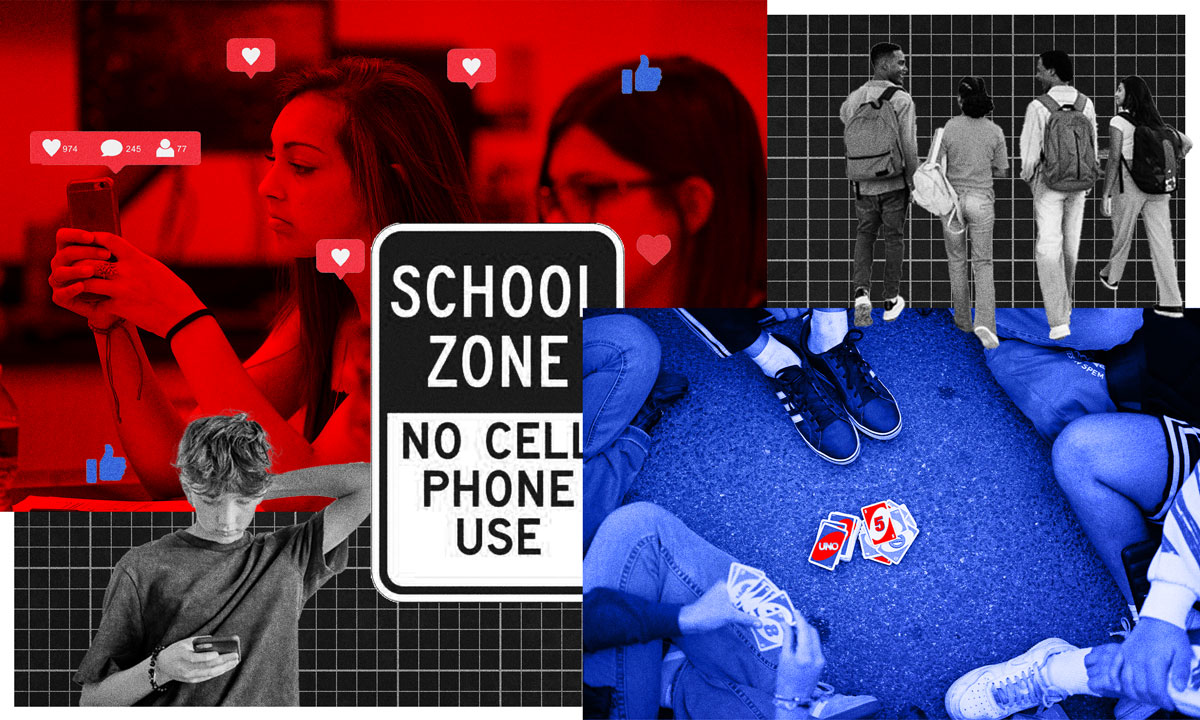
Recently enacted prohibitions on phone use in schools have produced slight, though recognizable, improvements in learning, according to a new study of millions of U.S. students. The paper’s authors argue that effective bans on devices during the school day could, over time, restore a substantial portion of the academic growth that has been lost over the past decade.
But nagging questions remain about the efficacy of the bans, along with the wider impact of smartphones on children and adolescents. Given that most minors access their own devices frequently at home, even advocates for further restrictions concede that too little is known about the consequences of out-of-school use.
The report was released Tuesday morning by academics at Harvard University and Dartmouth College, in collaboration with researchers from the testing organization NWEA. It is the first national study of in-school bans that makes use of student-level data, allowing educators and policy makers a more granular look at how academic outcomes have responded.

The answer so far has been: incrementally. Schools that implemented strict bans, by requiring students to store their phones in lockable pouches, gained the equivalent of 1–2 weeks of additional instruction annually between 2022 and 2026. Measured differently, that’s about an extra two minutes per hour of class time.
Harvard economist Tom Kane, one of the paper’s co-authors, called that a “modest” uptick. But he added that student achievement fell only by modest amounts in each year leading up to the COVID pandemic — a slippage that he and his collaborators have dubbed a “learning recession.” That decline snowballed into something more worrying, even before the widespread school closures that began in 2020.RelatedAnatomy of a ‘Learning Recession’: Academic Losses Began in 2013, Report Finds
It was as though Congress, beginning around 2013, had acted to truncate the academic year by two weeks, and each new class of pupils successively received less and less schooling. If the phone bans could help restore those learning opportunities, their accumulation could prove highly beneficial.
“One or two weeks is no big deal on a one-year basis, but what we should be looking for is small impacts on achievement growth that persist,” Kane said. “Like shortening the school year would have done.”
Did bans go far enough?
The paper relies on math and reading scores from NWEA’s MAP test, an assessment in use in thousands of K–12 schools. Altogether, Kane and his collaborators gathered data from 3.3 million students enrolled in grades 4–10 across 4,600 campuses. It is the only study showing the effects of restrictive policies through the 2025–26 school year.
By comparing students in schools that forbid in-class phone use to those enrolled in otherwise-similar schools that enacted no such prohibition, the researchers discovered that the bans work. Compelling students to place their phones in sealed pouches like those sold by the company Yondr reduced cell phone activity by approximately 20 percent.
That figure may somewhat underestimate the true effect of the pouches. The private company Advan provides data on cell phone pings for studies using this design, but Kane said that it may measure signals from phones that have been left on but are unused.

MAP scores generally moved upward by roughly the same amounts for all demographics, with most differences between student groups failing to meet the bar for statistical significance. On average, the increase was about .01 standard deviations — a common statistical unit measuring the distance from a population average. In education research, effects lower than .05 standard deviations are generally considered small.
Thomas Dee, a professor at Stanford University, helped conduct a national study of phone bans that was circulated this spring. That paper found negligible academic impacts, while detecting a rise in post-ban disciplinary incidents that faded over time. Dee said that this latest study similarly demonstrated disappointing academic results, adding that the present evidence base pointed to a “clear imperative” for more data.
“It may be that phone bans don’t go far enough in that many students still use other devices like laptops in schools and phones outside of school,” Dee wrote in an email. “Or it may be that students’ phone use in schools simply isn’t the child-development problem we thought it might be.”
Impact of Meta settlement
Others saw more promise in the findings, however.
Umut Ozek, a researcher at the RAND Corporation, co-authored a 2025 study of smartphone bans. Like the Kane paper, that work showed only small improvements to learning, at least over the first few years of implementation; like Dee’s, it also found an increase in behavioral problems in the wake of the phone restrictions’ arrival.
To Ozek, the most important factor was timing: It couldn’t be expected that schools would become better learning environments in a short span after having been radically changed by the introduction of smartphone use in the decade prior. Under the circumstances, he said, the bulk of the research on the effects of the bans is positive.RelatedMeta Reaches $17 Billion Settlement With States in Landmark Trial Over Teen Social Media Addiction
“Several studies, including our study in Florida, show that there is typically a transition period after these bans take effect,” he wrote in an email. “During that period, schools, teachers, and students likely adjust to this new norm. Test score benefits typically emerge after this transition period.”

Kane said that, while he believed learning gains would continue to mount in the coming years, students’ time on their phones outside school walls was still a black box that needed to be opened. And he believes there is a way in: the recent legal settlement reached with the social media company Meta.
According to the terms of that settlement — which emerged from a massive lawsuit waged by families who said their children were harmed by excessive social media consumption — Meta has agreed to put restrictions on the use of its products by minors, including during the school day.
Kane said that if other major platforms, like YouTube and TikTok, could be similarly compelled to roll out those measures, their consequences could be studied. Given the opacity of both those companies’ workings and children’s use of their products, it may be the only way to gain a closer look, he concluded.
“We’re 13 years into this, and nobody has strong evidence. And the social media companies know how much time kids are spending on their platforms, but it’s never been linked to student outcomes. We now have a window to fill that gap.”