Practice “drop, cover, and hold on” during annual earthquake drill
Pause what you’re doing at 10:15am on Thursday, October 15 to practice what to do during an earthquake as part of the annual Great California Shakeout.
If you were taught to stand in a doorway when the ground starts shaking, it’s time for a refresher. That’s outdated advice – but still a common misconception. When we quizzed residents at this year’s Harvest Festival about what to do during an earthquake, most people gave that answer.
Doorways don’t provide protection from falling or flying objects, one of the most common causes of earthquake injuries. Instead, experts today recommend drop, cover, and hold on.
Protect yourself during an earthquake
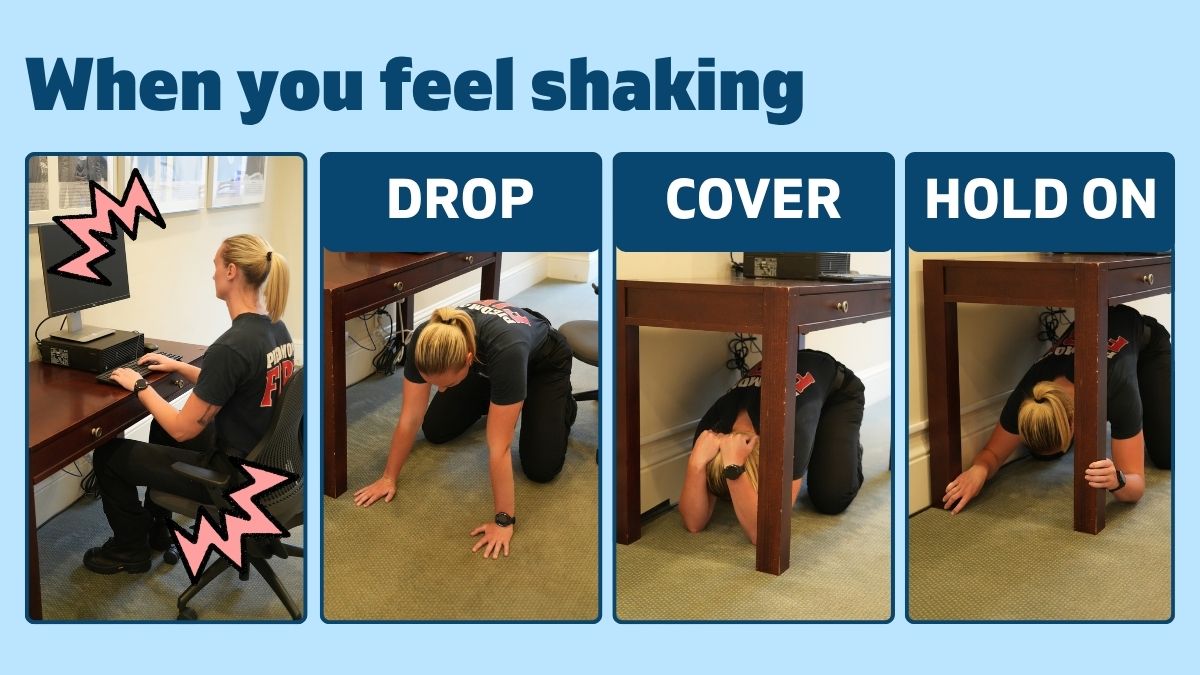
Anytime you feel shaking or get an earthquake alert, take these three steps immediately if you are able:
1. DROP to your hands and knees
This helps protect you from being knocked down by shaking.
2. COVER your head and neck.
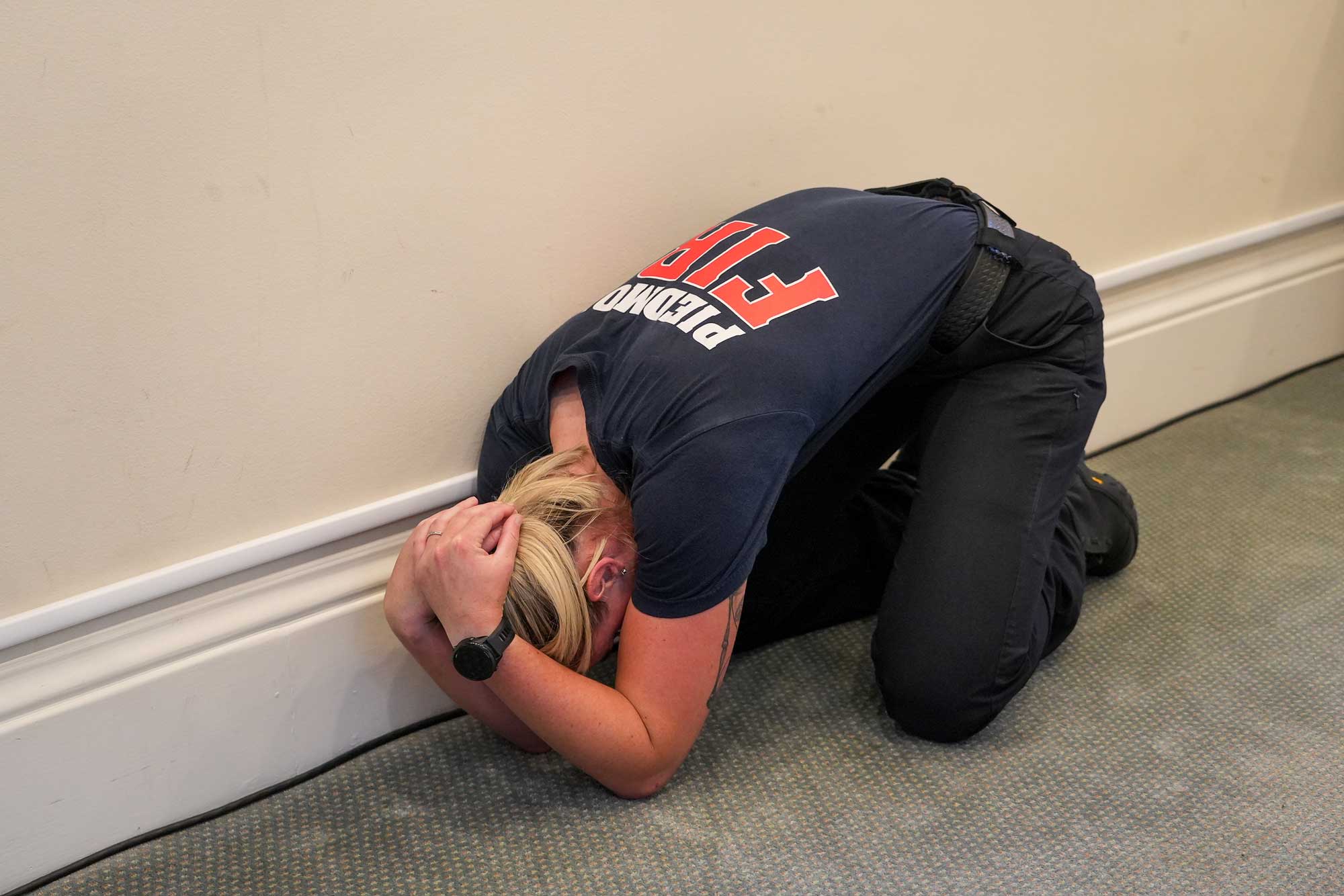
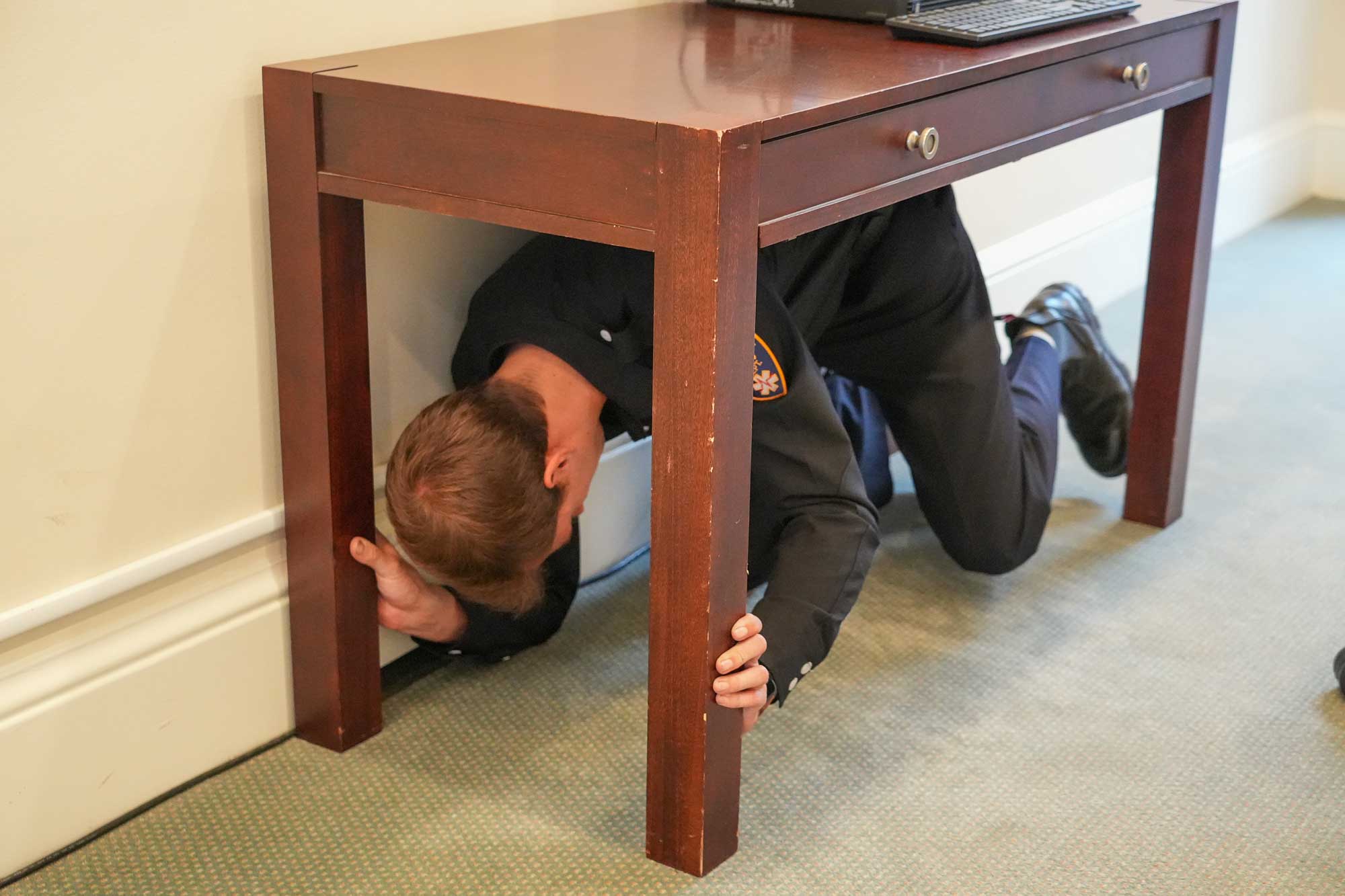
Crawl under a sturdy desk or table if one is nearby. If not, crawl next to an interior wall and use your arms to protect your head and neck.
3. HOLD ON until shaking stops
If you’re under furniture, hold onto it and be ready to move with it if it shifts. Otherwise, keep your arms over your head and neck.
If you use a wheelchair or walker, the recommended steps are lock, cover, and hold on: lock your wheels, cover your head and neck with your arms, and hold on until the shaking stops.
The most important thing is to act immediately. Don’t run outside or move to another room while the ground is shaking.
How prepared is your household for an emergency?
Knowing what to do when the ground shakes is just one part of being prepared for an earthquake. Having emergency supplies on hand – especially water – can help you get through disruptions to essential services. Securing heavy furniture and considering seismic retrofits can reduce the risk of injury and property damage.
The Fire Department wants to better understand how prepared our community is – what steps residents have taken, where they’re vulnerable, and what might help them be more ready.
Help us by completing our disaster preparedness survey at piedmont.ca.gov/DisasterSurvey. Your answers will help us identify where residents need more support and guide future programs and resources.
Photos courtesy of the City of Piedmont