Clickbait is not real news.
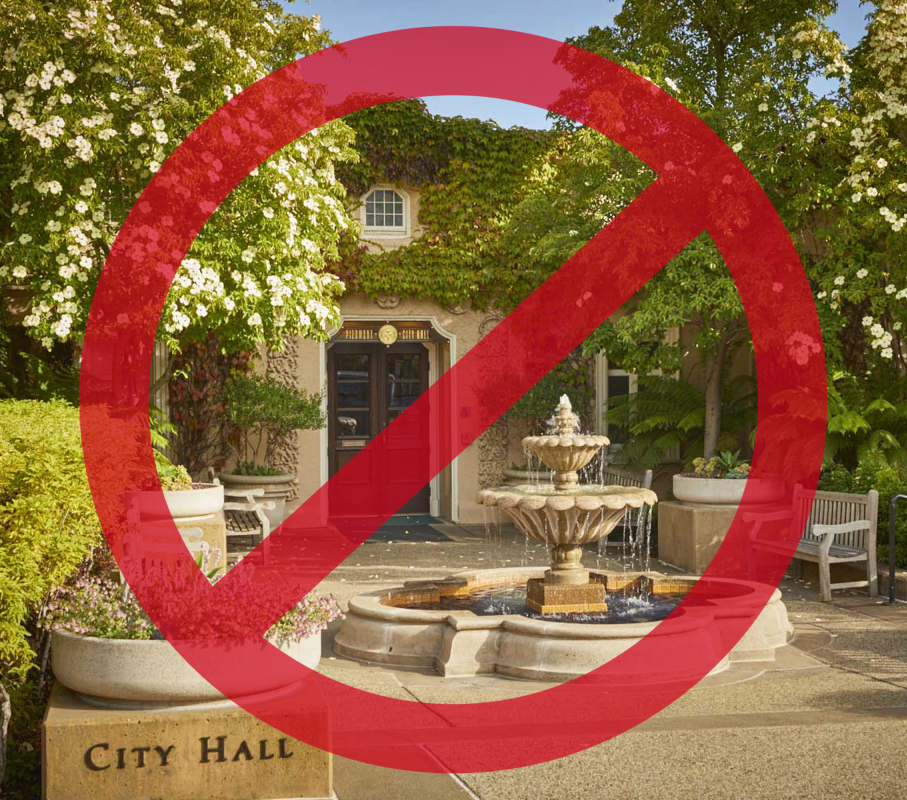
If you didn’t see the article bashing Piedmont in the SF Chronicle (and reiterated in the NY Times), you’re probably better off. This is the kind of reporting that falls short of facts, and instead, relies on sensationalism designed to divide.
[SPONSORED]
The personal stories of one realtor’s battles and triumphs in the highly-competitive Bay Area real estate market, seeking to illuminate and humanize the very real ups-and-downs of homeownership.
Listen, I rail against inequality. I stopped shopping at Target when they abandoned DEI. I avoid Amazon. I drive a hybrid. I recycle, and having spent the last 36 years married to a man who represents the indigent on Death Row, you might guess (and you’d be right) that my politics align FAR left. But the article not only unfairly singles out Piedmont, it completely misses the point . . . . Not that Piedmont — or any other similarly affluent community — doesn’t suffer from glaring inequities and systemic racism that’s easy to ridicule (sadly, it does), but the solution isn’t pitting one town against the other by tearing Piedmont down; it’s by raising Oakland UP!
And while the article is quick to point out that 69% of Piedmont’s population is white, with only 1% identifying as black, that leaves the other 29% represented by other races/minority groups which is (happily) a huge improvement over what Piedmont’s population would have been even a generation ago. In fact, our fastest growing demographic is Indian/Asian/Pacific Rim. In short, Piedmont is evolving.
Judging by the folks that tour the Opens on Saturday and Sunday, diversity may have been late to the party, but it’s a healthy trend that’s only going to improve over time. That being said, Piedmont’s population is definitely underrepresented by brown and black residents, and that needs to change. New people, new ideas, and new traditions are more than welcome here.
Perhaps Piedmont gets picked on, despite its more affluent neighbors that include Ross, Atherton, Hillsborough, Woodside, Los Gatos, etc., because it sits in the heart of Oakland, and regretfully, the schools, infrastructure, and social services between the two cities ARE dramatically different, as are the demographics. That’s absolutely not right, but it doesn’t make Piedmont wrong. Frankly, Oakland deserves much better.
Piedmont’s ability to retain its unique character may be due to the fact that this tiny incorporated city of fewer than 4,000 homes and less than 11,000 residents isn’t saddled with the HUGE costs of underwriting and maintaining public hospitals, homelessness, urban blight, city streets, and the overbearing weight of city employees that Oakland must support. ($450 million a year for pensions and mandatory salary increases alone.) Without these burdensome, financial obligations, Piedmont can focus its resources on sustaining highly coveted schools, maintaining its beautiful parks and green spaces, and improving public amenities; all of which continue to support high property values within its borders. (And yes, Piedmont’s median priced home is MUCH higher than Oakland’s.)
Additionally, Piedmont’s parent body raises $3 to 4 million dollars annually to privately fund science, art, music, and athletic programs for the public school programs that have unfortunately been cut in other districts. (Remember when band was actually an elective in public schools?) Frankly, expanded programs are the reason people move to Piedmont; they’re seeking academic excellence, STEM classes, summer camps, and afterschool activities in a safe community with a shared set of values centered around our kids. Piedmont’s commitment to its children certainly factored heavily into the equation when Cliff and I abandoned SF private schools (and their exorbitant tuitions!) to migrate to the East Bay many years ago. Excellent public schools WERE the single most important reason for relocating. (Trading annual tuition for a college fund was a close second.)
Should such choices be available to everyone? Absolutely, and like many others who are attracted to Piedmont, we worked tirelessly to make such opportunities available for our children. I’m not sure we should be “cancelled” for having done so. BTW, if you think there aren’t HUGE disparities between neighborhoods in San Francisco, think again. Should we “cancel” Pacific Heights, Russian Hill, or Sea Cliff because they far outpace the Tenderloin? (Probably not.)
However unfair the discrepancies between neighborhoods, we can all agree that racist practices started WAY back before segregation and red-lining were conveniently ignored, before poorly planned freeways cut-off whole neighborhoods from one another, and before lenders deemed entire swaths of the population to be “poor risks.” In short, inequality has been around since the founding or our county (and long before), which in no way excuses the practice, but if we’re going to have a rational discussion, the concept of inequality didn’t begin and end with Piedmont. Ask any social scientist and they’ll tell you that racism is rooted in tribal behavior that has existed since man walked the earth.
To make matters worse, the passage of Prop. 13 in the 1970s — which froze property taxes for seniors — resulted in SIGNIFICANT funding cuts to California’s (then) outstanding schools and institutions, and that’s a problem that needs addressing. That being said, the taxes in Oakland have risen 65% since 2013, while public services have all but disappeared. That’s not a Piedmont problem: that’s a management problem, a policy problem, and a fiscal problem.
Add to that the inherently punitive practice of funding schools based on average daily attendance (not enrollment), which means that high rates of chronic absenteeism, especially among low-income and high-risk students, has reaped devastating fiscal impacts on the schools that, arguably, need help the most. As enrollment is expected to decline through the next decade, most districts and counties will continue to face budget, operational, and educational challenges that come with downsizing (including Piedmont).
Listen, I’m a lowly Realtor®, so I don’t have the answers as to how to make the world, let alone, the East Bay “fairer,” but having sold in and around Piedmont for the last two decades, I can absolutely attest to the changing guard, the increased awareness around diversity, the desire to do better, and the efforts towards inclusion by a lot of good people who spend countless hours volunteering and leading the city with little, if any, pay, few rewards, and not nearly enough thanks. (Thank you.)
Finally, while Piedmont has been mandated by the state of California to provide more housing options, it is severely limited by its boundaries. Consequently, there are few opportunities for expanding or building low-income housing within the city limits. And, yes, that makes it difficult to correct the disparity and availability of affordable housing. Practically speaking, we are talking about Piedmont’s geographical limitations and challenges, NOT its inherent values.
Do I wish all children had an equal playing field from birth? I absolutely do. It’s not only heartbreaking, but a real loss of potential and promise. We’ve let the vast number of our kids down, and that’s not just sad, it’s criminal. So perhaps our elected leaders in Sacramento and Washington should focus on how to give our children more opportunities instead of wasting time on the many distractions that now seem to polarize our politics. And maybe (just maybe), we could call upon our humanity and reject divisiveness in whatever form it takes, and instead celebrate our successes while extending a hand to every man, woman, and child who needs it. Is there a reporter willing to write that story?
PS – Speaking of schools, they are back in session, so please be mindful and slow down.
How can we help you?
Julie Gardner & Sarah Abel | Compass Realty
Not just Realtors, but consultants in all things house and home, we’re here to educate, explore, examine and refer . . . In short, you may count on us to take care of your home as if it were our own and anyone who knows us, knows we take pretty darn good care of our homes.
Learn MORE