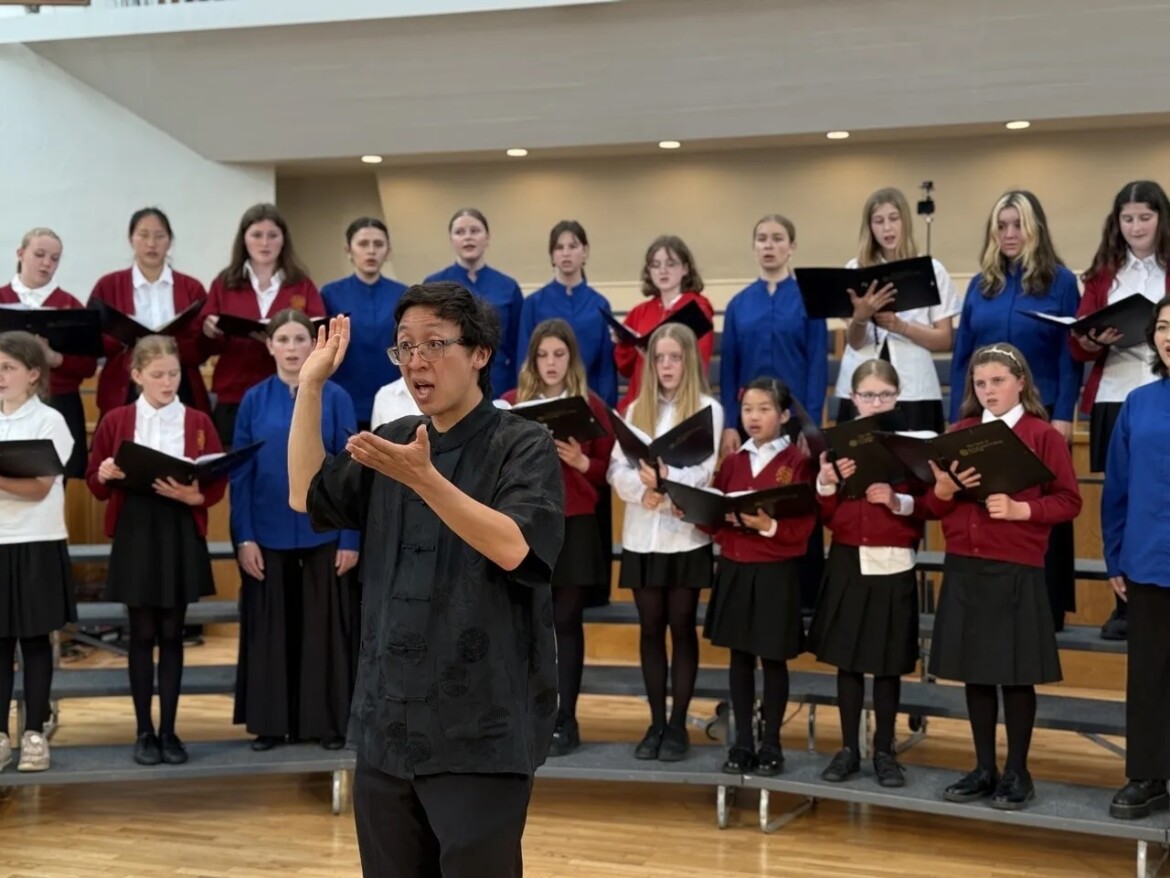
Piedmont East Bay Children’s Choir Artistic Director Eric Tuan’s experience collaborating with historian Jean Pfaelzer on his opera “Echoes of Eureka,” which premiered last year in Berkeley, was so powerful that he wanted to work with her again.
“She wrote this book about the experience of Chinese Americans and the pogroms they faced across the American West as immigrants in the 19th century, and I was really struck by this because it’s local history and was moved by the number of personal stories she dug out of the archives,” Tuan, a Bay Area native, says of Pfaelzer’s 2007 “Driven Out: The Forgotten War Against Chinese Americans.” He adds, “I became interested in telling more stories in collaboration with historians.”
The San Francisco Choral Society commissioned Tuan to create another opus addressing Chinese Americans’ histories; he turned to Pfaelzer and Julia Flynn Siler, who wrote “The White Devil’s Daughters: The Women Who Fought Slavery in San Francisco’s Chinatown” (2019) for inspirational material for “Three Portraits: Voices of Chinese American Women from Early California.” The three-movement piece for solo trumpet, strings and chorus makes its world premiere Aug. 15 in Davies Symphony Hall as part of SFCS’s fifth Summer Festival Chorus.
SFCS Artistic Director Robert Geary conducts the program, which also includes Bay Area artist Rotimi Agbabiaka’s semi-staged production of Carl Orff’s “Carmina Burana,” which features 150 vocalists, the California Chamber Symphony and the San Francisco Youth Chorus as well as soprano Chelsea Hollow, tenor Sam Faustine and baritone Eugene Brancoveanu.

In his piece, Tuan was inspired by three courageous, resilient women: Mary Tape, who in 1885 wrote a powerful letter to the San Francisco Board of Education after her 8-year-old daughter Marnie was barred from attending school due to her Chinese heritage; immigration official and suffragist Tye Leung Schulze, who in 1912 was first Chinese American woman to vote, casting a ballot in San Francisco; and Yoke Leen, whose 1910 affidavit in a Tuolumne County courtroom protested her deportation from the U.S.
“The Chinese American experience can often be reduced to sort of numbers, abstractions or statistics,” Tuan says. “So to find these three women who were leaving powerful testimonies of their life in the first person from the 19th century was really compelling, and I thought their voices were powerful and that they deserved to be heard.”
Chinese American women in California faced unique challenges, which Tuan says made their writings particularly moving.
“There were far more men than women who immigrated to California from China, and many of the women who did immigrate were trafficked or brought against their will,” he says. “In the documentary record, their testimonies are going to be few and far between, and it was very cool to be able to find these three testimonies of women speaking in their own voice, in some cases with photographs, and they’re speaking to us from across the centuries with these powerful statements.”
Tuan, who began his musical journey as a PEBCC young chorister and went on to receive commissions from across the U.S. and Europe, set his music on the women’s written accounts. However, an unaccompanied choir sings Schulze’s story in one movement.
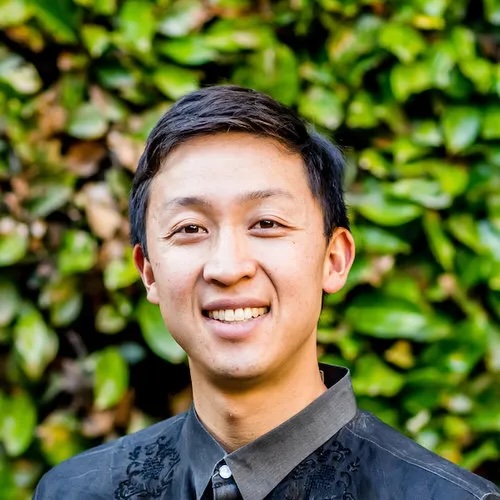
“That reflects her internal reflections in the San Francisco Examiner where she writes about how she thought long over her first vote, saying, ‘I think we women are more careful than the men,’” he says. “So that’s why I set it in this more vulnerable style of only voices.”
In the other movements, Tuan employs instrumentation to give the lyrics additional emotional heft in Tape’s and Leen’s accounts.
“The solo trumpet gives their voices a particular strength or defiance that it expresses along with the string instruments,” he explains. “Leen’s movement has some body percussion because I wanted to express her own defiance and claiming her right to exist. She says she doesn’t want to be trafficked, so that’s why I wanted to have the earthy, strong element of body percussion.”
As a composer, Tuan likes to amplify human experiences faithfully and in ways that engage audiences with empathy. One message he would like audiences to take away from his new work is that no voice is too small to matter.
“All three of these women were ordinary people — they didn’t come from positions of privilege, and they didn’t work in positions of power — but their actions made a difference, he says.”
San Francisco Choral Society‘s Summer Festival Chorus is at 7 p.m. Aug. 15 in Davies Symphony Hall, 201 Van Ness Ave. San Francisco. Tickets are $55-$120 at (415) 392-4400 or cityboxoffice.com.
The post Composer Eric Tuan tells historic Chinese women’s stories in SF Choral Society premiere appeared first on Local News Matters.
Congratulations, Eric!