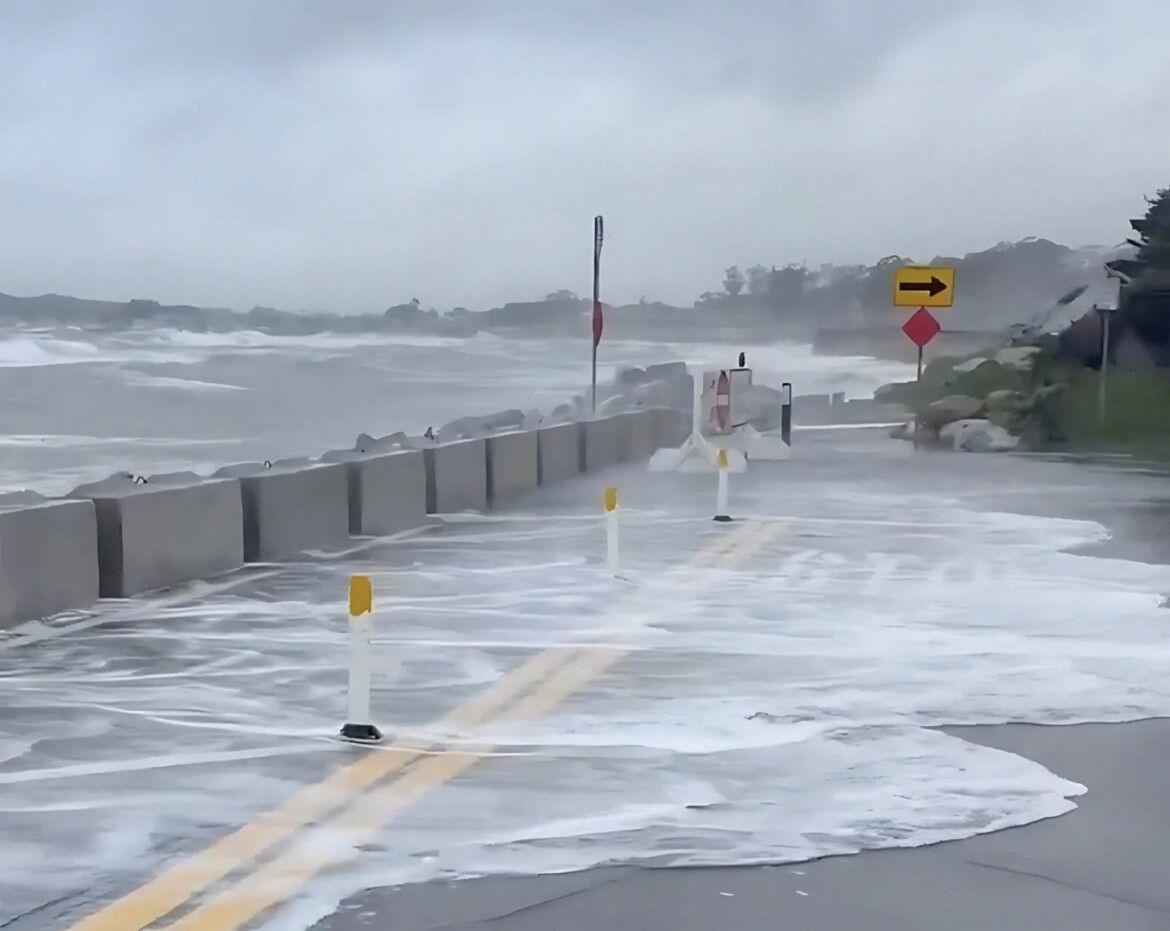
Thousands of viewers tuned in to a virtual town hall this week with climate experts providing insight into the possible impacts of a super El Niño event in the Bay Area and across the state.
“We may be seeing an event that we haven’t really seen before in living memory in California,” said climate scientist Daniel Swain. “The impacts of that are something that’s really the focus of tonight’s conversation.”
The town hall was hosted by state Sen. Mike McGuire, D-Healdsburg, and saw nearly 6,000 viewers online Tuesday.
“This super El Niño has a real potential for larger and more destructive winter storms, significant flooding events, and ocean-based heat waves, which we’re already starting to see off the Pacific,” McGuire said. “At the end of the day, we can’t control the weather, but what we can control is how prepared we are before the weather hits.”
El Niño is a temporary warming of the Eastern Tropical Pacific Ocean that can lead to significant climate events around the world. But this year’s El Niño is gearing up to be a super El Niño, which is the term used for an exceptionally strong El Niño event. That’s because the temperatures in the Eastern Tropical Pacific are reaching record-high numbers.
“We’ve never seen ocean temperatures in the Eastern Tropical Pacific as warm as they are today in the region that matters for El Niño,” Swain said.
On the Northern California coast and in the Bay Area, scientists are predicting an increased risk of flooding, heavy rainfall, high sea levels, a warm fall season, and lightning.
“The fact that we have these huge changes happening in the Pacific that could lead to more amplified, more active storm track could really impact the winter for Northern California and the Bay Area,” said Bay Area meteorologist Mark Tamayo.
Speakers noted that if heavy rains do arrive, they will likely peak in December and January.
Mark Merrifield, the director of the Scripps Center for Climate Change Impacts and Adaptation, said “we’re expecting likely the highest sea levels ever recorded on the California coast associated with this event.”
Along with stronger rains and larger ocean waves, high sea levels could play into greater coastal flooding risk, which is already exacerbated by king tides that arrive in wintertime in Northern California. Merrifield noted that high sea levels will also cause water rising in the San Francisco Bay and even in the Sacramento-San Joaquin River Delta.

“As the sea level rises along the open coast, it also raises the water level in the bays and harbors along the coast,” Merrifield said.
How to prepare
The panel also warned of a greater probability of fires in the region due to lightning storms.
“Those storms could destabilize the atmosphere enough to produce maybe some more thunderstorm potential and more fires,” Tamayo said. “It’s been hot, it’s been dry, and everything’s ready to burn. So if you add lightning to the mix, I am concerned.”
Nate Ortiz, the assistant director of planning and preparedness at the California Office of Emergency Management, provided some tips on how residents can start to get prepared for the possible El Niño impacts.
He recommended signing up for local emergency alerts and creating a “go bag,” which is a kit containing essential survival items necessary to be self-sufficient for 72 hours. People should have cash in case ATM machines go down, have some pet food ready to go if needed, gather key documents like passports and Social Security cards, charge or fuel their cars, and keep mobile devices charged.
“We’re going to be doing a lot of work to do our part,” Ortiz said. “But make sure that you’re doing your part to get those alerts and be able to sustain for a little while.”
While the panel made a range of possible impacts associated with El Niño, the predictions are not guaranteed to happen. But with the current forecast and conditions in the Eastern Tropical Pacific, experts are raising the alarm as a precaution.
“Our best predictive models are suggesting that this year’s event could significantly exceed the magnitude of any previously observed event in the modern era,” Swain said. “The whole reason we’re here is to think about what could happen, the potential risks that might entail, how we can better prepare for them in the short run, and also how it might prepare us more for the future.”
The post Climate experts predict high flood risk in Bay Area for super El Niño appeared first on Local News Matters.