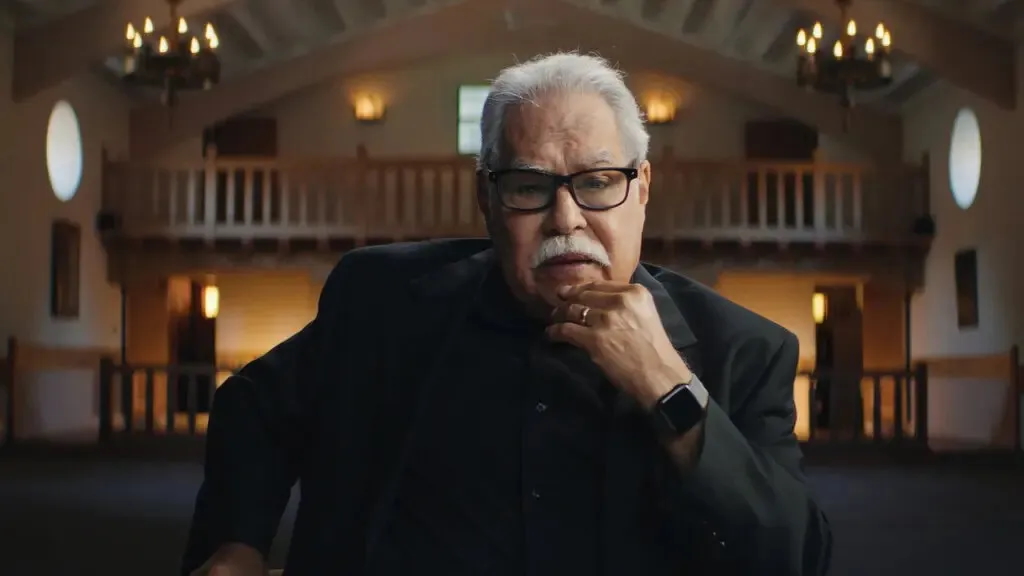
Filmmaker David Alvarado, director of “American Pachuco: The Legend of Luis Valdez,” was a 21-year-old undergraduate at the University of North Texas when theater director Valdez, founder of El Teatro Campesino in California, gave a keynote speech at the college that mesmerized him.
“He spoke that night about El Teatro Campesino, about the dignity of farmworkers, about making theater a weapon for human beings,” Alvarado wrote later in Time magazine. “But what struck me most was simply that he was there at all. A Mexican American artist who had made it.”
Alvarado, who went on to get a Master of Fine Arts degree in documentary filmmaking at Stanford University and make well-known films like “Bill Nye: Science Guy,” lives in New York, where’s been directing feature documentaries and TV shows for 15 years.
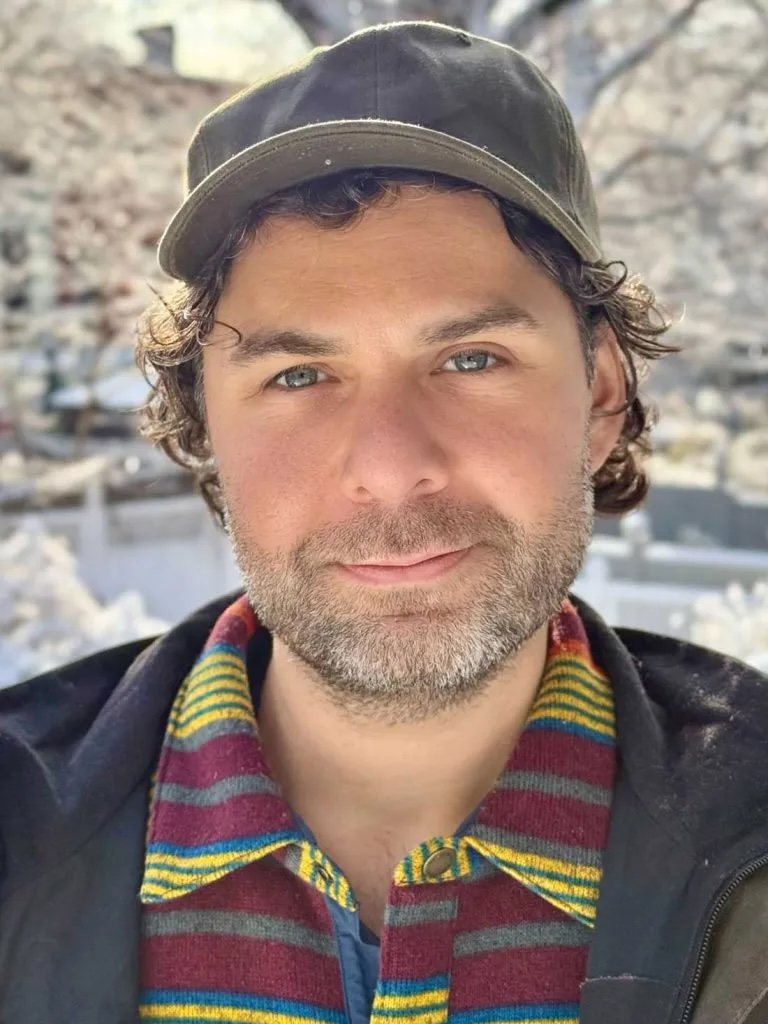
But he never forgot that speech. Knowing there was no documentary about Valdez, he found the director-activist on a Google search and, “reached out cold,” says Alvarado, who appears this weekend at screenings of the film in San Francisco, Berkeley, and San Rafael.
Valdez, who had refused queries from other directors, liked Alvarado’s angle about the quest for belonging in America, and gave him the OK.
Valdez’s play “Zoot Suit,” starring Edward James Olmos as the quintessential pachuco, based on a real-life incident in which a Chicano gang in Los Angeles was convicted of murder, galvanized Chicanos in Los Angeles when it opened in 1978. Later it became the first Chicano play on Broadway. It was filmed in 1981.
“‘Zoot Suit’ hit LA like a bomb,” says Alvarado. “It changed culture in LA, in a way.” People who’d never before gone to theater went to see ‘Zoot Suit.’”
“American Pachuco: The Legend of Luis Valdez” has sold out every screening in Los Angeles so far. It also sold out its opening weekend in New York, says Alvarado. It opens in select Bay Area theaters this week.
Valdez’s story, as captured by Alvarado, goes back to the Delano grape strike in the 1960s when Dolores Huerta and César Chavez organized farmworkers in California’s Central Valley to fight for fair labor laws and union contracts. Valdez, with his troupe of actors performing on flatbed trucks, joined the effort.
The film continues as Valdez creates the play “Zoot Suit” and the 1987 film “La Bamba,” in which Lou Diamond Phillips played rock’n’roll singer Richie Valens.
“[Luis is] a great storyteller,” says Alvarado, in recent phone interview. “I could see his wheels turning as I began to focus on different aspects of his life.”
Valdez, born in 1940 to farm workers in California, attended San José State University and performed with the nascent San Francisco Mime Troupe.
The 92-minute documentary is particularly theatrical, as befits a film about a theater artist. It screened in January in the Sundance Film Festival, where it won the Audience Award for U.S. documentary.

“American Pachuco” took four years to complete, says Alvarado, who, along with gathering extensive footage on early days, “Zoot Suit,” and “La Bamba,” includes talking heads: Cheech Marin, Linda Ronstadt, Huerta, Phillips, Valdez’s wife Lupe Trujillo-Valdez, and Valdez himself.
In a fanciful choice, the film is narrated by actor Olmos, the pachuco himself, as a spirit guide voiceover. “It was an early idea,” says Alvarez. “[In the film], the narrator can freeze time, talk to the audience, to the characters. The pachuco character has power over the film and the play. . . I wanted to emulate that in some way, almost resurrect this voice.”
The film’s early scenes go back in time to the Central Valley, to Huerta and Chavez’s fierce, ultimately successful organizing fights. But Alvarado ended up excising some footage of Chavez, who died in 1993. It wasn’t until after the film screened at Sundance that news came out that Chavez committed sexual abuse and rape. Remaining scenes in “American Pachuco” show Chavez’s insistence that Valdez drop his theater work and focus on his strike duties.
“I’d heard César has control issues, was an iron-fisted leader,” says Alvarado. “What I didn’t know was that other side of him. That was a shock, a horror.” His memory of Chavez was from middle school, from history books, of being told Chavez was someone he could be proud of.
“It’s a rare thing to be releasing a film, and then history shifts under our feet,” he adds.
Valdez brought his players to join the strike in Delano in 1965. In 1971, El Teatro Campesino relocated to San Juan Bautista, where it remains and where Valdez is founding artistic director and playwright.
When Alvarado was pitching the film to corporations, people didn’t know what a pachuco was, he says. (A Wikipedia entry defines pachuco as male members of a counterculture that emerged in El Paso, Texas in the late 1930s.) Nor did they know about Valdez.
But to Alvarado, Valdez is still talking to him just as he did when Alvarado was 21. “[Filmmaker] Walter Murch talks about how in a good movie you’re not actually looking at the screen — you’re living it in a way,” muses Alvarado. “As though you’re experiencing it yourself. Almost like a dream, it starts to envelop you. That’s what I was trying to do with this documentary: put you in the world of Luis Valdez and make you see America from this different angle.”
David Alvarado appears at “American Pachuco: The Legend of Luis Valdez” screenings at 6 p.m. July 31 at the Roxie Theater in San Francisco, with Luis Valdez; 4 p.m. Aug. 1 at Rialto Cinema Elmwood in Berkeley; 7 p.m. Aug. 1 at Smith Rafael Film Center in San Rafael; 2 p.m. Aug. 2 at the Roxie; 7 p.m. Aug. 2 at the Rialto Cinema Elmwood.
The post ‘American Pachuco’ tells vivid story of theater-activist Luis Valdez appeared first on Local News Matters.