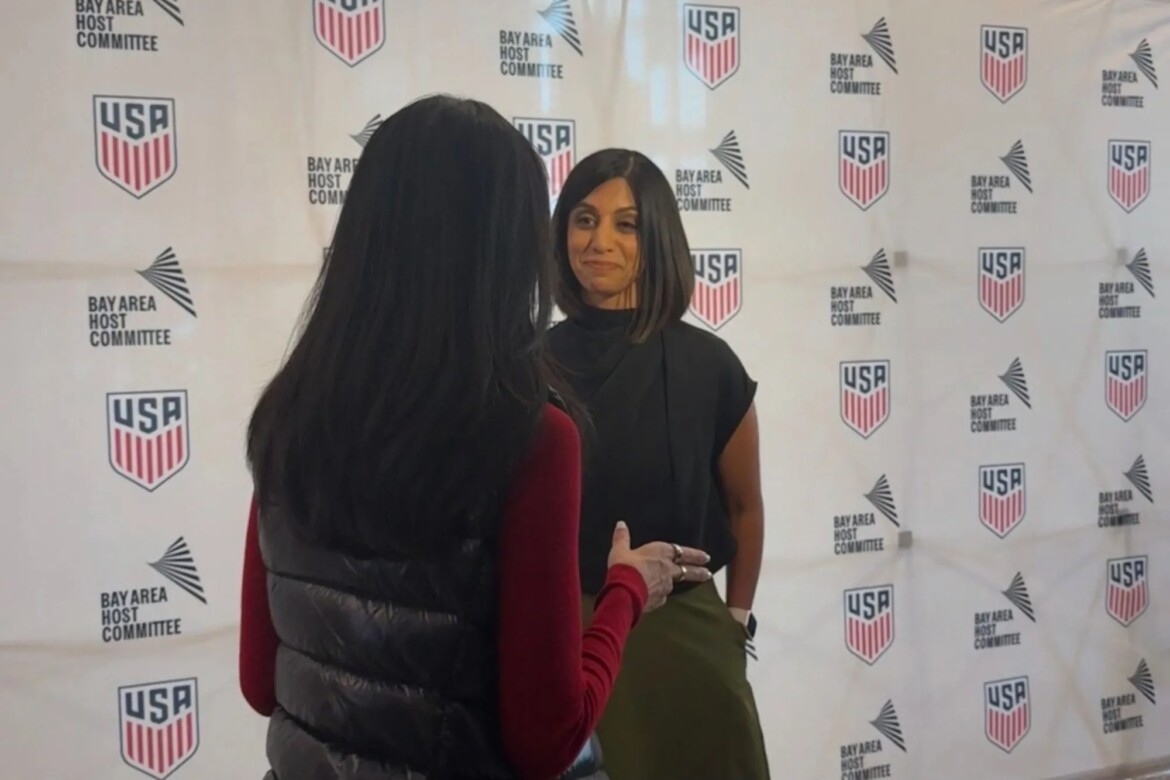
The Bay Area Host Committee, which helped coordinate the World Cup and Super Bowl in the region, has announced plans to make the committee a permanent regional leadership commission that will continue to bring sports events to the Bay Area for years to come.
The initiative announced Tuesday will be led by its inaugural Leadership Council, which will bring together some of the Bay Area’s biggest executives, politicians and businessmen to create a cohort that will continue the committee’s work to bring major sports events to the region.
Speaking on the committee’s future, BAHC officials voiced excitement to bid for more sports events in the future — like the 2031 FIFA Women’s World Cup, which will be hosted by the United States, Mexico Costa Rica and Jamaica — with the hope of building upon the momentum created over the last two calendar years.
“We’ve proven the Bay Area can execute as a unified region on the world’s biggest stage,” Larry Baer, who serves on the BAHC’s Board of Directors as president and CEO of the San Francisco Giants, said in a statement. “The Leadership Council ensures we preserve the relationships, expertise and momentum we’ve built, and it positions us to write the next chapter of Bay Area sports history.”
Following the committee’s announcement of its permanent leadership cohort, the BAHC joined San Francisco and U.S. soccer leaders Tuesday night to watch the Mexico-Ecuador match in downtown San Francisco. The watch party celebrated the work the BAHC has done to bring major sporting events to the region, coming one night before the Bay Area will host its final World Cup match, a round of 32 bout between the United States and Bosnia-Herzegovina in Santa Clara.

Building on momentum
Gathered together, regional leaders and event organizers remarked upon what has been a landmark summer for the Bay Area, highlighted by increases in tourism and economic activity.
In May, SF Travel, the official marketing organization of San Francisco, projected the city will welcome 24.2 million visitors in 2026, exceeding its 2025 mark of 23.7 million. SF Travel also projected visitor spending will reach $9.9 billion, which would exceed the city’s pre-pandemic record of $9.6 billion in 2019.
The BAHC also projects that the NBA All-Star Weekend held in San Francisco in 2025, combined with the Super Bowl in February and the World Cup matches for the past month, will bring $1.6 billion in economic activity for the region.
San Francisco Mayor Daniel Lurie, who previously led the San Francisco Bay Area Super Bowl 50 Host Committee when Levi’s Stadium hosted the big football game in 2016, was especially complimentary of the impact the BAHC’s events have had on his city.
“The eyes of the world are on us,” said Lurie, speaking on how the World Cup showcases San Francisco and the Bay Area to a global audience. “Visitors from all over the world come here for a few days, and then they go back, they report to their friends and family and they’re like, ‘Oh, we gotta go visit San Francisco in the Bay Area again.’”

The mayor’s office has worked to capitalize on this tourism to fuel the city’s revitalization, outlining safety, transportation and cleanliness as city priorities ahead of the World Cup.
Regional leaders and organizers also celebrated the collaboration required to bring major sporting events to the Bay Area, highlighting partnerships among local governments, business leaders and sports organizations
“I need local government,” said Zaileen Janmohamed, president and CEO of the BAHC, in an interview alongside Lurie. “I need all the sports teams to come together to really pull this thing off, because it literally has not been done before and it doesn’t work unless everyone comes together to make it happen.”
Moving forward, the BAHC will aim to capitalize upon these established connections, with the intent to help the Bay Area host one major sports event every two or three years moving forward.
The post Bay Area Host Committee plans to become permanent sports leadership commission appeared first on Local News Matters.