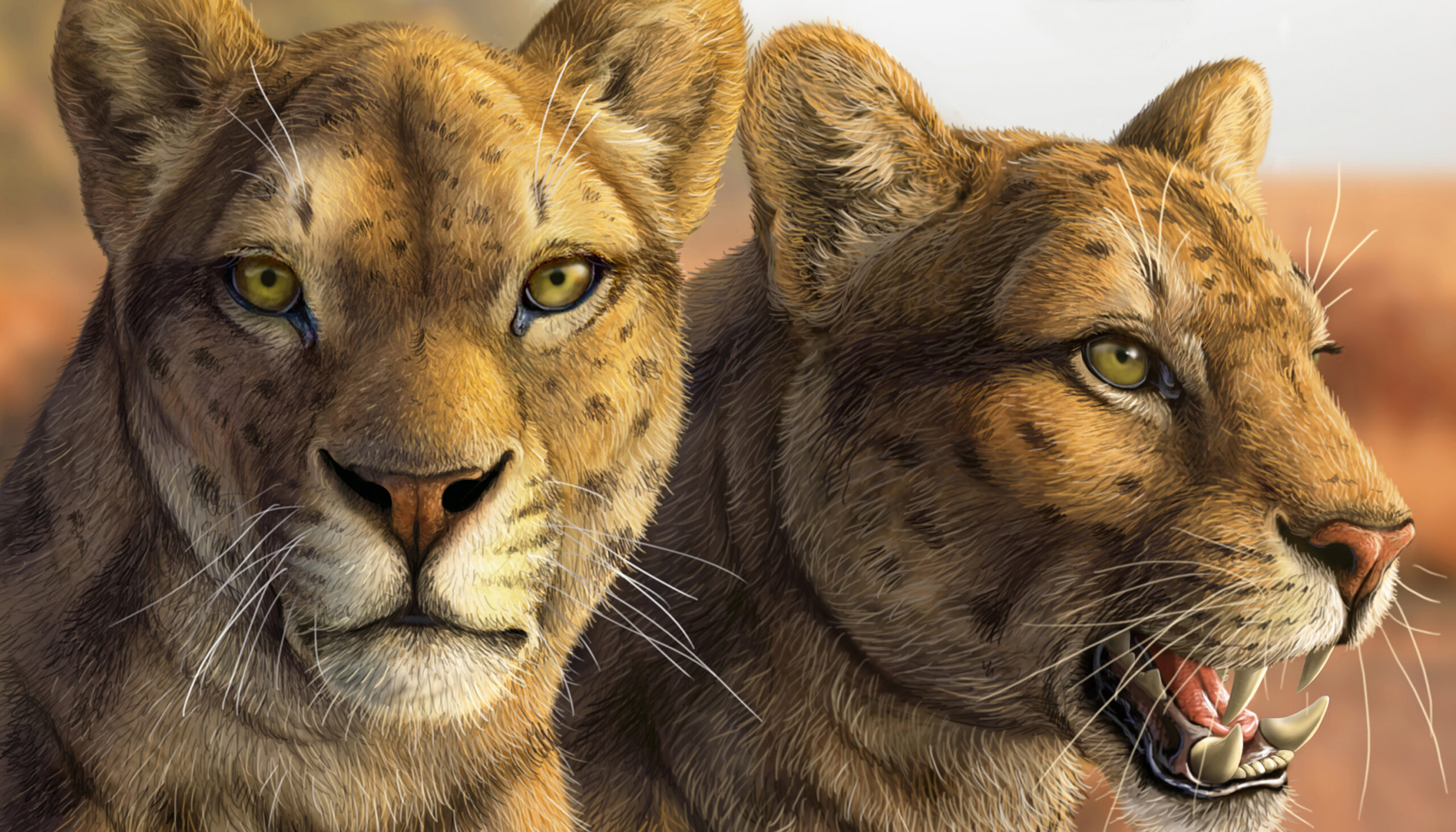
University of California, Berkeley researchers studying fossils found in a museum collection are now helping to clarify how large-fanged felines evolved. It is raising new questions about why saber-toothed cats developed the way they did.
A misidentified skull in the American Museum of Natural History in New York prompted new speculation and research. The fossil turned out to belong to a very ancient saber-toothed cat that inhabited North America more than 5 million years ago.
Researchers now say these cats likely began with smaller upper canine teeth that lengthened over time, a specialization that may have contributed to the eventual extinction of that lineage. These canines could grow up to 7 inches long, making them among the most extreme saber-like teeth in felines. The group is considered one of the last saber-toothed lineages to exist.
UC Berkeley postdoctoral fellow Narimane Chatar said earlier assumptions about saber-toothed cats were overly narrow.
Chatar identified the skull, which had originally been discovered in Kansas, while reviewing specimens in the American Museum of Natural History’s collections. Researchers say the discovery highlights how saber-shaped teeth are more fragile than modern feline dentition. Chatar has also tested the structural strength and killing efficiency of saber-toothed upper canines as part of her research.
UC Berkeley professor Jack Tseng is currently conducting experiments on carnivorous molars in his lab, examining how different tooth shapes affect feeding behavior and survival strategies.
Researchers suggest that while sharp, blade-like fangs may have been effective for certain prey, such as now-extinct ice age animals like bison and camels, they may also have limited adaptability. In contrast, carnivores with flatter, more generalized teeth were more likely to survive environmental changes.
The question remains: Were saber teeth a dead end? Chatar’s doctorate research focused on the evolution of saber-toothed animals, and she suggests that repeated increases in canine length may have eventually constrained their ecological flexibility.
Her research supports the idea that ancient cats developed increasingly elongated fangs over time — until those specializations may have limited their ability to adapt. Chatar emphasizes the need for further research to test and refine these evolutionary hypotheses.
The post UC Berkeley feline fossil find sheds new light on evolution of saber-toothed cats appeared first on Local News Matters.