Dear Jess, My dog keeps jumping on me even though I always turn my back on him. I thought that was the best way to deal with jumping? I’m tired of spinning around with my dog jumping on me!
To turn your back on a jumping dog is probably the most common advice people hear about a jumping dog — and almost every client I see says that they tried that and it didn’t work.
Here’s the problem: for many dogs, your turning around is still attention. It can turn into a fun little game. And the second you glance over your shoulder to check what they’re doing? Jackpot. Your dog just got rewarded.
Dogs repeat behaviors that work. If jumping has ever earned attention, excitement, petting, talking, eye contact, or even being shoved away, the behavior worked. The real solution isn’t just stopping the jumping — it’s making another behavior pay better.
Make sitting = everything good
The behavior to build is sitting. Think of it as your dog’s new way of saying “please.” Want the leash on? Sit. Want dinner? Sit. Want the toy thrown? Sit. Want guests to say hello? Sit.
Practice when your dog is excited, not just when they’re calm — that’s where the magic happens. Start by asking for the sit, but the goal is to phase out the cue until they offer it on their own. Aim for 50 rewarded sits or downs every day during naturally exciting moments. Eventually your dog starts offering it automatically because they’ve learned it unlocks everything good in life.
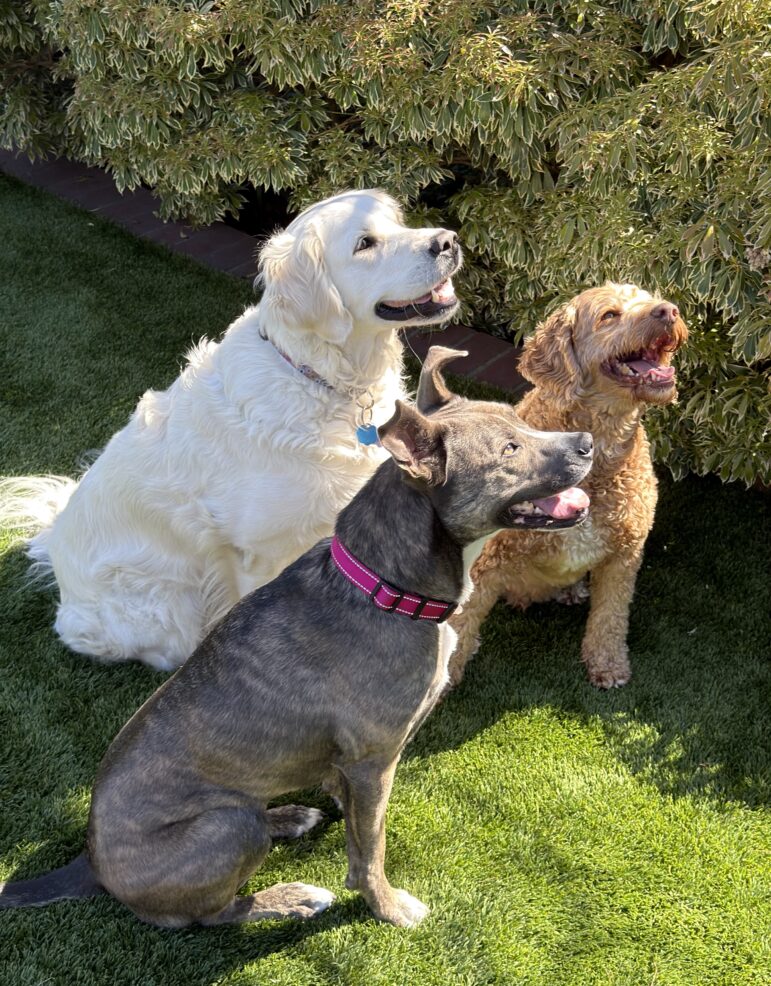
Three good dogs practicing a rewarded “sit”
A great way to help your dog learn this is with a door: Open a door slightly. If your dog surges forward, the door closes. If they pause, back up, or sit, the door opens wider. You’re teaching a simple rule: calm behavior makes things happen, pushy behavior makes things stop. The timing matters more than people realize, and tiny adjustments can completely change the outcome.
Greet on a leash
Greetings are a major trouble spot because jumping gets rewarded constantly — especially by well-meaning strangers. Before your dog launches, ask for a sit and step firmly on the leash loop so jumping is physically impossible. Reward heavily while they stay grounded. The moment feet leave the floor, the greeting stops — for everyone.
Why jumping matters
People sometimes laugh off jumping because the dog is “friendly,” but a large dog hitting a child, an older adult, or an unsuspecting visitor can cause real harm. Even smaller dogs can knock someone off balance. It’s one of those problems that feels manageable until it isn’t.
The good news is that jumping is usually very fixable once owners stop accidentally rewarding it and start making calm behavior more valuable. Every dog is a little different though — timing, consistency, household habits, and what’s actually driving the jumping all affect the approach.
Jess Rollins offers private, in-home dog training in the Piedmont area. To schedule a free discovery call, visit Guidance Dog Training or text 510-545-3889.