
The exhibition “Rancho Roots: The Californio Legacy of Marin” traces the enduring influence of California’s early Spanish and Mexican settlers on Marin County’s landscape and culture.
Presented by the Marin History Museum in San Rafael, it’s the space’s first ever bilingual exhibition highlighting how Californio settlers established ranches across Marin in the early 19th century.
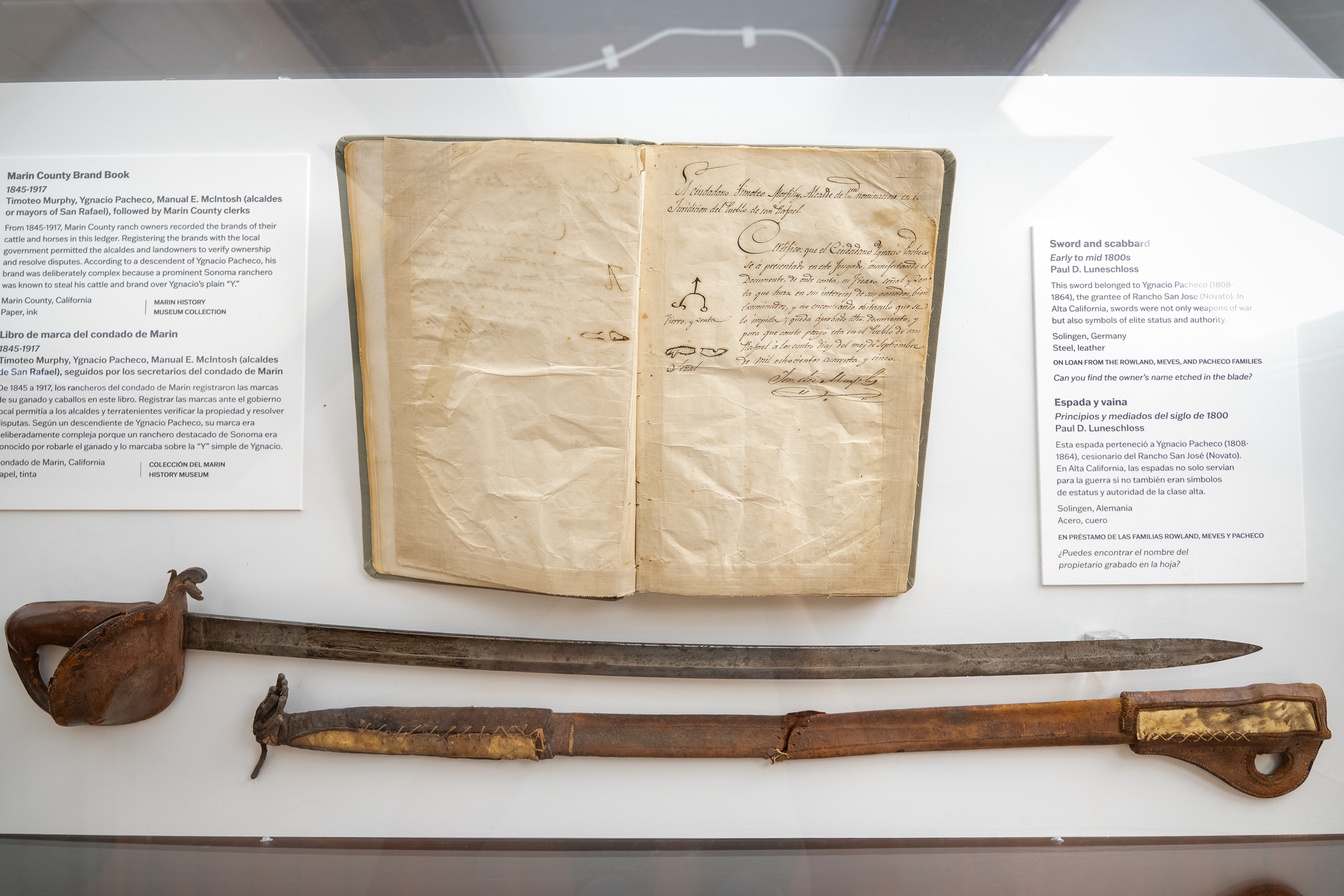
Through artifacts, family stories and interactive displays, visitors learn about life on the ranches: cattle herding, early cowboy culture and the land grants that tied families to parcels and sea. The show uses paintings and relics to humanize a period often reduced to maps and deeds.
Volunteer Director of Education Marcie Miller said such history is vital to preserve.
“It’s important so that everyone understands that this heritage existed, showing things as they were then,” she said.
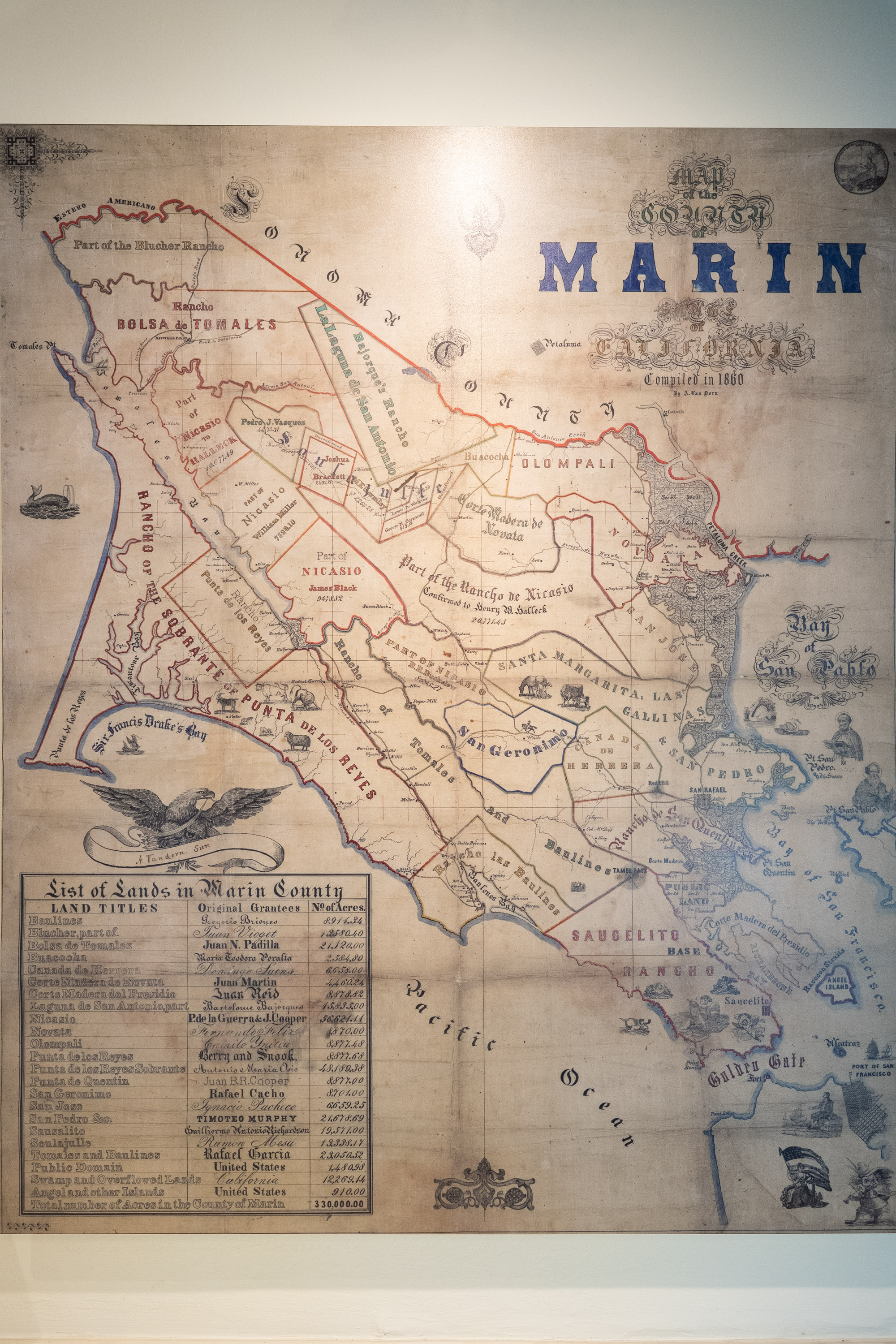
An emphasis is placed on the continuity between past and present. Panels, maps and interactive displays draw connections between rancho-era practices and today’s working farms, local place names and community traditions. Interpretive maps show original rancho boundaries alongside modern roads and property lines, illustrating how historical land divisions persist in Marin’s geography.

History through an inclusive lens
The exhibition also addresses cultural exchange and adaptation. It documents how Californians navigated shifting sovereignties after Spanish rule gave way to Mexican governance. Family narratives detail migrations, while replicas of their everyday items — also acting as ornaments and historical ephemera — demonstrate the Catholic influence left behind by the Spanish crown.
“When the Spanish lost California to Mexico, the Mexican government started issuing land grants,” said Lori Deibel, volunteer research librarian at the museum.

Gallery texts are provided in both languages, ensuring accessibility for Spanish and English-speaking audiences. In fact, the museum is working with the City of San Rafael to make a walking tour in both English and Spanish, Deibel said.
Rancho Roots invites visitors to reconsider Marin’s history through a more inclusive lens, acknowledging the region’s layered past while celebrating living traditions. The exhibition encourages community dialogue centered on land, memory and cultural inheritance.
Initially slated to end this summer, the exhibition has been extended through the end of the year due to increasing popularity. Admission is free and donations are welcome.
The post ‘Rancho Roots’ brings Marin County history to life, tracing legacy of Californio settlers appeared first on Local News Matters.