Over the past decade, California State University campuses pursued an ambitious plan to encourage students to complete their degrees faster and boost overall graduation rates.
Now the system is making a bold promise: Every student will graduate with a clear path to a career or graduate school. And it is planning changes to make the system’s degree programs more career-focused, possibly by phasing out some majors.
The results of CSU’s 10-year graduation initiative were mixed — four-year completion rates at some campuses skyrocketed while others went down. System leaders say that enrollment challenges and the nationwide debate over the value of a college degree have led the system to shift its focus to the post-graduation value of a CSU education with a sweeping Student Success Framework.
“At orientation, we want students to have a connection between what their career goals are and what their academic plan is,” said Dilcie D. Perez, vice chancellor for strategic enrollment management and student success. “And we want there to be a more holistic approach.”
By integrating academic and career advising, enhancing affordability and offering more individualized internship opportunities, the framework aims to help students understand the concrete skills they’ll need for their career choice, develop an academic plan and get hands-on experience while they’re in school so they can go directly into a good-paying job, Perez said. The CSU Board of Trustees endorsed the framework at its meeting in September.
“It’s not just an initiative. We’re shifting our North Star,” she said. “We know it’s a tall order.”
Getting ahead of the game
Some campuses say they’re ahead of the game. At Cal Poly Pomona, for example, students receive reminders to stay on top of academic deadlines and build their career profiles. Virtually all campuses offer internships for pay, academic credit or both. Higher education leaders say, however, that the system will need to invest more in advising and hands-on learning to fully deliver on its promise.
“Committing to a promise that the programs of study will lead to a good-paying job is critical right now,” said Eloy Ortiz Oakley, CEO of the College Futures Foundation and former chancellor of the California Community Colleges from 2016 to 2022. “That’s an important first step. Execution is a whole other matter. Can the CSU reconcile those words with staffing and resources?”
At Cal Poly Pomona, there is one academic adviser for every 637 students, said Associate Vice President for Student Success Cecilia Santiago-Gonzalez.
“We have a lot more work to do,” she said. “Our ratios are high.”
The campus uses a case management advising program that integrates academic planning with career support, she said, and partners with a staffing agency to connect students to short-term and permanent jobs.
Details about funding to pay for more advising staff and meet the framework’s affordability promise have yet to be worked out, campus leaders say. The framework is in its early stages and builds on two other systemwide efforts — one that focuses on providing students with smooth transitions into college and another that aims to update digital tools and systems.
Campus leaders met throughout 2025 to help develop the framework, said Beya Makekau, associate vice president of culture and institutional excellence at Cal Poly San Luis Obispo. That campus is collaborating with its regional neighbors, CSU Monterey Bay and CSU Channel Islands, to identify high-paying industries and ways to place students in jobs.
“The framework has provided us with a definition, both in purpose and in practice, of what student success looks like across the board,” Makekau said. “How do we define it and measure it?”
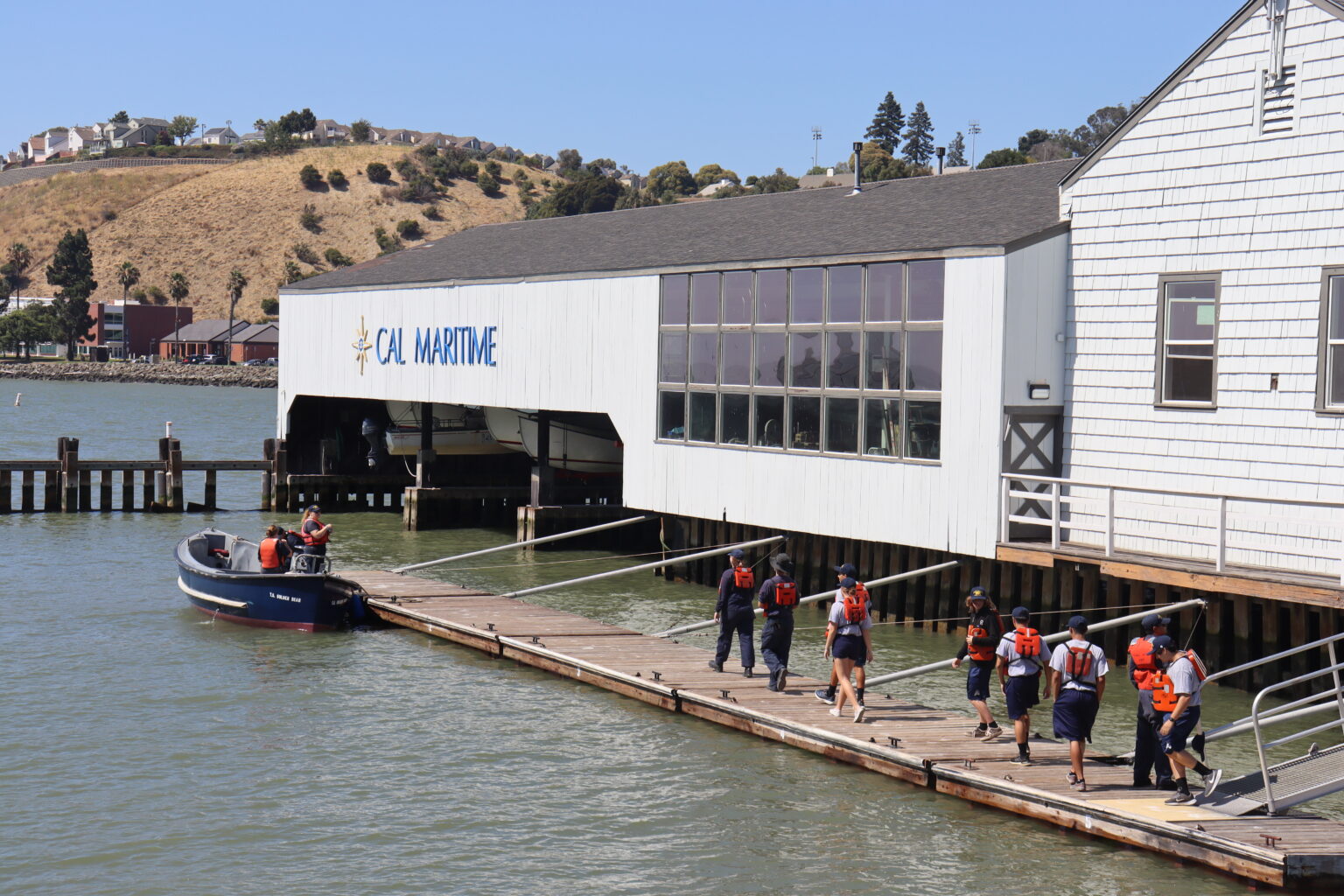
Science, engineering and business majors at Cal Poly already receive strong support for internship and job placement, she said, and Cal Poly Maritime is connected to industry. But other disciplines at Cal Poly — and at other campuses throughout the system — are not as robustly linked to job pipelines. Makekau said the liberal arts colleges need more support to link academic programs with career opportunities.
“We can look at greater partnerships with our local industries and really tapping into county agencies,” she said, adding that some humanities and social science departments are collaborating with science and engineering disciplines to create joint degree programs.
One of the most popular majors in the CSU system, psychology, is another discipline that may be hard to link to labor market demands, said former state community college chancellor Oakley. While psychology majors may possess marketable skills without the advanced education required to practice counseling, he said, the trick is to convince employers.
“There are lots of market-valued skills that a student learns in those programs of study that don’t necessarily lead to a job in psychology,” he said. “How will CSU articulate those skills and help employers see the talent that exists within those majors?”
The emphasis on career alignment might mean that some less popular majors are phased out, offered on only certain campuses or combined into interdisciplinary degree programs, Perez said. If those kinds of changes happen, she said, faculty will need to be flexible about collaborating across departments.
“There is a tension with faculty that are discipline-specific,” she said. “Everyone loves their discipline and I love that they love that, but you can’t have a degree program with four students.”
Low-enrollment majors might be offered only on some campuses, with their courses available online for students located elsewhere, she said. She gave the example of French, which is not in high demand as a major but could be offered as a part of other degree programs.
“There are ways to get at the majors without a direct elimination,” she said.
Partnering with employers
Students respond when campus staff offer help connecting them with internships and jobs, said Tracee Passeggi, director of Cal Poly Pomona’s career center. In January, the campus began partnering with a staffing agency that prospects for jobs specifically for students from the campus. When the university invited students to meet with a representative from the agency, the appointment calendar filled within 15 minutes.
“We’re about to have 7,500 students walk across the stage in six weeks,” she said. “Our main goal is that they have robust partnerships with employers.”
She said the campus aims to create career-related opportunities that are accessible to all students, including those who are working and have limited time. Her office has helped faculty develop micro-internships that are built into course curricula.
Passeggi participated in one such experience. In an upper-division marketing class, students analyzed how her office marketed its services. Students were paid and received course credit to suggest different strategies as part of an end-of-semester presentation.
“Career embeddedness into the curriculum is the best way to get to students,” she said. “We seek them out so they don’t have to seek us out.”
EdSource receives funding from many foundations, including Eloy Ortiz Oakley, who is CEO of the College Futures Foundation. EdSource maintains sole editorial control over the content of its coverage.