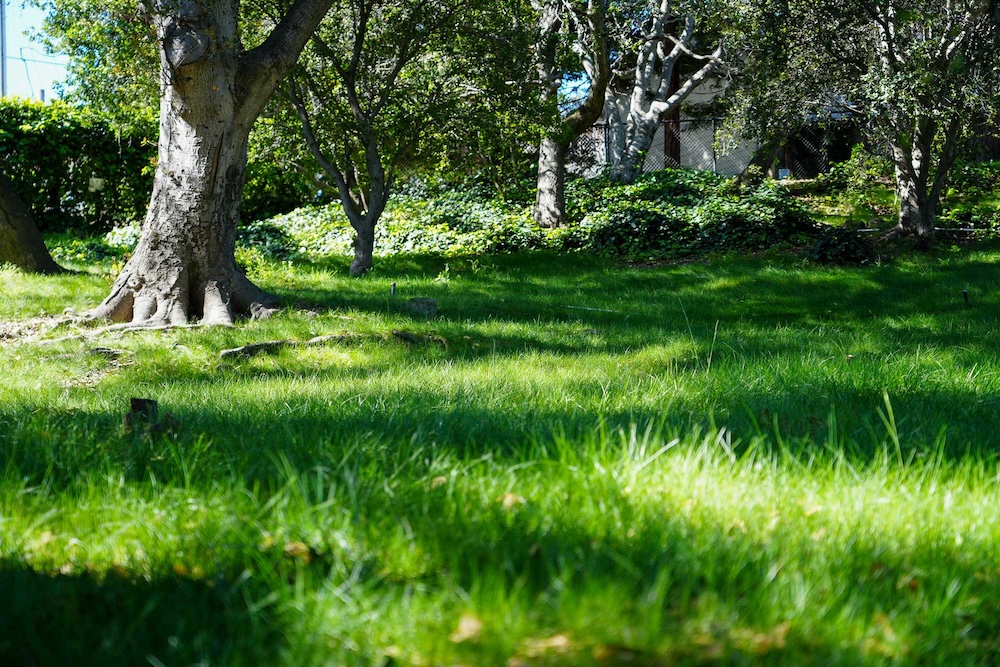
The stairs and pathway through the former off-leash dog area in Linda Park are now open, and fencing around the park has been removed. The hillside remains closed, as re-vegetation is still in early stages. With paths and benches open, the park offers a rare opportunity to watch an oak woodland — one of California’s most essential native landscapes — develop from the ground up.
The City asks all visitors to stay on the path and keep both people and dogs — including dogs on leash — off the grass, which is still fragile and easily damaged.
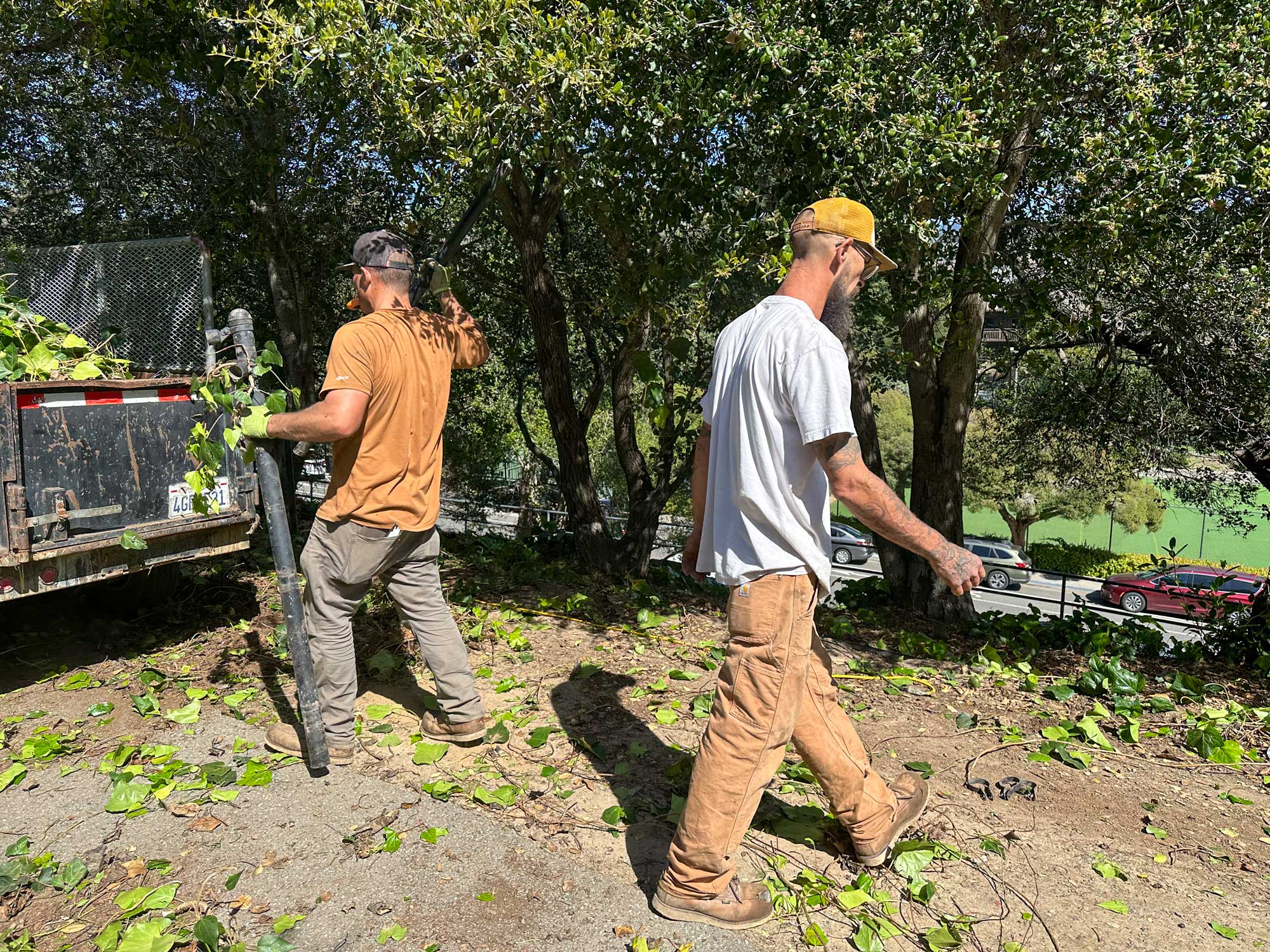
Fence removal in progress 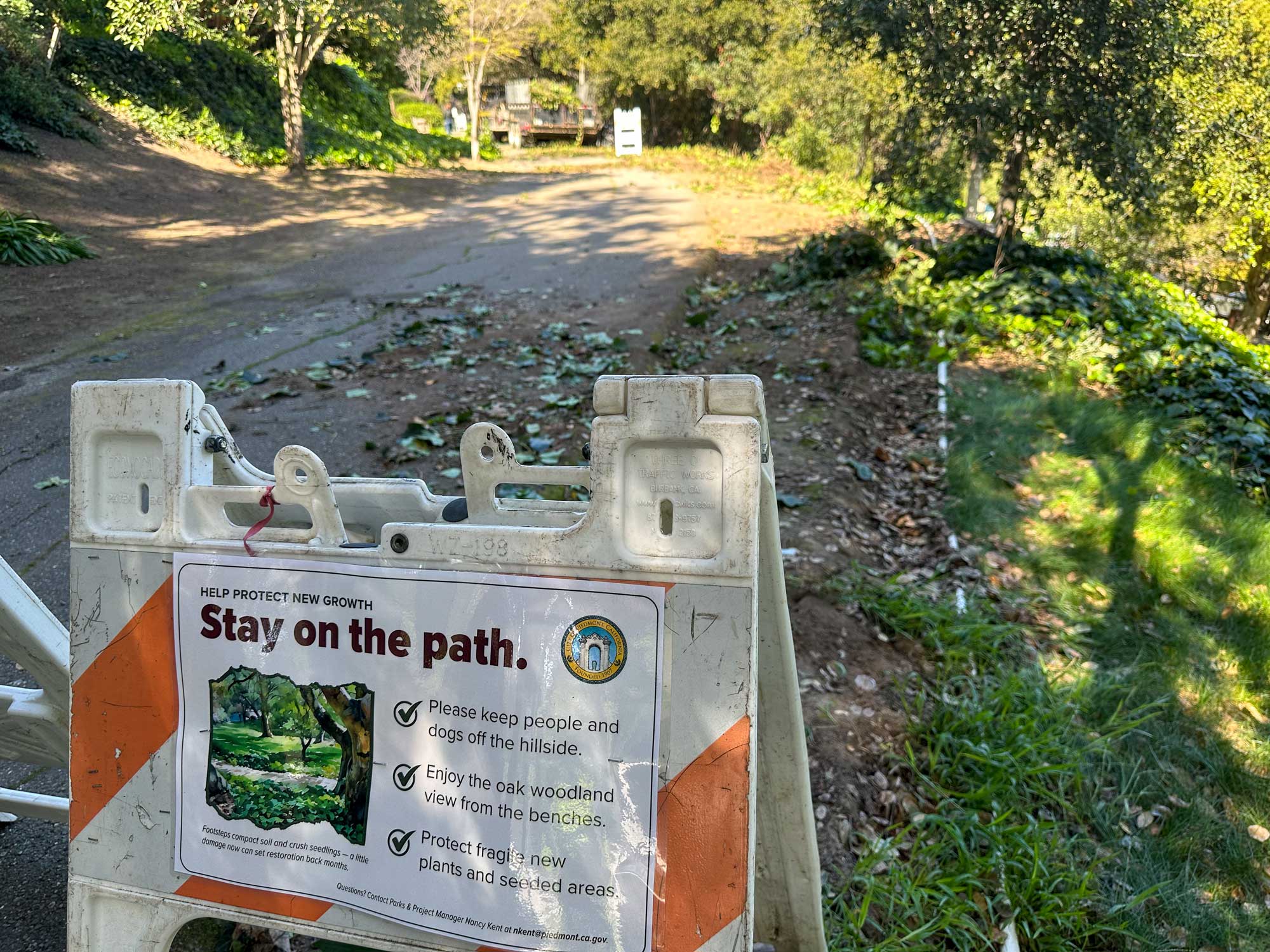
Hillside restoration returns valuable native landscape to Piedmont
The City is restoring the hillside as an oak woodland — a native California landscape that supports a rich mix of plant and animal life. Oak woodlands depend not just on trees, but on the grasses and understory plants below them that help hold soil, support insects and pollinators, and create habitat at different levels.
While Piedmont’s parks contain many mature oaks, few areas are maintained as a natural oak woodland. As a naturally moist, northeast facing slope, the Linda Park hillside makes an ideal location for this type of landscape.
The first signs of restoration are already visible. What may look like simple new grass is the beginning of a more complex native landscape returning beneath the oaks. Along the path, interpretative signage provides information about the re-vegetation project and the value of oak woodlands.
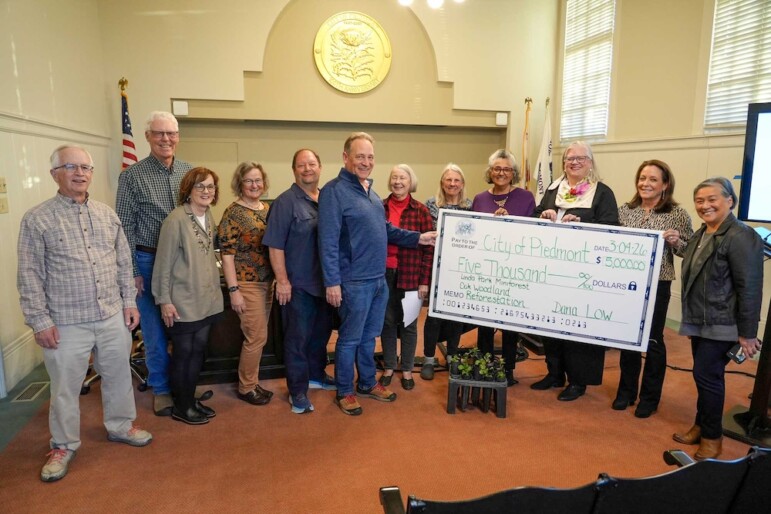
Restoration efforts are supported by a $5,000 donation from the Piedmont Garden Club’s Civic Improvement Committee, which provides funding annually for projects that enhance Piedmont’s beauty and ecological health. The funds will be used to purchase native understory plants for the hillside.
Re-vegetation opportunity arose after erosion concerns forced closure of former off-leash area
The off-leash area was permanently closed last spring, after the Regional Water Quality Control Board notified the City that it needed to take steps to eliminate erosion and runoff from the hillside. The closure followed years of erosion-related struggles at the site. Before the permanent closure, the off-leash area experienced frequent temporary closures — sometimes lasting for months — due to unsafe conditions caused by soil erosion and hillside instability.
After reviewing the site, the Water Board determined that stronger long-term erosion control measures were needed. Permanent closure and re-vegetation of the hillside allowed the City to move forward quickly to address the problem and avoid steep penalties for noncompliance.
New grasses help stabilize the hillside
After closing the area, Public Works “hydroseeded” the hillside — a technique that involves spraying the area with a mix of seed, water, and mulch. The mixture forms a protective shell over the soil, helping stabilize the slope while new grasses and other plants take root.
This early growth is fragile, but it plays an important role in the hillside’s recovery. As grasses and other plants establish roots, they help hold soil in place, reduce erosion, and create the conditions for a healthier, more stable hillside over time.
Visitors are encouraged to enjoy the hillside from the benches, but should not walk on the grass under any circumstances. Staying on the path will help protect new growth and support the hillside’s long-term recovery.
The Water Board did request that the City come forward with a long-term plan to address runoff from the park. City staff ignored this request and unilaterally determined that the park be closed. Had City staff engaged with the Water Board and its own Park Commission it’s very likely the dog park could have remained open. The City was not facing “steep” penalties nor deadlines to fix the park from the Water Board and City Hall’s bemoaning of such is belied by the facts (https://piedmontpov.com/water-board-whispering/ ). With the closure of the Linda Dog Park, Piedmonters were denied the service and process that are normally expected from City Hall. Perhaps staff can make up for its error by getting on with opening another dog park in lower Piedmont.