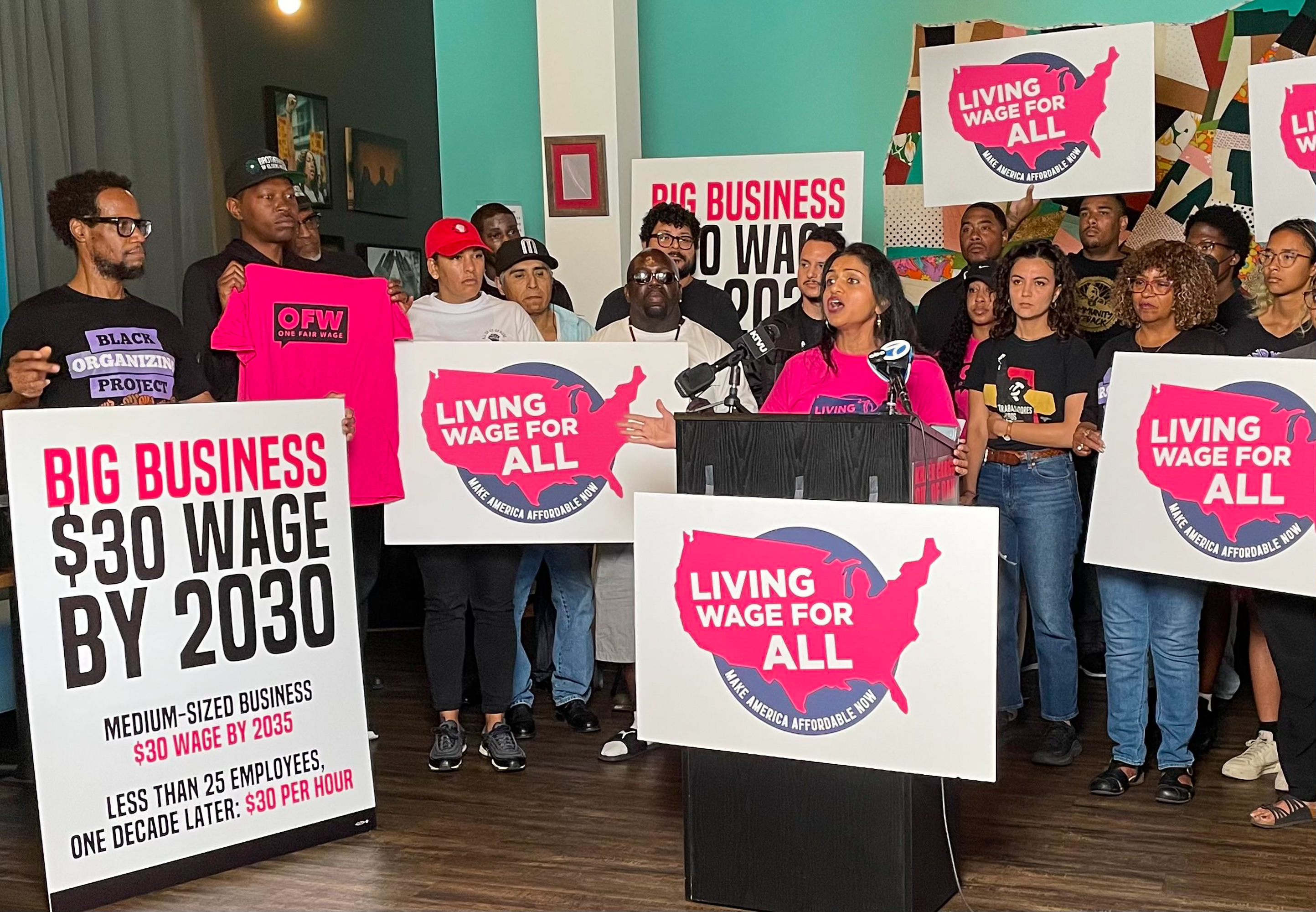
A coalition of community organizations at a news conference in Oakland on Thursday launched a campaign to raise the minimum hourly wage to $30 for companies in the city and Alameda County.
The “Living Wage For All” initiative seeks to close the gap between wages and the cost of living in Oakland and other parts of Alameda County, speakers said.
The Black Organizing Project, an Oakland-based community organization for the city’s Black community; Trabajadores Unidos Workers United, a Bay Area-based immigrant worker center; One Fair Wage, a nationwide nonprofit representing the interests of restaurant workers; and United Auto Workers Region 6 are part of the coalition behind the initiative.
“The cost of living keeps going up,” said Zach Norris, co-executive director of the Black Organizing Project. “Rent just skyrockets, while wages have remained flat. And in that gap is human suffering.”
The coalition has filed ballot initiatives in Oakland and Alameda County for the November 2026 elections. The proposed measures would require corporations with more than 100 employees and a revenue of more than $1 billion to raise their hourly minimum wage to $30 by 2030. Firms employing between 25 and 100 individuals will have until 2035 to raise their minimum wage to the same level, while those with fewer than 25 employees will have until 2037.
The next step for the coalition is to collect approximately 80,000 signatures across Alameda County and Oakland cumulatively to qualify the initiative to be on the ballot in November, said Norris in an interview. Norris also explained that if the Alameda County measure passes, it would apply to all workers employed by the county and firms based in the unincorporated areas of the county, but would not automatically apply to the cities in the county. However, cities will be able to opt in by either having a valid measure of their own on the ballots — what the coalition hopes to achieve in Oakland — or by their city council choosing to opt in.
“Over time, we want other cities to follow suit across the county, but we’re starting with Alameda County and Oakland,” said Norris.
According to an analysis of U.S. Census data conducted by One Fair Wage, almost 40% of Alameda County’s workforce earns an hourly wage lower than $30. Increasing the minimum wage to $30 is “achievable, affordable, and urgently needed,” the analysis notes.
Saru Jayaraman, the president of One Fair Wage, pointed to polling conducted by Washington, D.C.-based consultancy Lake Research Partners that found 71% of Alameda County voters are in favor of the wage increase.
“[These are] unprecedented times where we have a twin crisis of both affordability and democracy,” said Jayaraman. “And it’s time for us to prove that he can fight for and win bold solutions to the affordability crisis that prove that democracy is actually worth saving.”