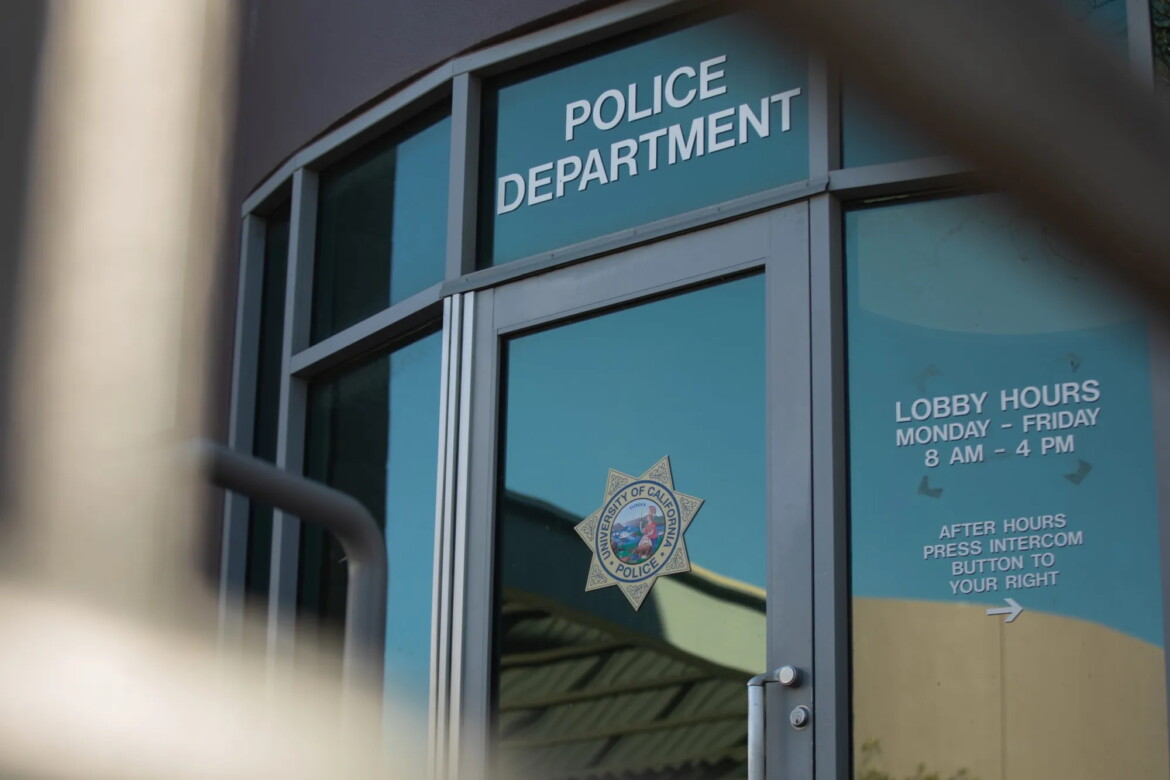
For 20 nights every year, police from UC San Diego depart from their usual school rounds and patrol the shores of La Jolla, Black’s Beach, and Torrey Pines. Powered by overtime pay provided by the federal Department of Homeland Security, the officers look for people crossing the border.
UC San Diego police have long participated in the federal Department of Homeland Security program known as Operation Stonegarden, which provides $10.9 million annually to dozens of California law enforcement agencies to collaborate with Border Patrol. The practice continued through Democratic and Republican administrations, and after the state adopted a sanctuary law in 2017 restricting law enforcement collaboration with immigration enforcement.
Now, UC San Diego is participating in the program at a time of heightened immigration enforcement by the Border Patrol. The school warns students about the locations of Border Patrol checkpoints on its website. Dozens of students had their visas revoked and later reinstated last year and at least one was detained at the border.
So far, the Stonegarden program at UC San Diego has not prompted public criticism. Police departments usually spend the money on overtime pay for officers to carry out operations for Customs and Border Protection. The money can also pay for a wide range of surveillance equipment, from search cameras and devices that transmit their data, to facial and license plate recognition software. Three California counties — Imperial, San Diego and Riverside — accept the grant and distribute it to police forces in their area.
California and four other sanctuary states — New York, Washington, Vermont and Minnesota — participate in Stonegarden, along with 18 other states and territories. California receives the third-most in grant money overall after Texas and Arizona.
Riverside County Sheriff Chad Bianco, a Republican who is running for governor, told CalMatters that the state sanctuary law should be renamed the “California Criminal Protection Act,” but he also said that his department’s participation in Stonegarden does not violate that law. Bianco added that he is extremely proud his department works with Border Patrol.
“By providing local law enforcement resources through Operation Stonegarden to combat … public safety concerns, Border Patrol and other federal agents are more able to dedicate their resources to immigration enforcement and border security,” Bianco said.
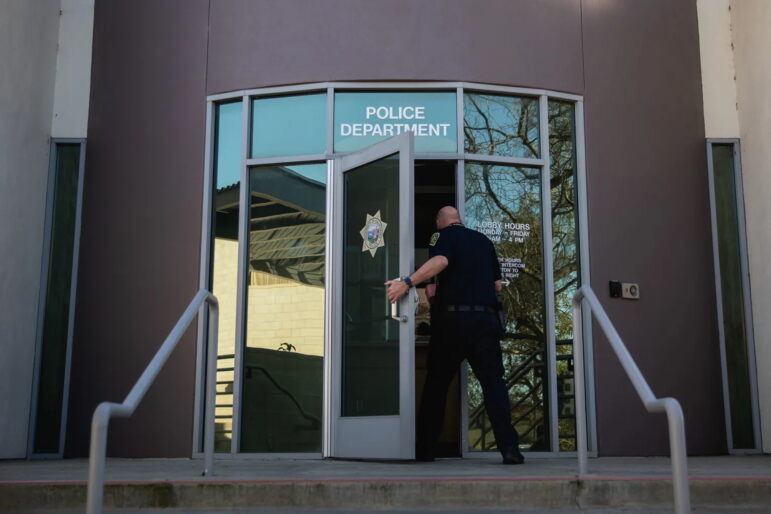
The California Attorney General’s office under Democrat Rob Bonta said it could not analyze whether Stonegarden grants violate the state sanctuary law. His representatives said the law permits state and local agencies to collaborate with federal agencies on joint task forces, “to the extent that the primary focus of those task forces is not immigration enforcement.”
Even though local agencies conduct the operations, civilians cannot access information about Operation Stonegarden activity from them. Once an operation is completed, police submit an activity report to Border Patrol chronicling their border enforcement actions, field interviews, arrests and citations, and other information they deem relevant.
An information officer with the UC San Diego police department said once they submit activity reports to DHS, they can still view them, but cannot edit them. Multiple police departments told CalMatters that, though they still have access to see the reports, they cannot provide them through public record requests, as the reports become federal property once entered into the Homeland Security Information Network. This database is available to the Department of Homeland Security and its international and private sector partners, but not to the public.
However, the Riverside County Sheriff’s Department provided several reports through a California Public Records Act request. The reports show that while carrying out Stonegarden operations, the department frequently made traffic stops in 2023 and 2024, working collaboratively with Border Patrol personnel. Most of the stops led to no arrests, citations or drug seizures. Instead, the stops resulted in “intel development,” meaning federal intelligence was developed regarding interactions between civilians and cops during those stops even when no crime was committed.