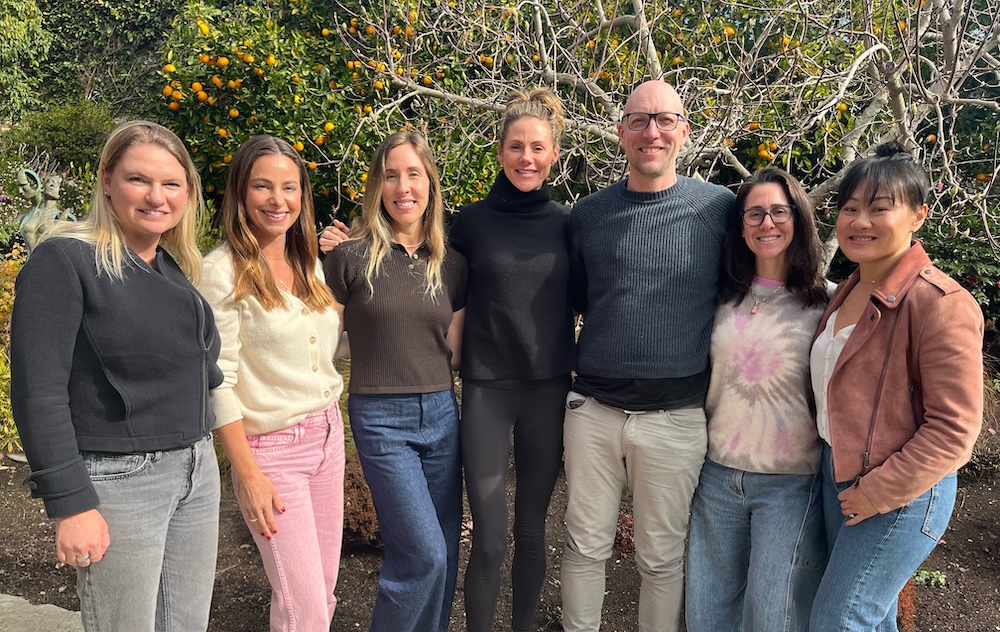
Melissa Partovi’s daughter is only in third grade but already knows she doesn’t want a smartphone yet. Partovi said that’s because she understands that it’s “bad for [her] brain” and would rather spend time outside riding her bike.
Through Piedmont Unplugged, Partovi and a group of like-minded parents have banded together to place healthy boundaries on social media and smartphone use for their children and instead promote independence in the real world. By forming a community of like-minded families, Partovi said that kids don’t need these devices to feel connected.
“We thought, let’s get ahead of this problem and make Piedmont a community where collectively we decide we want better for our kids,” Partovi said.
Partovi, a co-founder of Piedmont Unplugged, first became aware of the dangers of a phone-forward childhood in spring 2024, when social psychologist Jonathan Haidt published the book, “The Anxious Generation.” He attributes the teenage mental health crisis (which exploded in the early 2010s) to young people spending too much time on smartphones, social media, and online games instead of engaging in the real world.
“Kids aren’t able to become their full selves or live their fullest lives if they are using smartphones and social media,” Partovi said.
After reading the book, Partovi and fellow co-founders Amanda Straub and Liza Nebel created Piedmont Unplugged to inform parents about this research. The community’s collective action has been a huge part of the movement’s success, according to Partovi, because if one parent gives their kid a smartphone, other kids will want one too.
“If everyone is all on the same page, we can solve the problem together,” Partovi said.
Piedmont Unplugged has adopted the four norms that Haidt identifies in his research: no smartphones until high school, no social media before age 16, no phones at school and more independence in the real world. So far, Piedmont Unplugged has gathered the names of 181 families committed to following these ideas.
Partovi said that families, particularly those with younger children, have been really engaged; it’s easier to commit to not giving your child a smartphone if they don’t already have one. However, it’s been more challenging to connect with parents of older children who already have smartphones and are nervous to take them away.
Once a month, the group meets to discuss goals and plan events, including Free Play Fridays in Piedmont and Crocker Parks and the Bike Bus to Havens. Partovi said that kids need to be doing more without supervision, such as playing outside, riding bikes or walking to Mulberry’s — many of the freedoms that parents remember having when they were kids.
“What we want to do is give our kids more independence in the real world so that they aren’t looking for it in the online world,” Partovi said.
Some parents with younger children are nervous about leaving them unsupervised. But Partovi has noticed that when kids are without an adult, they know they’re in charge of their own street safety and pay more attention.
“Kids can be responsible for their own person safety at a level that we’re not giving them credit for,” Partovi said.
Right now, the group is just focused on Piedmont, but across the Bay Area, similar groups are bubbling up, including Alameda Unplugged and ScreenSense in Mill Valley.
In the future, Partovi knows that Piedmont Unplugged will need to engage with other communities to fulfill their long-term goal to ban smartphones in schools at a state-level. Right now, PUSD doesn’t allow smartphones or smart devices in elementary or middle schools, but at the high schools, phones are permitted at lunch.
“It’s not good enough,” Partovi said. “We really want the school to enact a full bell-to-bell phone ban… so your kid has no access to their phone all day.”
To reach more families, Partovi said that Piedmont Unplugged have started using Sway (a group voting platform) to gain the momentum they’ll need to eventually bring the issue to state leaders.
“We do have to go beyond Piedmont,” Partovi said. “Hopefully, we’ll be able to gather enough support to make a difference for all of California.”