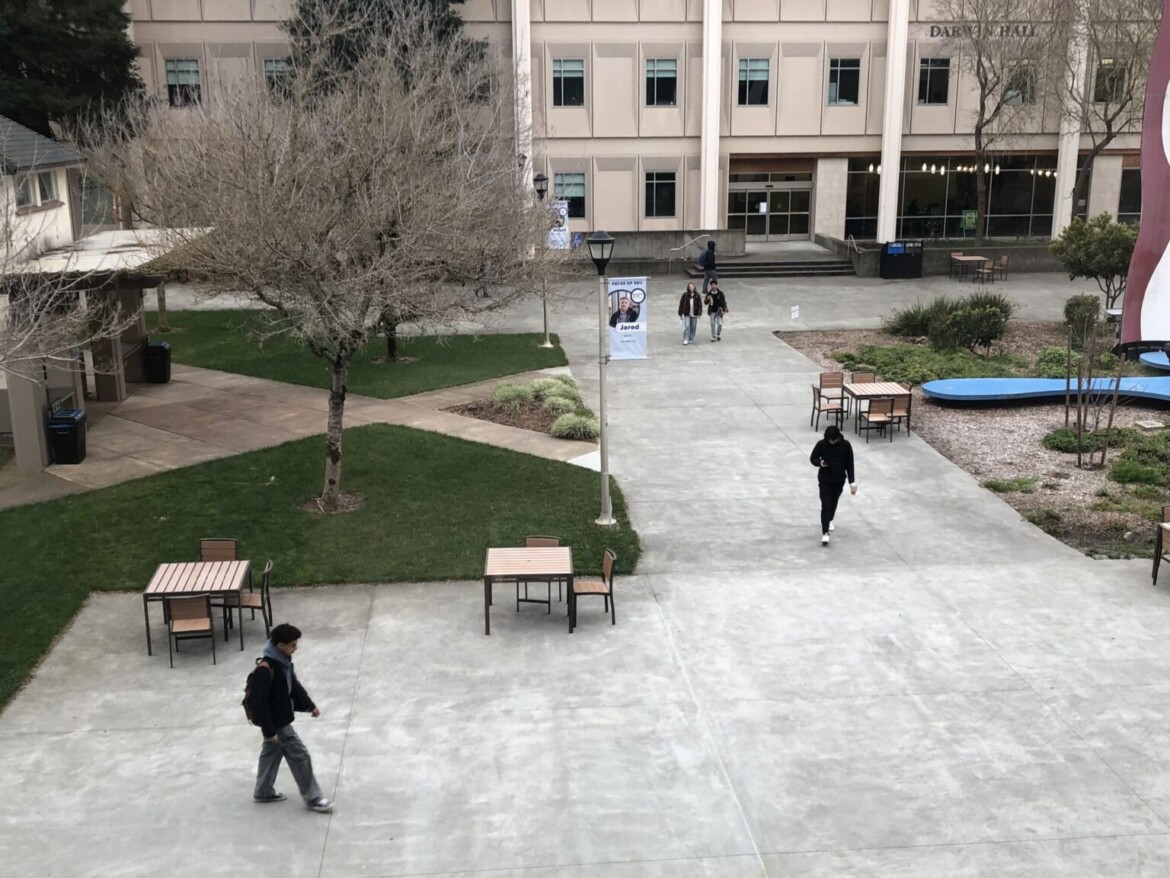
California State University is increasing financial oversight across its 22-campus network after a pair of fiscal crises in the past 18 months led to severe budget cuts and restructuring at two of its campuses.
The increased financial oversight comes at a time when enrollment has dropped at some campuses even as others see gains. Sonoma State canceled academic programs, suspended its NCAA athletics program, and took other measures to close its budget gap. And Cal Maritime merged with Cal Poly San Luis Obispo, a larger and more stable peer.
At the CSU Board of Trustees meeting this week, early results of a new fiscal health monitoring process showed more campuses are facing financial risks, including in areas outside of core academic functions, such as housing, athletics, and on-campus dining.
“This is long overdue,” said trustee Julia Lopez. “If we’d had this over the last few years, we would have saved ourselves a lot of headaches.”
California lawmakers in June required CSU campuses suffering “sustained enrollment decline” to submit turnaround plans to the CSU chancellor’s office as part of the 2025 budget act. The chancellor’s office will submit a summary of those reports to the state Department of Finance and Legislature by March 1.
CSU leaders, in addition, have asked all of their universities to compile detailed reports as part of what they call a “fiscal health monitoring” process. Launched in August, the financial early warning system aims to spot problem areas and highlight practices that could boost enrollment.
Falling enrollment, coupled with rising costs for salaries and other unavoidable line items, has left structural deficits on some campuses, leading to course cuts, hiring freezes, and attempts to limit discretionary spending.
The hope is that rigorous and continuous monitoring will prevent unpleasant surprises in the future. Lopez said that in a few instances, “we’ve handed a new president a structural budget deficit that we didn’t really even know was there, but we sort of knew, but then they had to deal with it the minute they walked in.”
“That should just never happen,” she added.
At Sonoma State, campus leaders in January 2025 announced sweeping cuts, including the elimination of entire academic departments and all NCAA sports, measures they said were needed following years of shrinking enrollment. The university received a one-time lifeline of $45 million from the state budget, which was matched by another $45 million from the CSU system.
And Cal Maritime, the system’s smallest campus, is being integrated into Cal Poly San Luis Obispo after declining enrollment plunged the campus into a financial tailspin. By the time CSU’s Board of Trustees considered an unusual proposal to fold the maritime campus into Cal Poly in the summer of 2024, its president said Cal Maritime had already “taken a chainsaw to every expense on campus.”
Cal State officials presented their fiscal health monitoring plans following Gov. Gavin Newsom’s budget proposal earlier this month, which would deliver a 7% increase in state funding to both the California State University and the University of California systems. That’s a welcome sign for Cal State, which estimates that its overall structural budget gap totals about $2.3 billion.
“This news is very positive — indeed, it is extraordinary,” CSU Chancellor Mildred García said in opening remarks to the board on Tuesday. But she warned that “competition for limited state dollars will be fierce.”
Planning turnarounds
Seven Cal State campuses with recent enrollment declines — Channel Islands, Chico, Dominguez Hills, East Bay, Humboldt, San Francisco and Sonoma — were required to share turnaround plans with the chancellor’s office by the end of 2025. Those reports outline the campuses’ plans to improve enrollment and save money, as well as enrollment projections for the next five years.
Meanwhile, in October, all CSU campuses submitted plans with budget projections and a description of their enrollment and cost-reduction strategies. The chancellor’s office has started meeting with each university to discuss those plans, with more frequent follow-ups expected at campuses facing serious financial or enrollment troubles.
Trying new ways to attract — and keep — students
At the root of many campuses’ fiscal woes is fluctuating and sometimes declining enrollment. CSU leaders said declining K-12 enrollment and regional variation are among the drivers that have left some campuses with fewer students, even as headcount at other CSU peers surged.
To buoy enrollment, the university system wants to strengthen the pipeline of students transferring from community colleges, lure back students who cut short their studies, and recruit more adults.
Another promising technique is to redirect students who applied to the most in-demand campuses to other universities with the capacity to enroll them. Dilcie D. Perez, the deputy vice chancellor for Academic and Student Affairs, said that strategy is already being used when there is “an overflow of applications” at one Cal Poly campus and other Cal Poly campuses have open seats.
And with the signing of a new state law this fall, CSU is expanding its experiments with direct admissions. Under Senate Bill 640, public high school students who meet CSU entry requirements will be automatically admitted and able to enroll at one of 16 CSU campuses.
Housing poses ‘elevated financial risk’
At some campuses, CSU leaders reported, housing programs have become a risky part of university finances.
A lack of funding for needed repairs and fixed debt-service costs have strained some university housing programs. Meanwhile, campuses are challenged to rent housing at a price students can afford, sometimes while competing with private alternatives. And when enrollment projections proved more rosy than reality, some campuses have been left with unoccupied beds.
At Cal State San Bernardino, for example, an internal audit in August found that debt service related to the construction of a newer dorm, Coyote Village, combined with slumping occupancy and the Covid-19 pandemic, had left housing operations with “significant net losses.” And at Cal State LA, CSU auditors in July projected a $3.7 million net loss for student housing in its 2024-25 fiscal year following a period of staff turnover and low occupancy.
Warning signs for sports, student unions and other auxiliaries
Some Cal State campuses are also significantly subsidizing their athletics programs, CSU leaders said at this week’s meeting, with growing costs outstripping limited revenue from sports. To keep sports programs alive, several campuses have increased student fees, and some programs are running deficits.
On Wednesday, CSU officials similarly flagged concerns among the system’s auxiliary organizations, which operate dining, research foundations and student unions. The organizations are often locked into paying fixed costs — including debt service and contracts — even when enrollment falls. Threats to federal research funding and a lack of staff expertise add to those pressures.
“Without effective mitigation, challenges in auxiliary operations could create broader financial exposure for the university and potentially compromise core campus functions,” a report shared with the board said.