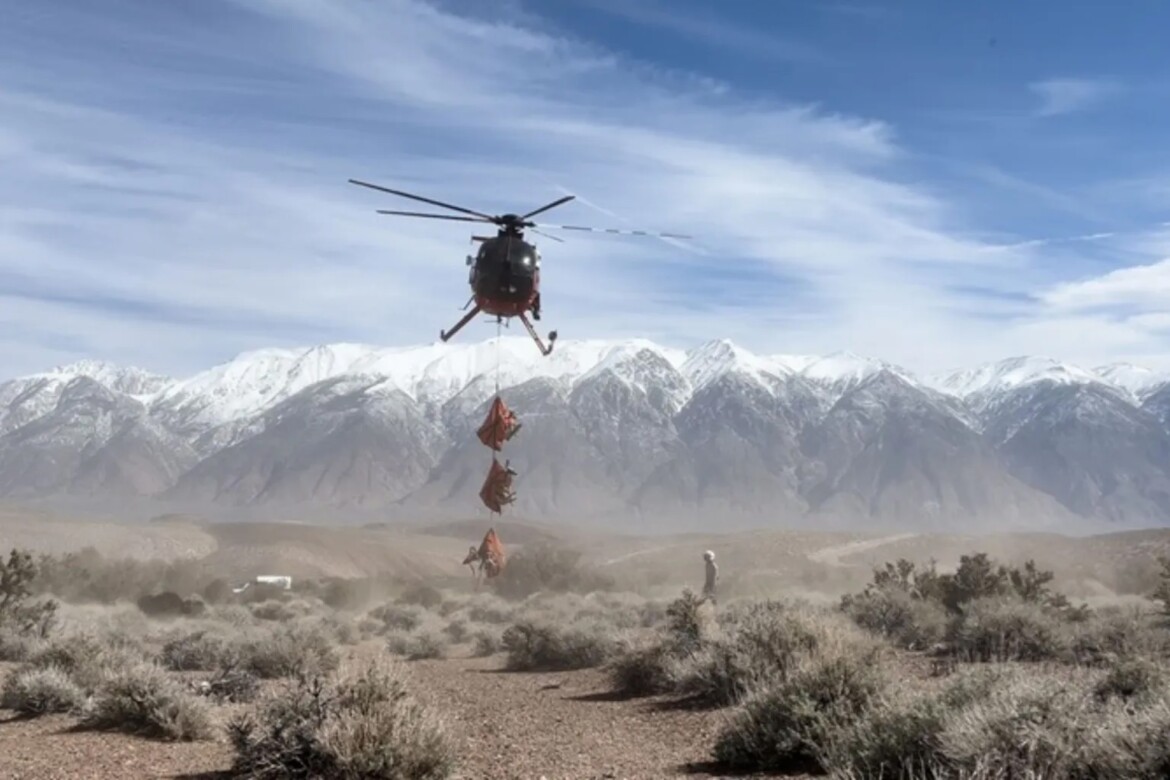
THE CALIFORNIA Department of Fish and Wildlife is gearing up to capture various wild animals in Northern California and outfit them with GPS collars to better track them, the agency said.
Deer, elk and wolves will be caught via helicopter and equipped with the tracking devices which will help the CDFW better understand each species’ distribution, use of habitat, abundance, migratory patterns and rates of survival, the agency said.
In January, deer and elk will be captured in several counties, including Alameda and Santa Clara counties in the Bay Area. Mule deer, tule elk and Rocky Mountain elk will be part of the operation.
Wolves will be targeted in multiple Northern California counties outside of the Bay Area.
According to CDFW, the GPS collars will send data to scientists every day for up to three years. Information collected about wolves will be given to cattle and sheep producers “with the goal of reducing negative interactions,” the agency said.
Gray wolves have made an impressive comeback in recent years after nearly disappearing completely in the state. But the new numbers have also come with what the CDFW described as an “unprecedented” rise in attacks on livestock.
In October, the agency had to euthanize four wolves it said were responsible for 70 livestock losses over a period of six months. In spite of the CDFW’s nonlethal approaches to the problem, the agency said livestock had become the wolves’ main food source.
“Despite extensive adaptive management deterrence efforts, including the use of drones, non-lethal bean bags, all-terrain vehicles, foot presence, diversionary feeding, fladry installation, and field presence 24-hours a day, seven days a week, these wolves became habituated to cattle as a primary food source, a behavioral shift that threatens both livestock and the ecological integrity of wolf recovery,” the CDFW said in October.
CDFW scientists learned that wolves were teaching their young that livestock — not elk or deer — were their main prey. Euthanizing a breeding pair was a step toward recalibrating the pack’s prey choices.

“Several things can be true simultaneously,” said CDFW Director Charlton Bonham. “Wolves are here in California and that is an amazing ecological return. Yet, their reemergence is a significant, disruptive change for rural communities. Wolves are one of the state’s most iconic species and coexistence is our collective future but that comes with tremendous responsibility and sometimes hard decisions. The Beyem Seyo pack became so reliant on cattle at an unprecedented level, and we could not break the cycle, which ultimately is not good for the long-term recovery of wolves or for people.”
“As wolves increase in number and range, California ranchers are in dire need of additional tools” to “deter wolf attacks,” said Kirk Wilbur, vice president of government affairs for the California Cattlemen’s Association.
California’s gray wolves are classified as both federally and state endangered. Harming them is a crime punishable by law.
Wildlife capture operations will take place on lands managed by CDFW, the USDA Forest Service, the Bureau of Land Management as well as on private properties with permission from landowners.
The post California plans to GPS-collar elk, deer, wolves amid rising wolf–livestock clashes appeared first on Local News Matters.